


What’s in this Article
- Quick picks by situation at a glance
- How to choose the right aerator for your wines
- How we chose
- Quick Comparison
- FAQ
If you like red and white wines but wish they tasted a little rounder right out of the bottle, you are in the right place. This guide is for anyone who wants softer tannins, brighter fruit, and a cleaner pour without committing to a long decant.
We break down the four common aerator styles you will actually use at home: pourer spouts, handheld gravity Venturi cups, electric stick aerators, and simple decanter-to-glass setups with filters. The focus is the glass, not the gadget. Expect practical notes on what each type does to tannin texture, aroma, and balance.
What matters most in testing is consistent flow, real oxygen contact, leak-free seals, and easy cleanup. We also look at sediment control, material feel, and whether an aerator changes the flavor in a predictable way from first pour to last.
A quick reality check. Very delicate whites can lose their top notes with aggressive aeration. Older reds can thin out if pushed too far. Aerators are not for sparkling wines. Use a light hand and taste as you go.
Do this first: pour two small tastes before dinner. Leave one as is. Aerate the second, then compare swirl-for-swirl. If using a spout, seat it with a firm twist. If using an electric stick, prime it with water for a few seconds. If using a gravity cup, keep the stream steady so the Venturi chamber stays full.
Quick picks by situation at a glance
Big, young reds that feel grippy
Use a handheld gravity Venturi aerator. It hits the wine with a strong burst of air and can knock down coarse tannins fast, bringing out dark fruit and shaving off bitterness in Cabernet, Syrah, and Malbec.
Weeknight mixed table with both red and white
Choose a simple pourer spout with a diffuser. It gives moderate aeration for Merlot or Tempranillo and stays gentle enough for Chardonnay or Viognier. You get a smoother mouthfeel without blowing off delicate aromatics.
Older vintages and sediment control
Go with a decanter-to-glass funnel that includes a mesh filter. You get a softer, slower aeration plus a barrier for fine sediment in aged Rioja or Bordeaux. The result is cleaner texture without overstressing the wine.
Pouring for a crowd with minimal mess
Pick an electric stick aerator or pump-top spout. It delivers even aeration glass after glass, reduces drips, and lets you keep the bottle on the table. Great for parties where you want consistency and fewer stains.
Picnics, travel, and gifting
Take a compact pourer spout in a small sleeve. It is lightweight, easy to rinse at a sink, and improves casual reds and fuller whites on the go.
How to choose the right aerator for your wines
Gauge tannin and body first
Match aeration strength to structure. Big, young reds usually want a stronger hit to soften grip. Light reds and aromatic whites need a gentler flow to keep floral notes intact.
Pick the mechanism by how fast you pour
If you pour one glass at a time, gravity cups give the most dramatic softening. If you pour many glasses quickly, electric sticks keep flow steady so every glass tastes the same.
Fit and drip control matter
Look for a snug bottle seal and a shaped lip that cuts the stream cleanly. A good seal prevents leaks at the neck. A sharp pour edge keeps labels and tablecloths safe.
Cleaning, materials, and storage
Simpler is often better. Fewer parts clean faster and hold fewer odors. Rinse immediately after use. Favor food-safe plastics or stainless steel that do not add taste. Stash small spouts in a drawer or bag so you actually use them.
Know when to ease off or skip
If a white wine smells shy straight from the fridge, let it warm a touch before aerating. For older reds, start with a gentle pourer spout and taste. If the wine seems fragile or thin, stop there and enjoy it without more air.
How we chose
We tested a wide mix of aerators and pourer spouts across real wines and real tables. The goal was simple. Soften harsh tannins, lift aroma, keep pours tidy, and make cleanup painless. Here are the exact things we judged.
- Blind taste tests on multiple styles
- A/B/C comparisons against a control pour and a quick-decant baseline.
- Young, tannic reds (Cabernet, Syrah, Sangiovese) to gauge softening and bitterness fade.
- Lighter reds (Pinot Noir) to check if texture stays silky, not thinned out.
- Aromatic whites (Sauvignon Blanc, Riesling) to confirm lift without blowing off acidity.
- Real aeration effect, not just bubbles
- Venturi pull and turbulence you can taste, not just see.
- With electric sticks, consistency of flow with each press.
- Measured differences over first sip and after 10 minutes in the glass.
- Pour control and fit
- Drip-free lip, no bottle-side runs, and clean stop at the end of a pour.
- Fits common cork and screwcap bottle mouths without wobble.
- Works at normal kitchen and table angles, not only at a perfect tilt.
- Build and materials
- Food-safe plastics, stainless, and silicone that do not smell or stain.
- Gaskets that hold their seal after repeated use.
- Moving parts that do not loosen after a few weekends.
- Sediment handling and clarity
- Fine mesh or channels that catch grit in older reds without clogging.
- No splash-back or foaming that makes the wine hazy.
- Cleanup and maintenance
- Rinses clean under the tap in under a minute.
- No trapped moisture in tiny chambers.
- For electric units, easy purge and a clear path for sanitizing.
- Portability and everyday usability
- Small enough to toss in a tote for picnics or BYO nights.
- Simple one-hand operation when you are topping glasses fast.
- Noise kept low so conversation stays the focus.
A word on trade-offs and matching to you:
- Want the biggest jump in softening for young, grippy reds? Go handheld gravity or a decanter-to-glass system with a filter. You will feel it in the first sip.
- Prefer easy weeknight pours for both red and white? A pourer spout or 5-in-1 stopper keeps things tidy and gives gentle lift without overworking delicate wines.
- Hosting or pouring multiple bottles back to back? An electric stick or pump-top spout gives consistent aeration with less wrist work, but expect a touch more cleaning and a bit of motor noise.
- Opening older reds with sediment? Choose a model with filtration and a calmer flow to avoid stirring up the bottle.
We aimed for picks that make your wine taste better first, then keep your table clean, and only after that reward you with speed and convenience.
Quick Comparison
| Product | Best for | Biggest strength | Biggest trade-off |
|---|---|---|---|
| Haley’s Corker 5-in-1 Wine Aerator, Pourer & Stopper (2-Pack) | Everyday bottles and fridge-door whites. | 5-in-1 design replaces separate tools. | Aeration is gentle, not a big tannin tamer. |
| Rabbit Super Aerator & Wine/Champagne Sealer Set (Red) | Simple upgrade with a matching sealer. | Smooth, drip-free pours with minimal effort. | Less impact on very young, grippy reds. |
| Vinvoli Deluxe 2026 Wine Aerator Decanter with 3-Stage Aeration, Sediment Filter and No-Drip Stand | Home use when you want maximum softening and clarity. | Multistage aeration and filter handle tannins and sediment. | Takes counter space and adds cleanup. |
| Wine Aerator Pourer with Sediment Strainer, Stand & Travel Bag | Travel, picnics, and BYO nights. | Compact kit with strainer and stand. | Smaller head aerates slower than full-size units. |
| Stainless Steel Fish Wine Pourer & Aerator | Gifting and fun tableside pours. | Stainless design adds flair and a light air boost. | Aeration is mild and can drip if rushed. |
1. Haley’s Corker 5-in-1 Wine Aerator, Pourer & Stopper (2-Pack)
Best multipurpose pick

A clever 5‑in‑1 corker that aerates as you pour, filters sediment, and reseals leak‑free—fresher wine, no drips. Fits most bottles and works for oils and spirits too.
$15.99 on Amazon
View on AmazonBest for weeknight drinkers and hosts who want one simple tool that does it all. If you like a softer edge on young reds without breaking out a decanter, this 5-in-1 is a set-and-forget fix. It also plays nicely with aromatic whites where you want a little lift without losing crispness.
We picked it because it actually solves the everyday problems. It gives a gentle aerated pour that rounds out bitey tannins, the built-in filter catches grit and stray cork, and the stopper reseals tight so your bottle tastes fresher the next day. The drip free spout keeps the tablecloth clean. The fact it fits most bottles and moonlights on olive oil and spirits is a nice bonus.
Trade-offs are real. The softening is moderate, not dramatic, so very tannic young reds will still benefit more from a dedicated handheld Venturi or an electric stick. And while it fits most bottles, the odd extra-wide or novelty neck may be a mismatch. Give the channels a quick rinse after use to keep flow smooth.
Practical tip: for a touch more aeration, pour with the bottle slightly higher so the stream has a bit of distance into the glass. Between pours at a long dinner, pop the stopper closed to slow oxidation and keep aromas lively.
2. Rabbit Super Aerator & Wine/Champagne Sealer Set (Red)
Best Aerator + Sealer

Open up flavor fast, then keep leftovers fresh. This Rabbit aerator delivers smoother pours, and the expanding sealer locks in aroma for tomorrow. Smart pick or gift.
$14.99 on Amazon
View on AmazonBest for weeknight drinkers who want a simple way to smooth out young reds and keep leftovers fresh. It is also a smart pick for small gatherings when you will open several bottles and want an easy, tidy pour.
We picked it because it does two jobs well. The aerator opens flavor fast, softening the rough edge on young, tannic reds so the fruit and spice peek through sooner. For crisp whites, it lifts the aroma without fuss. Then the expanding sealer locks in aroma for tomorrow, whether it is a still wine or something bubbly.
Trade-offs are real. This is not a deep-oxygen decanter or a gadget with buttons. Compared to handheld gravity funnels or electric stick aerators, the effect is gentler and more casual. If you crave maximum softening on a dense red, a longer decant or a more aggressive aerator may beat it.
Tip: give the bottle a steady, moderate tilt for a smooth stream and consistent aeration. When you are done, seat the expanding sealer firmly and store the bottle upright to help preserve the nose for the next pour.
3. Vinvoli Deluxe 2026 Wine Aerator Decanter with 3-Stage Aeration, Sediment Filter and No-Drip Stand
Best for sediment control
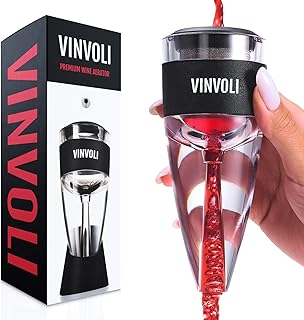
Richer, smoother wine fast—this 3‑in‑1 aerator boosts aroma, softens tannins, filters sediment, and prevents drips. Great for easy nights or gifting. Learn more.
$18.97 on Amazon
View on AmazonBest for drinkers who open bold reds that can taste tight or gritty, and anyone who wants clean, sediment-free pours without fuss. If you host tastings or share a bottle after dinner, the stand makes it easy for guests to use without drips.
We picked it because the 3-stage aeration and filter combo gives you noticeable softening of tannins and a clearer, smoother texture. The sediment filter keeps the last glass as polished as the first. The no-drip stand means you can park it between pours without spotting your counter.
Trade-offs are size and cleanup. It is bulkier than a pourer spout and you will rinse more pieces. Flow is slower than straight from the bottle, so it rewards a patient, steady pour. If you need one-hand service or portability, a spout or electric stick will be faster.
Tip: For very young, grippy reds, run two slow passes to round the edges. For whites, a single, steady pour brightens aromatics without overexposing delicate notes. Rinse the filter right after use and let the stand catch drips while everything air-dries.
4. Wine Aerator Pourer with Sediment Strainer, Stand & Travel Bag
Best portable with filter

1-sec wine upgrade: this pocketable aerator boosts flavor with multi-stage airflow and a sediment filter, plus a vintage look. Great gift—want to see more?
$9.99 on Amazon
View on AmazonBest for anyone who wants a small, giftable aerator that actually does something in the glass. If you often open young reds and also enjoy the occasional bottle that throws sediment, this pocketable pourer hits both needs without taking over your counter.
We picked it because the multi-stage airflow gives that quick, noticeable softening of tannins in a single pass, and the built-in sediment filter helps keep grit out of the glass. The stand keeps it tidy between pours, and the vintage look plus travel bag make it feel like a ready-to-wrap present.
Trade-offs are mild. The filter adds a bit of resistance, so pours are slightly slower, and you still will not match the breadth of a long decant or the push-button consistency of an electric stick. Plan on a fast rinse of the strainer to keep flow snappy.
Tip: for firm reds like Cabernet or Syrah, do two short passes to round the bite and smooth the finish. For aromatic whites, a single gentle pass lifts fruit without flattening freshness. Keep the aerator centered over the glass to avoid splashes, and stand the bottle upright for a few hours if you expect heavy sediment.
5. Stainless Steel Fish Wine Pourer & Aerator
Best conversation starter

Elevate every pour—these stainless steel wine aerators with playful animal spouts smooth tannins and spark conversation. Pick your favorite design.
$29.95 on Amazon
View on AmazonBest for hosts, gifters, and anyone who wants a little theater with their wine. The stainless steel build feels sleek, and the animal spout adds personality without turning into a gimmick. It is a simple way to take the edge off young, grippy reds and keep the vibe light at the table.
We picked it because it strikes that sweet spot between fun and functional. As a pourer spout aerator, it introduces enough air on the way to the glass to round out harsher tannins and open aromas. The stainless steel finish looks sharp and the design options let you pick a spout that matches your style.
Trade-offs are real. This is a pourer spout, so expect moderate aeration rather than the punch you get from a handheld gravity Venturi or an electric stick. If you are tackling very structured reds or bottles with significant sediment, a more aggressive aerator or a decanter will do more.
Tip: pour slowly to maximize contact with air, then give the glass a quick swirl. Try it on everyday reds and on fuller whites to lift aromatics without blowing them out. Rinse right after use to keep the spout spotless, and pick the animal design that makes you smile.
FAQ
Setup and use
Q: Do aerators actually soften tannins, and when will I taste it?
A: Yes. Fast oxygen exposure makes rough tannins feel rounder and lifts aroma. Young, structured reds show the biggest change. You’ll smell it on the first pour and feel a smoother mid-palate after 30 to 90 seconds of contact. If the wine seems thin, you likely over-aerated. Slow the flow or switch to a gentler spout.
Q: What’s the quick way to pick between a pourer spout, handheld Venturi, and an electric stick?
A:
- Pourer spout: drip control, simple, light to moderate aeration. Great for everyday reds and most whites.
- Handheld Venturi: you hold it over the glass; strong aeration for young, tannic reds. Can be splashy and louder.
- Electric stick or pump-top: one-button bubbles and steady flow. Consistent for groups, but needs batteries and careful cleaning.
Cleaning and care
Q: How do I clean these without ruining them?
A: For spouts and handhelds, flush with warm water right after use, then a quick vinegar rinse if needed. Air dry fully. Avoid soap residue that can cling to plastic. For electric units, pump two reservoirs of clean water, keep ports dry, never submerge the motor, and store disassembled to prevent odors.
Buying decisions
Q: Under $20, which type gives the best value for most people?
A: A well-fitted pourer spout with a silicone sleeve. It stops drips, fits most bottles, and gives enough air to relax everyday cab, merlot, syrah, and oaked chardonnay. If you mainly drink young, grippy reds, a basic handheld Venturi under $20 will soften tannins more.
If you want softer tannins and brighter aromas without a full decant, a small aerator or pourer can get you most of the way there. Spouts keep things simple and drip free. Handheld gravity tools hit hard on structure and mouthfeel. Electric sticks make consistency easy when you are pouring for a crowd.
The choice comes down to your wines and your setting. Big, young reds love aggressive air. Delicate whites and older bottles prefer a lighter touch. Start with one style, taste side by side, and dial it in.
You do not need a fancy setup to taste a difference. Even a basic vented spout can lift a muted nose and smooth a lean finish. If you like to tinker, grab a gravity aerator for a single glass or an electric pump when you want push-button repeatability.
Your quick buying checklist
Match the tool to your wine
- Bold, young reds with firm tannins: gravity Venturi or a two-stage spout that mixes plenty of air.
- Medium reds and oaked whites: a controlled spout or low setting on an electric model.
- Aged reds or very aromatic whites: minimal aeration. Use a narrow spout mainly for a clean pour.
Match the tool to the moment
- Weeknight glass or two: simple pourer spout or 5-in-1 stopper with a vent and cap.
- Tasting flights and side-by-sides: handheld gravity aerator for fast, strong impact per glass.
- Dinner parties: electric stick or pump-top spout for consistent results from the first pour to the last.
Control, flow, and foam
- Flow rate: faster is not always better. High flow can over-aerate delicate wines.
- Splashback and drip: look for a tapered, angled lip if you value a spotless tablecloth.
- Noise: pumps can hum. If quiet matters, use a gravity tool or spout.
Build and clean-up
- Materials: food-grade plastic and silicone are fine. Stainless parts add longevity.
- Disassembly: the easier it comes apart, the less old wine you will taste next time.
- Rinse routine: hot water right after use, a mild soak for sticky dessert wines.
Final take and next sips
Simple action plan for tonight
- Pick one bottle you know well, ideally a young red with some grip.
- Pour two small glasses. Aerate only one using your tool of choice.
- Smell both before tasting. Note fruit, oak, and any green edges.
- Taste both. Focus on mid-palate softness, bitterness on the finish, and overall length.
- If the aerated glass is too loose or loses detail, step down to a gentler spout or shorten the exposure.
Edge cases and caveats
- Older vintages can fall apart if hit with too much air. Start with a plain pour and only add a light spout if the nose seems closed.
- Delicate whites and low-tannin reds may benefit more from proper serving temp than from aeration. Chill or warm to range first.
- Sparkling wines are not candidates for aeration. You will strip bubbles and mute texture.
- Natural wines with active sediment can foam or clog. Use a decant-and-pour approach with a filter if needed.
Keep it tasting clean
- Rinse right away. Dried wine in micro-channels will shadow fresh pours with stale aromas.
- Deep clean weekly with warm water and a drop of fragrance-free soap. Rinse until there is zero scent.
- Let parts air dry fully before reassembly. Trapped moisture can add a musty note.
- Store spouts capped to keep dust out. Avoid leaving an electric wand in the bottle between uses.
Decision recap: want maximum softening in a single glass, fast? Go gravity. Want clean, everyday pours with a clear lift in aroma? Get a vented spout. Want repeatable, low-effort pours for guests? Choose an electric stick or pump-top. If sediment control matters, pair any of these with a simple filter over the glass.
Once you taste the before-and-after on your own shelf, you will know exactly how much air your wines like. Start simple, compare, and keep the tool that makes your favorite bottles taste like they cost more.








Leave a Comment