

The Best Smart, Battery‑Heated Vests for Skiing, Work, and Everyday Warmth
First chair on a sub-zero morning. A windswept jobsite. Walking the dog when the wind cuts right through your coat. A good heated vest solves the “cold core” problem instantly—without bulking you up like a marshmallow. This roundup zeroes in on the best smart heated vests and battery‑heated vests you can buy now, with an emphasis on real battery life, heat‑zone coverage, adjustable controls, layering comfort, and whether you can tweak settings from your phone.
Why heated vests matter (and why they’re better than adding a layer)
Heated vests put warmth exactly where you need it—the core. Because your torso stays warm, your body sends more blood to your hands and feet. That means a thinner ski mid‑layer, better dexterity for fishing or photography, and less fatigue when you’re working outside.
Unlike a generic fleece, a battery‑heated vest gives you adjustable, on‑demand heat. Start on high during the lift ride, drop to low while carving, bump back up when you’re standing around. This precision is the difference between “tolerable” and “comfortable” when temps swing throughout the day.
Common use cases: skiing, work, commuting, and camp life
- Skiing and snowboarding: A trim, low‑bulk vest under a shell jacket adds heat without restricting arm movement. Look for even front/back coverage and collar warmth to keep the chill off your neck.
- Outdoor work: Longer runtimes and durable fabrics win. If you stand, walk slowly, or drive equipment, you’ll appreciate high‑zone coverage and a bigger battery on lower power.
- Commuting and errands: Quick preheat and pocket warmth make short winter outings pleasant. A lightweight vest can double as a daily mid‑layer.
- Fishing, camping, and tailgates: Extended, steady warmth matters. Consider larger batteries, easily reachable controls, and zones that heat the lower back and pockets while you’re stationary.
How to shop: battery, heat zones, controls, and fit
- Battery size vs. weight: Capacity (mAh) is the single biggest factor in runtime. Larger packs last longer but add bulk and weight, which can matter under a snug ski jacket or harness.
- Voltage and responsiveness: 7.4V systems typically heat up faster than 5V USB-only setups. The trade‑off is that higher‑voltage packs can be bulkier.
- Heat zone placement: More zones aren’t automatically better. Prioritize front chest, upper/lower back, collar/neck, and hand pockets. Extra zones across the abdomen and lumbar can be great for standing around; for active skiing, balanced front/back warmth avoids overheating.
- Controls and “smart” features: Many vests use a single on‑chest button with three heat levels. Few offer phone apps; if app control is a must, expect to look at higher‑end ecosystems. Otherwise, a good physical button is faster with gloves on.
- Fabric and layering: The ideal heated vest is trim, smooth, and slides under a shell without binding. Look for light insulation and a close fit that still leaves room for a base layer underneath.
- Safety and care: Overheat protection and short‑circuit protection are table stakes. Always remove the battery before washing and follow the garment’s wash/care instructions.
Our selection criteria
To make this list, each vest needed to check most of these boxes:
- Practical battery life on low/medium heat for at least a half day of stop‑and‑go use
- Sensible heat‑zone distribution (front, back, and ideally collar/pockets)
- Straightforward controls you can operate with gloves
- Comfortable, layer‑friendly fit that doesn’t balloon under a jacket
- Reliable materials and stitching with easy battery access
- Clear, adjustable heat levels that actually change output
- Safety features such as overheat protection and auto shutoff behaviors
- Honest value for the performance class (not just a big battery number)
- Bonus: Any form of “smart” convenience (e.g., memory of last setting), though few in this price tier offer full phone apps
Quick comparison: heat levels and runtime expectations
Below are practical, real‑world runtime ranges to help you choose. Runtimes vary with ambient temperature, wind, how many zones you run simultaneously, and how much insulation you wear over the vest. Treat these as helpful estimates, not manufacturer specifications.
Assumptions:
- 3 heat levels (Low/Med/High)
- Typical cycling during active use
- Near‑freezing conditions under a shell
| Product | Batt | mAh | Lvls | Low | Med | High | Zones | App |
|---|---|---|---|---|---|---|---|---|
| Trunera Heated Vest (21 zones) | Yes | 20000 | 3 | 16–25h | 10–16h | 6–10h | 21 | No |
| GYIPFIPA Heated Vest | Yes | 16000 | 3 | 12–20h | 8–12h | 5–8h | 11–17 | No |
| Ravsau Heated Vest | Yes | N/S | 3 | 8–14h | 5–9h | 3–6h | 15 | No |
| Deepoter Heated Vest | Yes | 10000 | 3 | 10–16h | 6–10h | 3–6h | 8 | No |
| Rasfalo Heated Vest | No | Ext | 3 | 10–16h* | 6–10h* | 3–6h* | 15 | No |
| EJVZUO Heated Vest | Yes | 16000 | 3 | 12–20h | 8–12h | 5–8h | Multi | No |
| Trunera Heated Vest (Unisex) | Yes | 20000 | 3 | 16–25h | 10–16h | 6–10h | 21 | No |
1. Trunera Heated Vest — 20,000mAh Battery and 21 Heat Zones for Hiking, Skiing & Work

Price and availability are accurate as of 12/20/2025 07:17 am GMT and are subject to change.
With its 20,000mAh pack and 21 heating zones, this Trunera is built for people who refuse to be cold—ski lift operators, mountain town commuters, anglers, and anyone posted outside for hours. The zone layout targets the usual suspects (front/back core and collar) and extends warmth to areas that feel luxurious when you’re stationary, like pockets and lower back.
Layering under a ski shell is straightforward, though you’ll feel the battery if your waist belt or harness sits on that pocket. The control scheme is traditional—three levels on a single button—so you can bump heat with a quick tap mid‑run. If you want the warmest, longest‑lasting “turn winter into shoulder season” experience, this is the heavy hitter.
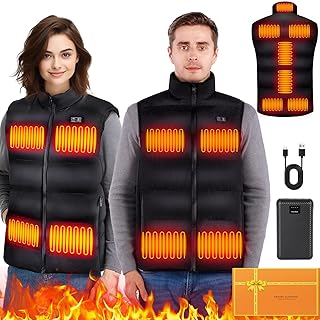
2. GYIPFIPA Men’s Heated Vest — 11–17 Heating Zones, Rechargeable 7.4V 16000mAh Battery
Price and availability are accurate as of 12/20/2025 07:17 am GMT and are subject to change.
A strong middle ground for active days, GYIPFIPA’s 7.4V system gets warm fast and stays consistent in wind or humid chill. Depending on the specific variant, you’re looking at 11–17 zones that favor chest, back, and hand pockets—ideal if your day flips between activity and standing.
The 16,000mAh battery is generous without feeling like a brick. For layering, the vest’s profile works under a softshell or hard shell, with enough room for a base layer. The single-button control won’t win smart‑home points, but in gloves and goggles, simple is good.
3. Ravsau Rechargeable Heated Vest — 15-Zone Warmth with Battery Included

Price and availability are accurate as of 12/20/2025 07:17 am GMT and are subject to change.
Ravsau aims for balance: ample coverage (15 zones) and a light, layer‑friendly build. It makes sense for skiers who want consistent front/back warmth with some pocket heat, but who also value freedom of movement. The included battery keeps the value proposition strong; figure on several hours at medium with periodic bumps to high for chairlifts or chilly breaks.
Because the exact pack size isn’t specified, treat this as a practical, mid‑range option. If your days run long in sub‑freezing wind, consider carrying a second power bank.
4. Deepoter 7.4V Heated Vest for Men — 8-Zone Heat, 3 Temp Levels, 10,000mAh Battery

Price and availability are accurate as of 12/20/2025 07:17 am GMT and are subject to change.
Deepoter’s 8‑zone approach is tailored for movement. If you run hot on climbs, tour, or shovel the driveway in intervals, fewer but well‑placed zones (front and back core) can actually feel better than blanket coverage. The 10,000mAh, 7.4V battery keeps weight down and still delivers quick heat when you need it.
For lift‑served skiing, plan on medium most of the day and quick bursts to high during stops. If you’ll be mostly standing, bring a second 10k bank or step up to a higher‑capacity model on this list.
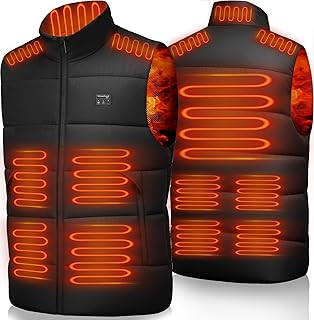
5. Rasfalo Heated Vest — Lightweight Rechargeable Vest with 15 Heating Zones (battery pack not included)
Price and availability are accurate as of 12/20/2025 07:18 am GMT and are subject to change.
If you already own a good USB power bank (or prefer picking your own capacity), Rasfalo’s BYOB approach makes sense. The 15‑zone map delivers the coverage most people want for winter errands, dog walks, or moderate activity on the mountain. With a 10,000mAh bank, expect a half day on medium with bursts on high; a 20,000mAh pack pushes toward full‑day comfort—at the cost of extra weight.
The value play is strong here, especially for layering‑first users who want a slim silhouette and straightforward controls.
6. EJVZUO Heated Vest with 16000mAh Battery — Warmth for Skiing, Work, Fishing & Camping

Price and availability are accurate as of 12/20/2025 07:18 am GMT and are subject to change.
EJVZUO positions itself as a versatile, go‑anywhere heated vest. The included 16,000mAh battery is a practical choice: long enough for most active days on low/medium without the heft of a 20k pack. While the listing doesn’t spell out the exact number of zones, it targets the usual core areas, which is what you want for skiing, job sites, and camp chores.
If you’re standing for hours, stick to low and top with a wind‑blocking shell to stretch runtime. For mixed activity, medium often strikes the perfect balance.
7. Trunera Heated Vest with 20,000mAh Battery and 21 Heating Zones (Unisex)

Stay cozy anywhere: 21-zone heated vest with 3 temps, 4-zone controls and a 20,000mAh battery for up to 13 hrs—washable & safety‑smart.
$45.99 on Amazon
View on AmazonPrice and availability are accurate as of 01/27/2026 09:32 pm GMT and are subject to change.
This unisex Trunera mirrors the first pick’s “no‑compromise warmth” formula, adding broader fit appeal. The 21‑zone array caters to people who want heat everywhere: chest, back, neck, and around the torso. With a 20k battery, it’s confidently “all day” on low to medium, and a savior for bitter mornings, slow lifts, or any situation where you’re chilled but stationary.
For layering under a fitted ski shell, double‑check sizing and leave a little room—this is a lot of heat and a sizable battery.
FAQ
- Do any of these heated vests have a phone app for control?
- In this roundup, no—these models use on‑vest buttons with three levels. If phone control is essential, look to premium systems from specialty outdoor brands. That said, physical buttons are faster with gloves, and most users prefer the simplicity.
- How do I pick the right battery size?
- Match capacity to your day. For skiing or active use, 10,000–16,000mAh is a great balance of weight and runtime. For stationary work or all‑day tailgates, 16,000–20,000mAh makes sense. Remember: larger packs are bulkier—especially if your jacket or harness sits over the battery pocket.
- More heating zones sound better—are they always?
- Not necessarily. Extra zones feel amazing when you’re standing around (pockets and lower back warmth are real comforts), but they consume more power on high. For active pursuits, a balanced front/back core map with collar warmth is often ideal. Choose coverage that matches your activity level.
- Can I fly with these batteries?
- Yes, in carry‑on, subject to airline rules. Lithium‑ion batteries must be carried on (not checked), and very high‑capacity packs may have watt‑hour limits. Check your battery label and your airline’s policy before traveling.
- How should I layer a heated vest for skiing?
- Keep it simple: wicking base layer, heated vest, breathable shell (soft or hard). Use the shell to block wind and boost runtime, and adjust vest heat instead of adding bulk. Start on medium, drop to low once you’re moving, and reserve high for chairlifts and long stops.
The Warm Takeaway: Which Heated Vest Is “Best” For You?
- Long, cold, mostly‑static days: Choose maximum coverage and battery. Trunera’s 20,000mAh, 21‑zone vests (both versions on this list) are the “never be cold again” picks.
- All‑day versatility without brick‑level weight: GYIPFIPA and EJVZUO, with 16,000mAh packs, strike a savvy balance for mixed activity—work, skiing, errands, and camp life.
- Lightweight layering for active skiing: Deepoter’s 7.4V, 8‑zone design keeps your core warm without overcooking, and it slides under trim shells easily.
- Budget‑friendly flexibility (you choose the battery): Rasfalo gives you 15 zones and lets you pick the power bank that fits your needs and budget.
Final tip: Match battery size and zone coverage to your day, not the spec sheet. A trim vest on low under a windproof shell often beats a blazing furnace set to high. When your core is quietly, consistently warm, winter just turns into another season to enjoy.






Leave a Comment