

The Best Inversion Tables for Back Pain and Sciatica: Expert Picks for Safety, Comfort, and Results
If tying your shoes or getting out of a car has turned into a negotiation with your back, inversion therapy can feel like relief you can control. The right inversion table gently decompresses the spine, eases nerve irritation from sciatica, and gives tight muscles a reason to let go. The wrong one? It can be uncomfortable, awkward to use, or simply unsafe. This expert guide cuts through the noise so you can choose confidently.
Why Inversion Therapy Matters (and Where It Fits)
Back pain has many causes—muscle strain, herniated discs, facet joint irritation, spinal stenosis, even simple postural fatigue. Inversion therapy uses gravity-assisted traction to create space between vertebrae, reduce pressure on discs and nerve roots, and stretch surrounding muscles. For some, that means less sciatica pain down the leg, fewer spasms, and better mobility.
It’s not magic, and it’s not for everyone. But when performed correctly, short, shallow sessions on a well-built inversion table can complement physical therapy, mobility work, and strength training. Many users find it particularly helpful after long sitting days or following exercise when muscles are warm.
Consistency matters more than intensity. Regular, brief sessions at mild angles often deliver better results than occasional, fully inverted sessions. The table you choose should make that consistency effortless and safe.
How to Shop: Features That Actually Matter
Not all inversion tables are created equal. Here’s what separates the best from the rest:
- Safety first: You want rock-solid stability, quality welds/fasteners, non-slip feet, and a trustworthy ankle locking system. Controlled inversion and easy returns to upright are essential.
- Ankle comfort and the “entry experience”: An easy-reach ankle lock eliminates the need to bend down, which is crucial if you already have back pain or limited mobility. Comfortable ankle supports (and the ability to micro-adjust) reduce pressure points.
- Decompression surface and traction helpers: Flexing backrests, lumbar bridges, and traction handles help you fine-tune decompression without needing extreme angles.
- Weight capacity and user size range: Most consumer tables support up to around 300 lb and a broad height range. Verify the rating and fit before buying—especially if you need a heavy-duty solution.
- Angle control: A multi-position pin system or a calibrated strap helps you set repeatable, safe angles.
- Assembly and storage: Pre-assembled components save time and reduce assembly error. Consider whether the table folds and whether you have floor space for a stable base.
- Extras that support relaxation: Heat and massage features can loosen tight muscles and make traction more effective at milder angles.
What to Know Before You Buy: Safety, Contraindications, and Use
Inversion changes blood pressure, intraocular pressure, and demands on the cardiovascular system. It can also stress vulnerable tissues if used improperly. Speak with a qualified healthcare professional before using an inversion table, especially if you have any of the following:
- Uncontrolled high blood pressure, heart disease, glaucoma, retinal issues, or a history of stroke
- Osteoporosis, spinal fractures, recent surgery, hip/knee replacements, or spinal implants
- Hernias (including hiatal), severe obesity, or pregnancy
How to use safely:
- Start shallow: 20–30 degrees for 30–60 seconds, then build gradually. Many people find 3–5 minutes at a mild angle is plenty.
- Use traction handles and breathe: Gentle, rhythmic breathing and light pulls on traction handles can boost decompression without going deeper.
- Come up slowly: Pause near horizontal before returning fully upright to avoid dizziness.
- Check your environment: Level floor, anti-slip mat, no obstacles, and a spotter for your first sessions.
- Inspect regularly: Test ankle locks, pins, and bolts periodically; replace worn parts promptly.
Our Selection Criteria
We only recommend models that meet high standards for:
- Structural stability and safety features
- Reliable ankle-lock systems (with preference for easy-reach mechanisms)
- Effective decompression design (traction handles, lumbar support, bed design)
- Clear angle control and predictable rotation
- Reasonable assembly demands and clear instructions
- Positive user feedback on comfort, build quality, and long-term durability
- Weight capacity transparency and suitability for a broad range of users
Below are the top picks—including two standout Teeter inversion tables, two strong Innova options with heat/massage, and one smart accessory to protect your investment.
1. Teeter FitSpine X3 — The Best All-Around Inversion Table for Back Pain and Sciatica

Price and availability are accurate as of 12/22/2025 09:02 am GMT and are subject to change.
Teeter has long been the benchmark for safe, effective inversion, and the FitSpine X3 shows why. The Easy-Reach ankle lock matters: it lets you secure your ankles without a deep forward bend—huge when your lower back is sensitive. The flexible, floating backrest encourages natural spinal movement, while traction handles help you intensify decompression without going to extreme angles. That combination often makes the X3 the best inversion table for sciatica because you can dial in traction where you need it while staying comfortable.
The X3’s rotation is smooth and predictable, which is key for first-time users. Setup is more straightforward than most tables thanks to partial pre-assembly, and the fit/finish feels premium. It’s FDA-Registered for conditions such as back pain and sciatica, a confidence boost that’s rare in this category. If you’re seeking daily relief with a focus on safety and comfort—not gimmicks—this is the clear, expert-approved pick.
2. Teeter FitSpine LX9 — Premium, Heavy-Duty Feel With Best-in-Class Ergonomics

Price and availability are accurate as of 12/22/2025 09:02 am GMT and are subject to change.
If you want the most confidence-inspiring Teeter experience, the FitSpine LX9 is the polished upgrade. It retains the Easy-Reach ankle lock and flexible decompression surface, adding extra handholds and clever ergonomics that make mounting, inverting, and returning upright even more controlled. The result is a heavy-duty feel that inspires trust, especially if you’ll be using the table multiple times daily or sharing it with family members.
As a premium Teeter inversion table, the LX9 excels at precision: angle control is repeatable, rotation is smooth, and the frame feels immovable under load. That’s exactly what you want when decompressing a cranky lower back or calming nerve irritation from a herniated disc. It is bulkier and heavier than the X3, and the weight rating is similar, but for those who value maximum stability and ease-of-use, the LX9 is a standout.
3. Zippered Waterproof Cover for Inversion Tables — Essential Protection for Dust and Moisture

Price and availability are accurate as of 12/22/2025 09:03 am GMT and are subject to change.
If your inversion table lives in a garage, basement, or shared space, protection matters. This zippered waterproof cover is a small investment that pays off in longevity. It helps keep the backrest surface clean, the ankle system dust-free, and metal components protected from humidity—especially important if you sweat during sessions or live in a damp climate.
While a universal fit is convenient, measure your table to ensure compatibility. For most owners, though, this cover reduces maintenance, keeps fabric and bearings cleaner, and protects your investment so you get consistent, safe performance every time you invert.
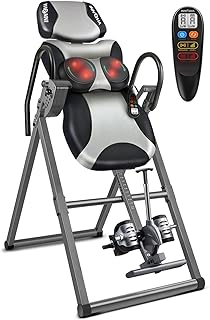
4. Innova ITM5000 Inversion Table with Heat & Shiatsu Massage — Best Value for Muscle Relaxation
Price and availability are accurate as of 12/22/2025 09:03 am GMT and are subject to change.
For tight, guarded muscles, heat and massage can make the difference between tolerating inversion and truly benefiting from it. The Innova ITM5000 blends those features with a stable frame and straightforward angle control. Warm tissues often respond better to traction, so you may get effective decompression at gentler angles—useful if you’re cautious about inverting deeply.
Expect more bolts and steps during assembly compared with Teeter’s partially pre-assembled design. Also, ankle support is serviceable but not as plush or adjustable as the Easy-Reach systems. Most Innova tables in this class are typically rated around 300 lb, but confirm the exact capacity and height range on the model you purchase. If you want heat/massage for less than premium pricing, the ITM5000 hits a sweet spot.
5. Innova Advanced Heat & Massage Inversion Table — Extra Coverage for Stiff Backs and Hamstrings

Price and availability are accurate as of 12/22/2025 09:03 am GMT and are subject to change.
When muscle tone is the main limiter—think stiff hamstrings tugging on the pelvis or paraspinal tightness—the Innova Advanced Heat & Massage model can help you unwind before traction. Its expanded massage pad and heat zones cover more of the back, encouraging relaxation and making it easier to get useful decompression without going fully inverted.
Angle control is simple and consistent, which supports safer progressions. On the flip side, expect a more traditional ankle-lock experience without the long-handle ratchet of high-end tables, and be prepared for a more involved assembly. As with other Innova models, verify weight capacity and size range against your needs. For blended heat/massage with broad coverage, this is a compelling option.
FAQ
- Is inversion therapy safe for herniated discs and sciatica?
- It can be, when cleared by your clinician and done conservatively. Mild angles (20–30 degrees) for short durations often help reduce nerve root pressure and ease sciatica symptoms. Stop if pain worsens or numbness increases.
- How long and how often should I invert?
- Start with 30–60 seconds at a shallow angle and build up to 3–5 minutes, 1–2 times per day. Many users find short, frequent sessions more effective than occasional longer ones.
- What angle works best for sciatica?
- Many people get relief at mild to moderate angles (20–45 degrees). Traction handles let you “pulse” gentle decompression without needing full inversion, which can be more comfortable and sustainable.
- What safety certifications or features should I prioritize?
- Look for robust frames, stable bases, secure ankle systems (ideally with easy-reach locking), reliable angle control, and predictable rotation. Partial pre-assembly reduces the risk of user assembly errors. FDA registration on select models (like Teeter) supports medical-use positioning.
- Are inversion tables suitable for seniors?
- With medical clearance and conservative use, yes—but prioritize easy-reach ankle locks, stable frames, and minimal angles. Always rise slowly to avoid dizziness, and consider a spotter initially.
Final Word: Choose With Your Back in Mind, Not Your Ego
The best inversion table is the one you’ll use consistently, safely, and comfortably. Here’s how our picks line up:
- Best overall for back pain and sciatica relief: Teeter FitSpine X3. Safe, smooth, and comfortable with traction aids that make shallow angles effective.
- Premium/heavy-duty feel with top ergonomics: Teeter FitSpine LX9. Extra handholds, refined design, and a confidence-inspiring frame for frequent users.
- Best value with heat and massage: Innova ITM5000. Solid decompression support with heat/shiatsu to relax muscles before traction.
- Best for full-back tension: Innova Advanced Heat & Massage. Extended heat/massage coverage helps tight backs tolerate inversion at gentler angles.
- Must-have accessory: Zippered Waterproof Cover. Protects your investment so it stays smooth, clean, and reliable.
If you’re aiming for the best inversion table for sciatica, start with the Teeter FitSpine X3 or LX9 for their controlled rotation, traction handles, and ergonomic ankle systems. Prefer warmth and vibration to ease into traction? The Innova models deliver strong value. Whichever you choose, get medical clearance, start shallow and short, and let consistency—not depth—do the heavy lifting for your back.








Leave a Comment