

Best Paintless Dent Repair Suction Cup Pullers for Auto Body: Fast, Paint-Safe Fixes That Actually Work
A parking lot door ding. A mystery divot on the hood. That heart-sinking moment doesn’t have to lead to a shop visit. With a well-made suction cup puller or a bridge-style PDR tool, you can often restore a panel’s shape in minutes—without touching the paint. Below, we break down the best options for different dent sizes, panel materials, and skill levels, plus how to use them without risking your finish.
Why suction-cup PDR belongs in your toolkit
Suction dent pullers shine on shallow, broad dents where the paint isn’t cracked and the metal isn’t sharply creased. They rely on paint-safe rubber pads to create vacuum grip, then pull outward to “reset” the panel. When used with heat and a clean, dry panel, they can be surprisingly effective on door dings, hood dips, and light bumper impressions.
They’re also versatile. The same heavy-duty cup that pops a ding can move glass, tiles, and appliances. For everyday DIYers, that versatility means real value—and less waiting for an appointment.
When suction works, and when a bridge puller or slide hammer is better
Suction cups need smooth, flat, non-porous surfaces larger than the cup itself. A mild, bowl-shaped dent on a door skin? Perfect. A tight crease along a body line or a sharp hail strike? That’s where suction often struggles.
Bridge pullers (glue tabs pulled via a “bridge” frame) excel on medium dents where you need controlled, centered pulling without yanking a large area at once. They concentrate force at the glue tab and let you fine-tune tension—great for dents that are too focused for a big suction cup.
Slide hammers provide raw pulling power for stubborn, severe damage. They’re typically not paintless by default and often require studs, screws, or hooked access. Use them when metal needs serious persuasion and repainting is likely anyway.
How to choose a dent puller that won’t harm your paint
- Match the tool to the dent.
- Suction cups: shallow, wide dings on clean, flat paint.
- Bridge pullers with glue tabs: mid-sized, more concentrated dents.
- T-bars/slide hammers: larger or more stubborn damage.
- Size and suction rating matter. Larger cups and higher horizontal suction help on broad areas; vertical ratings matter for lifting heavy objects but are less relevant for denting.
- Rubber quality counts. Soft, high-grip rubber pads paired with reinforced handles reduce paint risk and improve hold.
- Panel prep is everything. Clean, dry, warmed panels hold suction and glue better. Cold or dusty panels don’t.
- Avoid repainted/filler areas. Glue-pulling and aggressive treatments can lift weak paint.
- Practice control. Gentle, incremental pulls beat one big yank, especially around body lines.
Our selection criteria
- Proven paint safety: quality rubber pads and paintless techniques.
- Pulling performance: realistic suction ratings, grip consistency, and control.
- Dent-size coverage: from small door dings to broader, shallow depressions; plus options that handle medium/large dents.
- Build quality: sturdy handles, metal cores, and durable materials that won’t twist or crack under load.
- Ease of use: clear setup, reliable locking mechanisms, and designs that help beginners succeed.
- Versatility: bonus capabilities for glass, tile, appliances, or pro-level add-ons like bridge pullers and LED boards.
1. 3-Pack Suction Cup Dent Puller Kit for Cars, Screens & Tiles (Orange/Yellow/Black)

Portable 3-size dent puller kit with strong paint-safe suction, buffing cloths included—fix dents, lift glass or hold phones. Quick, easy DIY. Ready to try?
$15.99 on Amazon
View on AmazonPrice and availability are accurate as of 01/30/2026 11:00 pm GMT and are subject to change.
If you want a straightforward suction solution for door dings and shallow, bowl-shaped dents, this three-cup kit checks the right boxes. The large 4.5-inch puller gives you enough surface area to grip most door and hood panels, while the smaller 2.2-inch cups help fine-tune high spots after the main pull. The paint-safe rubber pad forms a clean seal and won’t scratch when used on clean, dry OEM paint.
Follow the included guidance—clean, dry, and warm the panel—and work in controlled increments. For broad, soft dents, start with the large cup and pull horizontally, not at an angle. For shallow ripples near a contour, use a smaller cup to avoid over-pulling. If a dent sits on a tight crease, step up to a bridge-style puller instead; suction alone typically can’t reshape sharp lines without creating highs.
2. 3-Pack Suction Cup Dent Pullers — Powerful Car Dent Removal Kit (Yellow/Black)

Dents, tiles or glass—this 3-piece suction kit packs up to 130 lbs pull, gentle rubber pads, and a sturdy ABS handle—perfect for quick, paint-safe DIY repairs.
$13.99 on Amazon
View on AmazonPrice and availability are accurate as of 01/30/2026 11:00 pm GMT and are subject to change.
If you’re chasing maximum grip from a compact suction kit, this set brings one of the stronger published suction ratings among small-format options. The large cup helps you tackle shallow fender or door panel dents, while the two smaller cups are helpful for finishing. The soft rubber pad and solid handle instill confidence, especially when you need a firm, centered pull.
Treat this like a precision tool, not a winch. Warm the area (hot water works), ensure the cup sits perfectly flat, and pull in short, controlled motions. If you feel the panel “oil-can,” stop and reassess; sometimes a couple of smaller, progressive pulls yield a flatter finish than one big tug. For focused, mid-sized dents—too tight for a big cup—consider a bridge puller for finer control.
3. Super PDR 198PCS Paintless Dent Repair Kit with Steel Rods, Whale-Tail Tools & LED Inspection Light

Fix dents at home without repainting—durable alloy rods, LED line board for precise spotting, plus glue gun and tabs. Easy for beginners.
$199.00 on Amazon
View on AmazonPrice and availability are accurate as of 01/30/2026 11:01 pm GMT and are subject to change.
This is the “all-in” route if you want shop-style PDR at home. It covers the full spectrum: a black lifter for tiny door dings, a bridge puller for medium dents where suction cups struggle, and a T-bar for larger, shallow depressions. The included rods (including whale-tail profiles) let you massage metal from behind when there’s access, which is the gold standard for paintless accuracy.
The bridge puller deserves special attention. By gluing a tab to the dent center and drawing it upward through the bridge, you can micro-adjust tension to match the dent’s resistance—precisely what you need for medium dents that would otherwise over-pull with a large suction cup. The LED line board dramatically improves panel reading so you don’t chase highs and lows blindly.
Important caveats: avoid repainted or filler-laden panels, as glue tabs can lift weak finishes. Work warm and clean; keep high-concentration alcohol on hand for clean tab release. Expect a learning curve, but the control and finish quality can be outstanding once you get the feel.
4. Eastwood 17-Piece 14-lb Slide Hammer Dent Puller Kit
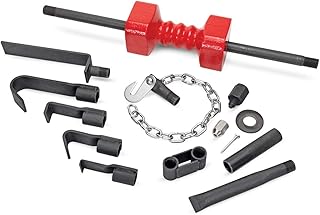
Heavy-duty 17-piece, 14 lb slide hammer kit—solid cast-iron weight, quick-change 7/8-14 threads, versatile hooks and case. Perfect for DIY or pros. Learn more.
$179.99 on Amazon
View on AmazonPrice and availability are accurate as of 01/30/2026 11:01 pm GMT and are subject to change.
When suction and bridge pullers aren’t enough—think sharp creases, pinches, or thick-gauge areas—a slide hammer brings the brute force to move metal. This 14-pound kit includes a range of hooks and attachments and uses standard 7/8-14 threads for compatibility with other accessories. It’s ideal for pulling where you have mechanical purchase, like inner edges, holes, or add-on adapters.
Note that slide hammer work is usually not paintless. You may pair it with stud-welding or screw-in adapters (not included) to gain a solid hook point, which typically means refinishing afterward. The payoff is leverage and momentum for damage that lighter PDR approaches can’t budge. If your goal is “perfectly paintless,” use this only as a last resort; otherwise, it’s a solid DIY/pro tool for heavier straightening.
5. 4.7-inch Car Dent Puller Kit with Suction Cup for Easy Auto Body Repair
For budget-friendly power, this kit claims the highest suction in the roundup, making it a great fit for wide, shallow dings that need a confident initial pull. The larger cup is the go-to for general use, while the smaller ones let you address localized low spots. The spring-lock handle is quick to set, and the rubber pad is designed to grip without marring OEM paint when the surface is properly prepped.
Treat high suction as a tool for stability, not an excuse to yank. As with any suction puller, warm the panel first, confirm a full seal, and work in increments. If the dent sits near a body line or has a crease, you’ll get better results with a bridge puller (glue tab) or, for severe damage, a more forceful method.
FAQ
- Will a suction cup dent puller damage my paint?
- On clean, dry, OEM paint with a soft rubber pad, suction cups are designed to be paint-safe. Damage risk rises on repainted or cracked finishes, or if dirt is trapped under the cup. Always prep the surface and avoid aggressive, angled pulls.
- Suction cup vs. bridge puller: which should I use?
- Use suction cups for broad, shallow dents on flat, smooth panels. Use a bridge puller (with glue tabs) for focused, medium dents where you need controlled, incremental tension. Bridge pullers excel when a large cup can’t sit flat or risks over-pulling.
- Can these tools fix dents on plastic bumpers?
- Sometimes. Smooth, painted bumpers with shallow impressions respond best—especially when warmed. Textured or unpainted plastic doesn’t seal well for suction or hold glue reliably. Deep creases in plastic are hard to correct without heat-shaping.
- How big of a dent can I fix at home?
- Shallow, plate-sized dents often respond to larger suction cups. Medium dents that are more concentrated typically need a bridge puller. Sharp creases, stretched metal, or complex body lines may require professional PDR with rods—or repainting after slide-hammer work.
- Why do kits recommend hot water or heat?
- Warmth makes paint and metal more compliant, helps rubber and glue adhere, and reduces the risk of chipping on cold, brittle finishes. In cold weather, warm the panel before pulling for better results and safer paint interaction.
From Door Ding to Ding-Gone: What to Buy and When
- Best simple suction kit for everyday dings: The 3-Pack Suction Cup Dent Puller Kit (Orange/Yellow/Black) balances paint-safe pads with three useful sizes and easy operation—great for common door and hood dents on smooth panels.
- Strongest suction for stubborn shallow dents: The 3-Pack Powerful Car Dent Removal Kit (Yellow/Black) brings higher stated suction for stable pulls. It’s a smart pick for thicker panels or when you want maximum grip from a compact set.
- Best for precision and full control (bridge puller included): The Super PDR 198PCS Kit adds a bridge puller, lifter, T-bar, rods, and an LED line board. Choose this if you want pro-style control for small to large dents while keeping repairs paintless.
- Heavy-duty option when metal really needs to move: The Eastwood 14-lb Slide Hammer Kit is your tool for severe, stubborn damage—but plan on refinishing afterward. It’s the right call when suction and bridge pullers aren’t enough.
- Budget-friendly high-suction bundle: The 4.7-inch Car Dent Puller Kit delivers one of the strongest advertised grips with a quick-lock handle. Ideal for wide, shallow dents on flat panels, as long as you prep properly.
Final tip: Start gentle and stay patient. Whether you’re using a suction cup or a bridge puller, small, incremental pulls on a warm, clean panel consistently outperform one giant tug. If the dent sits on a sharp crease or the paint is compromised, pivot to the right tool—or the right pro—before the panel pays the price.








Leave a Comment