

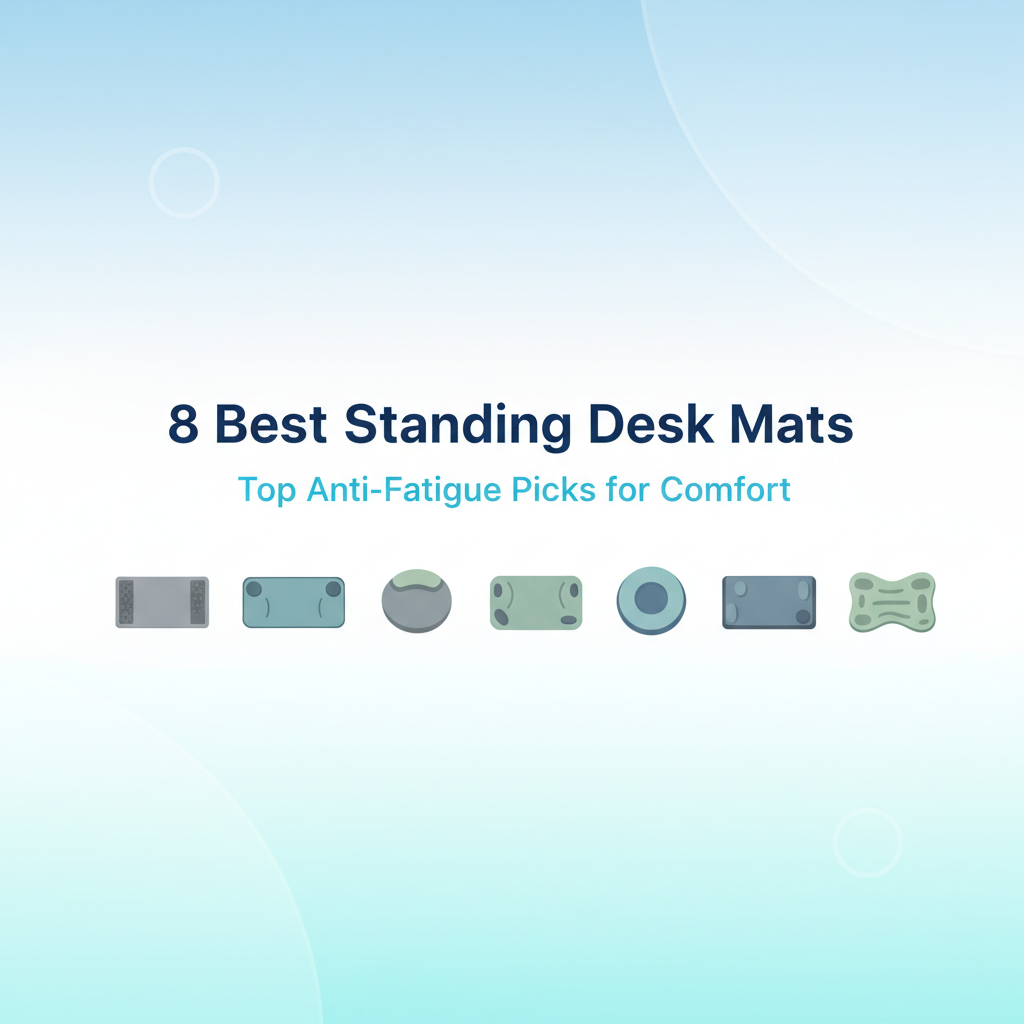
The 6 Best Anti-Fatigue Mats for Standing Desks (Comfort, Thickness, and Real-World Stability)
Standing more is great—until your feet, knees, and lower back protest. A proper standing desk comfort mat turns hard floors into a forgiving surface, encouraging micro‑movements that reduce strain and keep you productive longer.
Below, we unpack what matters (thickness, foam density, and surface texture), how to match a mat to your floor type (concrete vs. carpet), and the top picks worth your attention.
Why Anti-Fatigue Mats Matter for Stand-Up Work
Standing on a hard surface compresses the fat pads in your feet and transmits force up the kinetic chain. Anti-fatigue mats disperse load and cushion impact so your muscles do more “light work” and less guarding. The result: fewer pressure hot spots, less joint irritation, and better comfort over long sessions.
At a standing desk, that comfort translates to practical benefits—more time on your feet, more gentle posture changes, and less temptation to slump in a chair. If you’ve tried standing without a mat and gave up, the right mat can be the difference between a novelty and a healthy habit.
Match Your Mat to Your Floor: Concrete vs. Carpet
- Concrete, tile, and hardwood: You’ll feel every ounce of your body weight through hard floors. Opt for thicker (3/4″–1″) and higher-density cores. Polyurethane (PU) is known for springy resilience; memory foam gives a cushier, slower-rebound feel. Textured top layers add traction if you work in socks.
- Low-pile carpet: A mat can still help, but grip matters. Choose a model with a stable, high-friction backing and a wider footprint. If the mat wiggles, add a thin grippy underlay or reposition to a firmer area.
- High-pile or plush carpet: Stability is tougher here; a larger runner spreads pressure better. Consider mats with beveled edges and firmer cores to resist “sway.”
Pro tip: No anti-fatigue mat is truly “non-slip” on wet or dusty floors. Keep both floor and mat bottom clean and dry.
What Thickness and Density Actually Do
- Thickness (at least 3/4″ is ideal): More depth reduces peak pressure on heels and forefoot. For concrete, 1″ often feels notably better across a full workday.
- Density: Density determines whether a mat bottoms out. High-density PU tends to feel buoyant and resilient; memory foam feels plush and cradling but may deflect more under heavier users. Thickness without density can feel marshy; density without adequate thickness can feel hard—balance is key.
Surface Texture and Edge Design
- Top texture: Smooth “leather-look” PVC is easy to wipe; fine texture increases grip if you stand in socks. Wood-grain finishes add friction and style.
- Beveled edges: Reduce trip risk and make it easier to step on/off. A progressive ramp profile is best for busy spaces.
- Balance vs. standing mats: Balance boards engage ankles and core; standing mats prioritize cushioning. If you’re on calls all day, a pure standing mat is easier to live on.
Our Selection Criteria
We considered mats specifically for standing desk use across home and office settings, prioritizing:
- Thickness: 3/4″ minimum; several 9/10″–1″ picks for concrete and long sessions.
- Foam density and core composition: High-resilience PU or high-density memory foam that resists bottoming out over time.
- Top surface: Wipe-clean, stain-resistant, with traction that works for socks or shoes.
- Safety: Non-slip backing, beveled edges, and stable performance on common floors; certification callouts where provided.
- Size and shape: 20″ x 32″ for focused stations and long runners for dynamic work zones.
- Durability and maintenance: Waterproof or water-resistant skins that resist creasing and are easy to clean.
- Real-world fit: Suitability for concrete vs. carpet, kitchen-to-office versatility, and how the mat ships (flat vs. rolled).
1. StepRite 1″ Thick Anti-Fatigue Waterproof Mat — Max Cushion for Hard Floors
A full 1-inch profile sets the StepRite apart when you’re standing on concrete or tile. The high-comfort core eases pressure through feet, knees, and lower back, making it a strong choice for long work blocks where hard floors would otherwise win. The non-slip backing is at home on wood, ceramic, or marble, and the stain-resistant top surface simplifies cleanup.
This mat shines in compact desk zones, laundry rooms, and workshops where you need serious cushion in a manageable size. If you prefer a firmer, springier feel, a slightly thinner, higher-density mat may suit you better. For users who value plush comfort above all, this is a compelling pick.
2. ComfiLife Anti-Fatigue Mat — Balanced 3/4″ Memory Foam for Office Use

Plush 3/4‑inch memory foam mat eases foot, knee and back strain. Non‑slip, stain‑resistant—great for kitchens, standing desks, or busy workspaces.
$49.99 on Amazon
ComfiLife’s 3/4″ core is the classic standing desk sweet spot: thick enough to matter, dense enough to avoid that “marshy” sensation. It’s a comfortable daily driver for kitchen-to-office use, with a surface that wipes down quickly. If you split time between standing and sitting, this size tucks neatly under most desks without becoming a trip hazard.
The memory foam character is plush and pressure-relieving, ideal if your feet run sensitive or you work barefoot/sock-footed. On carpet, check stability; a wider mat or grippy underlay can help. If you want a more buoyant, springy feel, consider a PU-forward core.
3. Ophanie 3/4″ Anti-Fatigue Mat — Stable, Certified, and Flat-Packed

Cushiony 0.75-inch foam mat eases foot, leg & back fatigue. Durable PVC top, slip-resistant edge—perfect for kitchens, standing desks, or long shifts.
$39.99 on Amazon
Ophanie pairs a high-density PU recycled foam core with a textured PVC “leather” surface and a progressive bevel for safer on/off steps—great in tight offices. Being flat-packed is a sleeper perk: the mat lays perfectly right out of the box, eliminating curl-induced trips and uneven edges.
The core feels stable and supportive rather than spongy, which many office users prefer for typing posture and balance. Use it on clean, dry floors to maximize traction. If you stand barefoot or want a softer sink, a 9/10″–1″ mat might feel more luxurious; if you value stability and easy setup, this is a standout.
4. 24″ x 60″ Anti-Fatigue Waterproof Runner — Full-Width Coverage for Active Desks
If you move while you work—rock from foot to foot, step laterally, or pace a little—this runner gives you room to do it. The 3/4″ PU core stays resilient, cushioning long hours without feeling unstable, and the textured top provides dependable traction for shoes or socks.
This is also a smart choice over low-pile carpet where a wider base improves stability. The trade-offs are space and portability: it’s not the mat to stash under a desk between meetings. For static, narrow setups, a smaller mat is simpler. For dynamic work styles or long workbenches, this runner is the right tool.
5. Extra-Thick Memory Foam Anti-Fatigue Mat (20″ x 32″) — Plush 23mm Cushioning
With nearly an inch of cushioned depth, this mat brings serious relief underfoot, especially on hard floors or concrete. It’s an easy pick if you stand in socks or bare feet and want a mat that feels notably softer than typical office offerings. The waterproof surface simplifies upkeep in kitchens, craft rooms, or busy home offices.
Note the manufacturer’s tip: let the mat air out flat in a ventilated area if creases or a slight odor appear after transport. If you prefer a stable, firmer feel for typing posture, consider a denser 3/4″ mat. For pure comfort in a compact footprint, this one delivers.
6. UKISS Extra-Thick Anti-Fatigue Mat (20″ x 32″) — Safety-Focused, Beveled, and Cushioned
UKISS centers comfort and safety: a generously thick core, beveled perimeter to reduce trips, and a grippy backing for stable footing. It’s a strong fit for mixed environments—kitchen, laundry, cashier station, or a standing desk—where you want forgiving support and clean edges that won’t catch your shoes.
The memory foam feel is cushy and joint-friendly, particularly on hard floors. On carpet, evaluate stability and consider a larger mat if you shift your stance frequently. If you want more bounce and faster recovery, a PU-forward mat may feel livelier; for padded comfort with thoughtful safety features, UKISS is compelling.
FAQ
- How thick should a standing desk mat be?
- Aim for at least 3/4″. If you’re on concrete or stand for hours at a time, 9/10″ to 1″ adds noticeable relief. Thickness should be paired with a dense core so you don’t bottom out.
- What’s the difference between memory foam and polyurethane cores?
- Memory foam is plush and cradling—excellent pressure relief but softer under load. Polyurethane (PU) tends to be denser and more resilient, with a “springy” feel that many office users prefer for stability.
- Are these mats safe on carpet?
- Yes, but traction varies. On low-pile carpet, a wider mat improves stability. On plush carpet, mats can shift; look for high-friction backings and consider a thin grippy underlay if needed.
- How do I keep my mat from slipping?
- Keep both the floor and mat underside clean and dry. Dust and moisture reduce friction. Be mindful that even “non-slip” designs are less effective on wet surfaces.
- How do I clean and maintain an anti-fatigue mat?
- Wipe the surface with a damp cloth and mild soap as needed. Avoid harsh solvents. Store flat or hang; if shipped rolled, allow time to relax. Keep away from sharp edges and high-heat sources.
Stand Longer, Hurt Less: Final Picks and Pairings
- Maximum plush on hard floors: StepRite 1″ Thick Anti-Fatigue Mat (deep cushioning for concrete and tile) or the Extra-Thick 23mm Memory Foam Mat if you prefer a softer, cradling feel.
- Stable, balanced office comfort: ComfiLife 3/4″ Anti-Fatigue Mat hits the density/comfort sweet spot for daily desk work without feeling wobbly.
- Safety-first and ready to use: Ophanie 3/4″ Anti-Fatigue Mat ships flat and adds certified materials, a textured top, and a progressive bevel for confident footing.
- For active work zones or carpet coverage: The 24″ x 60″ Anti-Fatigue Runner gives you room to move and spreads load on soft floors.
- Cushioned versatility across home and work: UKISS 9/10″ Anti-Fatigue Mat blends thick comfort with beveled edges for kitchens, counters, and stand-up desks.
Bottom line: choose at least 3/4″ of high-quality foam, match density to your feel preference (plush memory foam vs. springy PU), and size up if you shift often or work on carpet. With the right ergonomic mat under your standing desk, you’ll earn more productive hours on your feet—without the aches.






Leave a Comment