

The 6 Best Smart Bird Feeders with Cameras and AI ID (Solar + Wi‑Fi Picks)
One day a cardinal finally perched long enough for your phone to buzz—“Northern Cardinal, adult male.” That tiny thrill is why smart bird feeders are having a moment. They don’t just feed birds; they turn your backyard into a live, learning wildlife cam with AI that tells you who’s visiting, when, and how often. If you’ve been eyeing a smart bird feeder with camera, AI bird identification, and Wi‑Fi streaming, this roundup cuts through the noise to the models worth your attention.
Why smart feeders matter now
The magic is the combination: a camera close to the action, an app that notifies you the instant a visitor arrives, and AI that recognizes species. It’s like a mini nature documentary, but on your phone and happening at your feeder.
- You’ll spot more birds: proximity and motion detection catch fleeting visitors you’d miss from the window.
- You’ll learn faster: AI gets you from “small brown bird” to “Song Sparrow” and encourages you to notice field marks.
- You’ll share better: most apps save highlight clips; kids and grandparents can follow along in real time.
AI bird ID basics (and Visory vs. Netvue)
AI recognition has become a headline feature—and there’s real variation behind the buzzwords. Big consumer ecosystems like Netvue’s Birdfy AI and widely used services such as Visory benefit from large, actively curated datasets, which tend to produce more consistent results across lighting, angles, and regional species. By contrast, generic “cloud-AI” claims can be hit-or-miss and sometimes overconfident.
No matter the platform, you’ll get the best accuracy by:
- mounting the feeder so the bird’s face is centered and close to the lens,
- keeping the lens clean,
- ensuring good daylight exposure (AI struggles with backlighting and harsh glare),
- and confirming/correcting IDs in the app (the feedback loop improves future guesses).
If a feeder’s listing is vague about its AI source, check whether the app lets you submit corrections and whether it shows confidence scores. Those two signals often correlate with better long‑term accuracy.
What to look for: camera, Wi‑Fi, and solar
Resolution is only part of the story. A crisp 4K label doesn’t guarantee better footage than a well‑tuned 2K sensor with higher bitrate and better HDR. Consider:
- Resolution and optics: 2K is a great baseline; 3K/4K can resolve fine plumage patterns if the lens and bitrate keep up.
- Night/low light: look for IR or good sensor sensitivity for dawn/dusk visits.
- App experience: stable notifications, low-latency live view, and easy clip exports make the difference.
- Wi‑Fi: most feeders work on 2.4 GHz networks; verify router compatibility and signal strength at the mount point.
- Solar and battery: an integrated panel keeps you off the ladder; panel angle and placement matter in winter or shade.
- Mounting: a secure bracket (post, wall, or hanging) plus a rain hood and drainage keep birds comfortable and video clear.
- Storage and privacy: local microSD is a plus for continuous video; some brands offer optional cloud history.
- Build and maintenance: weatherproofing, chew-resistant feed ports, and easy-to-clean trays pay off in year two.
Selection criteria for this roundup
- AI identification quality and update cadence (with attention to how it compares to mature ecosystems like Visory/Netvue)
- Camera resolution 1080p+ with practical clarity (day and night), not just spec-sheet appeal
- Solar charging practicality (panel placement, battery capacity, and winter performance)
- App reliability (alerts, live view stability, clip saving/sharing)
- Mounting flexibility and weather protection
- Feeder ergonomics (seed capacity, roof overhang, drainage, ease of cleaning)
- Connectivity and setup (2.4 GHz support, onboarding flow)
- Value for features and long-term maintenance convenience
Below are six standout smart feeders that balance these factors differently—so you can match one to your backyard, your birds, and your budget.
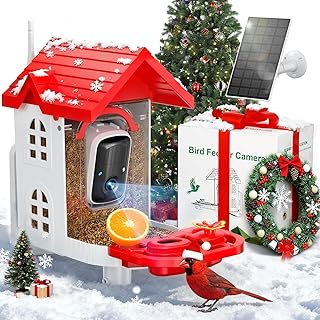
1. SV3C 2K Solar Feeder (Red) — Fast alerts and balanced 2K clarity
Price and availability are accurate as of 12/26/2025 01:11 am GMT and are subject to change.
If your priority is dependable alerts and clear 2K footage without constant charging, the SV3C in red delivers a smart, low-friction experience. The solar panel keeps the internal battery topped up in normal conditions, and the detection-to-notification path feels quick—a big deal when your regulars are skittish chickadees. The lens sits close enough to the perch to grab field marks that make IDs easier (eye lines, wing bars, bill shape).
AI recognition is competent but, like many non-ecosystem feeders, can falter with backlit visitors or juveniles still in mottled plumage. You can compensate by mounting slightly off-sun and keeping the lens shade clean. The bracket makes wall or post installs straightforward, and the overall build resists splash and seed dust well.
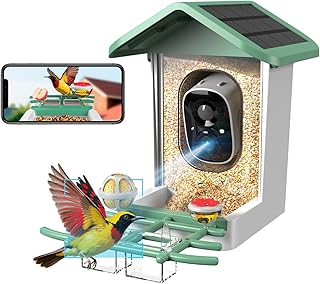
2. 2K Solar Feeder (Green) — A friendly starter with simple setup
Price and availability are accurate as of 12/26/2025 01:11 am GMT and are subject to change.
This green 2K model is a great “first smart feeder” if you want clean video and instant-arrival pings without going overboard. The footage is detailed enough for most backyard species, and the app’s live view connects reliably once your Wi‑Fi is stable at the install spot. The included hardware makes post or wall mounting manageable for one person, and the seed tray design minimizes clumping after a rain.
Expect AI identifications to be good in daylight with common species, but set realistic expectations for unusual migrants or juveniles. As with others in this class, positioning the panel toward midday sun and angling the feeder to avoid direct glare on the lens can meaningfully raise both video quality and AI confidence.
3. 4K Smart Bird Feeder — Pixel-rich detail for plumage lovers

Price and availability are accurate as of 12/26/2025 01:11 am GMT and are subject to change.
If you’re drawn to feather-level detail—fringe edges on a goldfinch or subtle streaking on a sparrow—this 4K model leans into maximum resolution. When conditions are good (solid Wi‑Fi, bright but not glary light, a clean lens), it can produce footage that makes field marks pop, which in turn helps confirm or correct AI guesses. The solar module limits downtime, especially for folks who want long clips and frequent live views.
Just remember that 4K isn’t a cure‑all. Bitrate, lens quality, and the app’s encoding settings determine whether that detail survives the trip to your phone. AI identification is decent for common yard birds, but take advantage of any in‑app correction tools to improve results over time. Mounting is straightforward; add a small shade or reposition if you notice midday washout.
4. 4K Live Solar Feeder — High-res streaming with smart alerts

Price and availability are accurate as of 12/26/2025 01:11 am GMT and are subject to change.
This 4K live-view feeder is for birders who want to dip into a real-time stream and snap a quick clip for friends or classroom show-and-tell. The notification cadence feels immediate, and when your wireless signal is strong, the image holds contrast and detail well. Solar augmentation means fewer ladders, especially if you’re conservative with continuous live viewing.
As with all high-res feeders, placement is everything: avoid direct glare, keep the perch distance tight, and check your router coverage outdoors. In-app AI IDs are a helpful starting point; you’ll get best results when the subject is square to the lens with good face illumination. If the app supports it, enable local storage for high-bitrate archives and use the cloud only for highlights.
5. 3K HD Solar Feeder — The sensible middle ground

Price and availability are accurate as of 12/26/2025 01:12 am GMT and are subject to change.
For many yards, 3K is a sweet spot: more detail than 2K, less bandwidth and battery draw than 4K. This model leans into that balance, keeping notifications reliable and image quality strong enough to parse field marks at close range. The solar panel provides steady trickle charge, and the seed tray design is easy to clean after a wet, windy day.
AI performance is respectable for common species. Expect occasional mislabels with backlit or partially occluded birds—par for the category when you’re outside top-tier Visory/Netvue ecosystems. Consider a slight downward tilt and a north- or east-facing orientation to minimize harsh sun and help both exposure and AI confidence.
6. 2K Day/Night AI Feeder — Family-friendly IDs with big species library

Price and availability are accurate as of 12/26/2025 01:12 am GMT and are subject to change.
If you’re picking a feeder for family birdwatching, this 2K day/night model hits the highlights: clear close-up video, approachable AI identifications, and a weather-tough body you won’t baby. The claimed species coverage is expansive; in practice, what matters most is how the app narrows to your region and how quickly you can confirm or adjust a guess. The solar setup keeps it humming through busy migration days.
For low-light sessions, position the unit to avoid reflective surfaces in the IR’s path (wet seed trays can bounce light back). The mounting hardware makes fence and wall installs easy, and the feeder’s roof provides reasonable shelter. If you want more granular control over motion zones or bitrate, verify those options in the app before you commit.
FAQ
- Do I need 4K for accurate bird IDs?
No. AI identification depends more on clear, well-lit views at close range than on raw resolution. A good 2K or 3K camera with proper mounting and light control can outperform a poorly tuned 4K setup. Higher resolution helps confirm subtle field marks when the app saves high-bitrate clips.
- Which AI tends to be more accurate, Visory or Netvue?
Both have strong reputations because they’re backed by larger, actively curated datasets. Differences show up around rare birds, juveniles, and tough angles. What matters most day-to-day is your mounting, lighting, and whether the app supports feedback/corrections that refine future IDs.
- Will these feeders work on 5 GHz Wi‑Fi?
Most smart feeders use 2.4 GHz only, which has better range through walls and into yards. Check your router’s SSID settings and ensure 2.4 GHz is enabled. If your mix SSID confuses setup, temporarily split bands or move a mesh node closer to the installation area.
- How reliable is solar charging in winter or shade?
Solar panels on feeders are trickle chargers. They work best with several hours of direct sun and proper panel angle. In winter, expect reduced performance; plan to top up via USB occasionally, especially if you stream live often or run high-res continuous recording.
- How can I improve AI accuracy quickly?
- Mount the camera so birds perch within the lens’s sharp zone.
- Avoid harsh backlighting; aim for consistent, indirect light.
- Keep the lens clean and the tray tidy to reduce IR reflections.
- Use the app’s confirm/correct tools; this teaches the model over time.
- Offer seed that encourages front‑on feeding (e.g., black oil sunflower can keep heads centered longer).
The Smart Way to Invite Wild Guests: Final Picks and Pairings
Want less ladder time and reliable alerts? The SV3C 2K Solar Feeder (red) is the easy all-rounder—fast notifications, solid detail, and practical solar assist.
Starting your smart-feeder journey on a budget? The 2K Solar Feeder (green) is a friendly entry point with simple mounting and dependable 2K video.
Chasing feather‑level detail? Either 4K model is for you. The “4K Camera & AI Bird ID” option focuses on crisp recorded clips, while the “4K Live Camera” version prioritizes a clean live view with instant alerts—both benefit from strong Wi‑Fi and careful placement.
Prefer a balanced approach? The 3K HD Solar Feeder sits in the goldilocks zone: better-than-2K detail without the bandwidth hunger of 4K.
Picking a family crowd‑pleaser? The 2K Day/Night AI Feeder pairs approachable IDs with dusk/dawn capability and a solar‑assisted design that keeps things fun, not fussy.
Whichever you choose, give the AI its best shot: mount for face-forward perches, angle for clean light, and keep that lens spotless. Your backyard will reward you—with more species, better footage, and the thrill of a buzz that says, “Look who just arrived.”



Leave a Comment