

The Best Resistance Bands for Physical Therapy: Safer Strength for Knees and Shoulders
If you’ve been told to “start with bands,” you’re in good company. Physical therapists rely on resistance bands because they load your joints gently, let you fine‑tune intensity, and fit almost anywhere. The right therapy band can help calm cranky knees, re‑train shoulder mechanics, and build back lost strength without flaring symptoms. The wrong band? It can pinch, roll, or simply be too strong when you need precision.
Below, you’ll find a practical guide to shopping for therapy bands—plus our top picks for knee and shoulder rehab. Each recommendation highlights who it’s best for, how it supports recovery, and what to watch for so you can progress safely.
Why Therapy Bands Matter When You’re Healing
Strength is medicine in rehab, but how you apply it matters. Bands provide variable resistance: the more you stretch them, the more they resist. That “ramping” load is gentle at the start of the movement and higher at the end—ideal for sore joints that don’t love heavy loads at deep angles. For the knee, that means you can target the glutes and quads without provoking the joint. For the shoulder, you can groove scapular control and rotator cuff strength through pain‑free ranges.
Bands also put force in the line of movement you choose—forward, sideways, diagonal—so you can mimic real‑life patterns: stepping, reaching, or stabilizing. That specificity helps retrain coordination and balance, not just muscle.
Common Rehab Use Cases: Knees and Shoulders
- Knee rehab and pain management: Mini loop bands excel for lateral steps, clamshells, and squats with a cue to “push the knees out.” These moves can reduce dynamic knee valgus and improve patellar tracking. Longer bands (fabric or latex) are perfect for terminal knee extensions (TKEs), hamstring curls, and hip hinges when anchored.
- Shoulder rehab and posture: Long bands shine here. External rotations, rows, serratus punches, and wall slides restore scapular mechanics while avoiding overhead compression early on. Bands let you scale tension to what the rotator cuff can tolerate.
- Return to activity: Once baseline control is back, bands introduce higher‑rep endurance work, closed‑chain stability drills, and functional patterns that prep you for walking hills, lifting groceries, or returning to sport.
How to Shop: Materials, Length, and Practical Must‑Haves
- Material and feel:
- Fabric bands are grippy, don’t roll easily, and feel comfortable on skin or clothing. They’re great for lower‑body work and sensitive skin.
- Latex flat bands deliver smooth, predictable tension across long ranges—excellent for shoulders and multi‑joint patterns. If you’re sensitive to latex, choose fabric (or confirm a latex‑free variant).
- Length:
- Mini loops fit just above knees, ankles, or wrists for activation drills.
- Long bands enable rows, presses, and anchored work—must‑haves for shoulder and full‑body therapy.
- Resistance range:
- Look for multiple levels from light to heavy. Early rehab often needs an ultra‑light option; later stages benefit from medium‑to‑heavy resistance for strength and endurance.
- Accessories:
- Door anchors and ankle straps expand exercise variety and make anchoring safer. If they’re not included, plan how you’ll anchor (a sturdy door hinge side, rail, or heavy table leg) without damaging the band.
- Safety and durability:
- Non‑slip fabric prevents rolling. With latex, inspect for nicks or drying, and avoid overstretching. Progressive loading should never cause sharp pain.
How We Chose These Bands (Selection Criteria)
- Rehab‑friendly resistance: Clear progression from lighter to heavier tensions, with at least one option suitable for sensitive joints.
- Material quality: Non‑slip fabric or reputable latex with consistent tension and reduced risk of snapping or rolling.
- Practical versatility: Useful for common knee and shoulder PT exercises, not just fitness accessories.
- Comfort and control: Bands that sit securely and distribute pressure well, especially around the knees and wrists.
- Extras that matter: Guides, carry bags, and anchor options are helpful—especially when you’re building a home routine.
- Real‑world fit: We considered who each band best serves—early‑stage rehab, long‑term maintenance, or clinic‑style versatility—and noted any drawbacks.
1. VRTX Fabric Resistance Band — Long Non-Slip Mesh Strap for Full-Body Workouts

Price and availability are accurate as of 12/20/2025 11:02 am GMT and are subject to change.
A long fabric band like this is one of the easiest ways to build a complete home therapy setup. For shoulders, you can anchor at chest height for rows, set it low for external rotations and extensions, or loop it for isometrics. For knees, anchor it behind your knee for terminal knee extensions, or wrap around the thighs to cue “knees out” during sit‑to‑stands. The non‑slip mesh helps the band stay exactly where you set it—clutch when you’re focusing on form and gentle progressions.
If you’re sensitive to latex or tired of bands rolling on clothing, the fabric texture is a win. The tradeoff is resistance variety: a single long band won’t deliver a true light‑to‑heavy spectrum by itself. You can adjust tension by changing the anchor distance or “choking up,” but if you’re in acute pain and need very light resistance, plan to pair this with a lighter band down the line.
2. THERABAND Special Heavy 50‑Yard Resistance Roll for Strength and Rehab
Price and availability are accurate as of 12/20/2025 11:03 am GMT and are subject to change.
THERABAND is ubiquitous in therapy settings for good reason: it provides linear, repeatable resistance through long ranges of motion, which is ideal for shoulder rehab and controlled lower‑body work. The 50‑yard roll is overkill for casual users but great if you want clinic‑style customization—cut a short length for wrist and elbow drills or a longer strip for anchored rows and chest pulls.
Note that “Special Heavy” is a high level of resistance. If you’re in the early phase or experiencing pain with minimal load, this strength may be too much. You can shorten the band to create less slack, but the force curve will still rise quickly. If you’re not sure, start with a lighter resistance in the same line, then graduate to this roll as your tolerance grows. Also, be mindful of latex allergies and inspect regularly for wear.
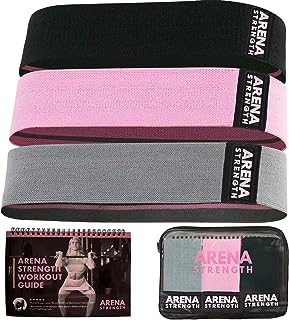
3. Arena Strength Fabric Booty Bands — Non‑Slip Hip & Glute Resistance with Workout Guide & Carry Case

Price and availability are accurate as of 12/20/2025 11:03 am GMT and are subject to change.
For knees that cave in during squats or steps, non‑slip fabric loops are hard to beat. This set is designed to sit comfortably above the knees or around the ankles for lateral walks, monster walks, clamshells, and mini-squats. Those drills are staples for patellofemoral pain and ITB‑related discomfort because they strengthen the glute med and external rotators without loading the knee joint directly.
The included guide and carry case simplify consistency—use the lightest band to start, and progress only when your form holds and pain stays mild. As with any mini loop set, you’ll need something longer for shoulder work and anchored knee drills (like TKEs). If you want a simple, non‑intimidating path to better knee control, this is a solid pick.
4. 4-Pack Fabric Resistance Booty Bands for Toning Glutes, Hips & Thighs

Price and availability are accurate as of 12/20/2025 11:03 am GMT and are subject to change.
A four‑band fabric set gives you enough “micro‑progressions” to build control without rushing. Start with the lightest loop for pain‑free side steps and bridges, then move up as your knee tracks well and your hips don’t fatigue early. The fabric feel prevents rolling and pinching—particularly helpful when you’re doing higher‑rep rehab sets.
The limitations mirror other loop‑only kits: shoulder and trunk work are constrained by the short length. You can still place a light loop around your wrists for wall slides or scapular activation, but it’s not a full solution. If your priority is calming knee pain with daily glute work, this set checks the boxes; just add a long band later for upper‑body balance.
5. Fabric Non-Slip Booty Bands (3 or 15-Pack) — 3 Resistance Levels, Carry Bag & Guide

Price and availability are accurate as of 12/20/2025 11:03 am GMT and are subject to change.
If you like having a clear plan, a simple three‑level loop set with a guide can reduce guesswork. Use the light band to groove pain‑free mechanics, the medium for endurance, and the heavy for strength phases. The carry bag makes it easy to stick with your PT on the go—consistency beats intensity in rehab.
The large pack option is efficient for group settings or spares, but for most home users, three bands are plenty. As with all mini loops, pair this with a long band if shoulder work, rows, or anchored knee drills are part of your program.
Safe Progression Tips From the Therapy Playbook
- Start light and earn your progress: Move up only when you can complete 2–3 sets with steady form and no symptom spikes during or after.
- Respect the “2 out of 10” rule: Mild discomfort (≤2/10) that resolves within 24 hours is acceptable; sharp or escalating pain means modify or stop.
- Control the tempo: 2–3 seconds up, 2–3 seconds down. Reduce momentum; increase time under tension.
- Breathe and brace: Exhale on exertion. Keep the ribs stacked over the pelvis for knee and shoulder stability.
- Anchor smart: Use the hinge side of a closed door or a solid, immovable object. Check the band and anchor point before each set.
Sample Rehab Moves By Band Type
- With long bands (fabric or latex):
- Shoulder: External rotations at side, band rows, serratus punches, extensions, pulldowns.
- Knee/hip: Terminal knee extensions (TKEs), banded hip hinges, hamstring curls, standing hip abductions.
- With mini fabric loops:
- Knee/hip: Lateral walks, monster walks, clamshells, glute bridges, mini-squats with abduction.
- Shoulder: Light band around wrists for wall slides and scapular protraction drills.
FAQ
Q: Fabric or latex—what’s better for physical therapy?
A: Fabric loops are comfortable and don’t roll, making them great for knee and hip activation. Latex flat bands offer smooth, adjustable tension over long distances—ideal for shoulder rehab and anchored leg work. Many people use both: fabric loops for lower-body control, a long band for shoulders and full-body strength.
Q: How do I choose the right resistance for injury recovery?
A: Start lighter than you think. You should complete sets with good form, mild effort, and pain ≤2/10 that settles within a day. If reps feel easy and symptoms are quiet, progress to the next band or increase range/sets. If pain lingers or form breaks, drop back or reduce range.
Q: I don’t have a door anchor. How can I set up safely at home?
A: Use the hinge side of a sturdy, closed door and wrap the band so the force pulls toward the hinges (not the latch). Alternatively, loop around a heavy table leg, railing, or squat rack post with rounded edges. Test tension gently before each set and avoid sharp corners that can damage bands.
Q: Can resistance bands replace weights for rehab?
A: In early and mid‑stage rehab, yes—bands offer plenty of load and excellent control. For late‑stage return to sport or heavier strength goals, you may add external weights. Think of bands as a foundation for motor control and endurance that complements future loading.
Q: I have knee osteoarthritis. Are bands safe?
A: Generally yes. Bands let you strengthen hips and quads, which reduces joint stress. Choose pain‑free ranges, prioritize glute activation drills and sit‑to‑stands, and progress gradually. If swelling or pain spikes, reduce intensity and consult your clinician.
Your Rehab, Your Bands: Smart Picks to Keep You Moving
The best therapy band is the one you’ll use consistently, safely, and with confidence. Here’s a quick match-up to help you decide:
- Want one band to cover most rehab needs without rolling? Choose the VRTX long fabric band. It’s comfortable, stable, and versatile for both shoulder and knee work.
- Need clinic-grade tension for precise shoulder protocols and custom lengths? Go with the THERABAND roll—just note that “Special Heavy” suits later-stage rehab or stronger users.
- Focused on knee stability and glute activation with zero fuss? Arena Strength’s non‑slip fabric loops grip well and include a simple guide.
- Want a straightforward, budget-friendly loop progression? The 4-Pack Fabric Booty Bands deliver comfortable knee and hip work with clear steps in resistance.
- Outfitting a household or small group, or just want spares? The Fabric Non‑Slip Booty Bands with a 3 or 15‑pack option make consistency easy.
Whichever you choose, anchor safely, start light, and let your form—not your ego—set the pace. With steady practice, bands can help you rebuild strength, reduce pain, and get back to what you love.




Leave a Comment