

Best Portable Oxygen Concentrator Accessories for Confident Travel: Pack Smarter, Breathe Easier
When you’re traveling with COPD or another respiratory condition, the right setup can turn an anxious journey into a routine trip. Gate agents ask about battery hours, seatmates worry about noise, and you’re juggling tubing, bags, and backup supplies. The concentrator is the star—but smart accessories are what make a battery-operated, pulse-dose oxygen concentrator truly travel-ready.
Below, you’ll find an expert-curated roundup of practical add-ons that solve everyday pain points—carrying comfort, tubing kinks, and nasal dryness—without adding bulk. Before the picks, a quick primer on what really matters when you’re shopping for travel oxygen and how to avoid gotchas on the road and in the air.
Why “travel-ready” oxygen matters
Mobility and independence
- The most portable concentrators are battery powered, often pulse-dose units that weigh a few pounds and can be worn or stowed under an airline seat. They allow you to move, dine, or board with fewer compromises.
- Accessories like lightweight backpacks, tube guides, and adapter tubing help keep your hands free and oxygen flowing—even through long security lines and tight cabin spaces.
FAA compliance and real-world logistics
- FAA-accepted portable oxygen concentrators are allowed on U.S. flights, but you’re responsible for sufficient batteries. Most airlines require enough run time to cover 150% of the scheduled flight, including delays.
- Your carry system and cable management make the difference between smooth boarding and a tangle of hoses and alarms. Good ergonomics reduces strain and preserves battery swaps and alarm access.
Comfort across changing environments
- Air-conditioned cabins and dry hotel rooms dehydrate airways. Some users rely on humidification at home, though airlines typically do not allow humidifier bottles in-flight and many pulse-dose POCs don’t support them. For travel days, tube positioning and moisture-conserving cannulas are often better solutions.
Pulse vs. continuous flow: know your mode
Pulse dose, a travel favorite
- Pulse-dose concentrators deliver oxygen with each inhalation. They’re the lightest and most efficient, with the best battery life and the lowest noise for their size. Popular models, like Inogen One G5, are designed specifically around mobility.
- Noise levels are typically in the upper 30s to mid-40s dBA range—quieter than cabin chatter—but acoustic design varies. Carry systems that don’t block vents help keep fans from ramping up, which can add noise.
Continuous flow, when needed
- Some users require constant liters per minute (LPM), especially during sleep or at higher therapeutic needs. Continuous-flow machines are often heavier and louder, with shorter battery life.
- Most portable units with continuous flow are bulkier. Humidification is more common here (especially at home or in a hotel), but not on aircraft. Double-check manufacturer recommendations before attaching bottles to any POC—and never block vents.
Battery life, weight, and noise: how to shop the details
Battery strategy
- Calculate realistic run time: your setting, altitude, and activity all impact battery draw. Airlines commonly require 150% of the flight time in available power.
- Prioritize fast battery swaps. A carrying solution with bottom or side access can save precious minutes during tight connections.
Weight and ergonomics
- Every extra pound matters when you’re wearing your concentrator for hours. Backpacks designed for a specific POC keep weight centered, reduce swing, and improve ventilation around the machine.
- Look for straps that distribute load and don’t pinch oxygen tubing. A good fit reduces fatigue and discourages slouching that can hamper breathing mechanics.
Noise considerations
- The machine’s decibel rating is fixed, but how you carry it affects cooling fan behavior. Obstructed vents and tight pockets can increase fan activity and perceived noise.
- Tubing management also reduces occasional “chuffing” and tugging sounds. Keeping clean bends prevents partial occlusions that can trigger alerts.
Humidification on the go
- Many mobile, pulse-dose concentrators are not designed for humidifier bottles; some manufacturers specifically discourage it. If you need moisture support, consider heat-moisture exchange cannulas or use humidification with a stationary concentrator at your destination.
- For continuous-flow therapy in non-flight contexts, a medical-grade humidifier bottle with a pressure relief valve can improve comfort and protect equipment.
Our selection criteria
We picked accessories that:
- Support battery-operated, travel-ready setups without adding unnecessary bulk.
- Maintain or improve airflow and ventilation—never obstructing intakes or exhaust.
- Enhance comfort: padded straps, tubing stability, and quick machine access.
- Prioritize safety with features like pressure relief valves where applicable.
- Offer broad compatibility with mainstream concentrators and standard tubing.
- Are practical for real-world travel: airline lines, rideshares, hotel rooms, and long days out.
- Keep maintenance simple—easy to clean, easy to replace, and easy to pack.
The best accessories for travel with a portable oxygen concentrator
1. Lightweight backpack that respects weight, airflow, and access
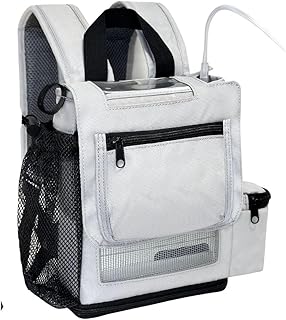
Carry your Inogen One G5 comfortably—this under-1 lb, unisex backpack trims bulk so you can move freely. Want to check fit?
$0.00 on Amazon
View on AmazonPrice and availability are accurate as of 01/30/2026 09:01 pm GMT and are subject to change.
A dedicated, lightweight backpack is the easiest way to keep an FAA-accepted, pulse-dose oxygen concentrator comfortable and quiet on the move. This O2TOTES bag is purpose-built for the Inogen One G5 and Rove 6, staying under one pound so it doesn’t erase the weight advantage of your portable unit. Padded straps and a clean profile reduce shoulder strain and snags in tight aisles.
The thoughtful touch is the zippered bottom—ideal for fast battery swaps without unpacking the device. That matters when airlines require 150% battery coverage and you want to minimize downtime. Just be mindful of ventilation. Proper placement keeps the machine’s cooling unobstructed, helping limit fan ramp-up that can raise noise levels mid-flight or in a quiet theatre.
2. 12″ elbow connector that tames tough angles and travel setups
Tight spaces and awkward angles can pinch oxygen tubing, especially when a POC is worn in a backpack or mounted in a scooter basket. An elbow connector with short adapter tubing makes clean bends without kinks, maintaining steady flow and preventing nuisance alerts. The 12-inch length is especially useful for routing through a bag’s grommet or around armrests.
While the product references humidifier bottles, most travelers won’t use water bottles when flying—airlines generally prohibit them, and many pulse-dose concentrators aren’t designed for humidification. On the ground, this connector helps reduce port stress and keeps your cannula line behaving. As with any adapter, inspect for snug fit and replace at the first sign of wear.
3. Six-pack of medical-grade humidifier bottles with pressure relief valve and adapter tubing
Dry nasal passages can make therapy miserable after a day of air travel and climate-controlled hotels. For users who rely on continuous-flow oxygen outside the cabin environment, a medical-grade humidifier bottle with a pressure relief valve can restore comfort and protect your equipment from overpressure should downstream occlusion occur.
This six-pack provides ample backups for extended stays and simplifies hygiene: rotate bottles to allow thorough cleaning and drying. It’s a great solution for destination use—think hotel rooms or family stays—when paired with a compatible continuous-flow device. For flights and pulse-dose POCs, skip bottles and consider moisture-conserving cannulas or saline as directed by your clinician.
4. Single 350 ml humidifier bottle with pressure relief valve—compact backup for destination comfort
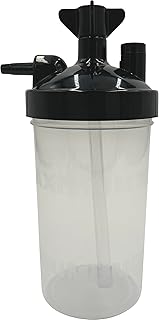
ResOne 350ml oxygen humidifier with built‑in safety valve — easy to attach, compatible with most machines for safer, more comfortable breathing.
$6.99 on Amazon
View on AmazonPrice and availability are accurate as of 01/30/2026 09:03 pm GMT and are subject to change.
If you prefer to keep your travel kit minimal, a single, safety-valved humidifier bottle covers essential comfort at your destination without hauling multiples. It’s a practical add-on when you’re using continuous flow at night in a hotel room and need dryness relief, but don’t want the complexity of a multi-pack.
As always, flight days are a different story. Most airlines won’t allow water-filled bottles in use onboard, and manufacturer guidance for many portable pulse-dose machines discourages humidifiers altogether. Use this for ground-based legs or once you arrive, and adhere to rigorous cleaning and water-quality practices to keep therapy safe.
5. Tube support crimps that keep your oxygen line open and tangle-free
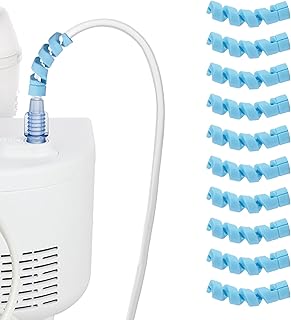
10 blue oxygen tube supports prevent kinks—easy wrap-on installation, fits concentrator bags or backpacks, keeps tubing clear whether home or on the go.
$7.66 on Amazon
View on AmazonPrice and availability are accurate as of 01/30/2026 09:03 pm GMT and are subject to change.
Nothing derails a smooth travel day like a crimped cannula line. These simple tube supports act like bend guards, preserving a gentle radius where tubing rounds a bag edge, armrest, or jacket zipper. The result: fewer kinks, fewer flow alarms, and a calmer experience in security lines and boarding queues.
They’re easy to place and remove, so you can tune your setup for walking, seated rest, or sleep. While small, they pay big dividends in maintaining consistent oxygen delivery—especially crucial for pulse-dose concentrators that rely on unobstructed inhalation sensing. If you value a discreet look, consider strategic placement behind the shoulder or inside the bag’s pass-through.
FAQ
What’s the difference between pulse-dose and continuous-flow portable oxygen concentrators?
- Pulse-dose units deliver oxygen in bursts triggered by your inhalation. They’re usually lighter, quieter, and have better battery life—ideal for travel and FAA-accepted models. Continuous-flow devices provide a constant LPM output. They can be necessary for certain clinical needs, especially during sleep, but tend to be heavier with shorter battery run time.
How many batteries do I need for a flight?
- Airlines commonly require enough battery capacity for at least 150% of the scheduled flight time, including connections and buffer for delays. If your POC runs four hours per battery at your prescribed setting, you’d plan for at least six hours of total battery capacity. Always confirm your airline’s specific policy and bring chargers for the destination.
Are humidifier bottles allowed on airplanes?
- Generally, no. Most airlines prohibit water-filled humidifier bottles in-flight, and many pulse-dose POCs are not designed to use bubble humidification. For travel days, consider alternatives like moisture-conserving cannulas or nasal saline per clinician guidance. Use humidifier bottles with compatible continuous-flow devices on the ground or at your destination.
How can I reduce noise during travel?
- Choose a carry solution that doesn’t block air intakes or exhaust—restricted airflow can force fans to run harder and louder. Keep tubing free of kinks, which can cause alarms and “chuffing” sounds. Sit the concentrator on a stable surface to avoid vibration noise. Finally, ensure filters are clean as recommended by the manufacturer.
What’s the best way to manage tubing when moving through airports?
- Route tubing through a backpack’s pass-through or around the shoulder to avoid snag points. Use tube support crimps at sharp bends and an elbow connector for challenging angles. Keep slack modest—too much line catches on armrests; too little tugs when you turn. Practice your setup at home before travel so movements feel natural.
The confident traveler’s toolkit: final picks and pairing advice
Most of us think “concentrator” when we plan travel oxygen—but it’s the small, smart accessories that quietly make the day smooth. Here’s how to build a kit around your therapy and itinerary:
- For pulse-dose, airline-focused travel: Pair the lightweight O2TOTES Backpack for Inogen One G5/Rove 6 with the Tube Support Crimps. You’ll preserve battery swaps with the zippered bottom, keep vents clear to limit fan noise, and maintain clean tubing bends that prevent nuisance alerts mid-flight.
- For challenging carry angles (wheelchairs, scooter baskets, or tight seats): Add the 12″ Elbow Connector to maintain a gentle radius at exits and reduce strain on machine ports. This helps keep sensing accurate on pulse-dose units and minimises flow interruptions.
- For destination comfort on continuous flow: Bring a ResOne humidifier bottle—choose the single bottle for short trips or the six-pack to rotate and maintain hygiene on extended stays. Stick to distilled water, clean thoroughly, and do not use onboard an aircraft.
- For anyone optimizing weight and access: Prioritize under-1 lb carry solutions and quick-access battery compartments. Your back will thank you, and your compliance will improve when swapping batteries is a 30-second task.
Key takeaways:
- Battery life, weight, and noise are your core constraints in transit. Accessories should protect those advantages—not compromise them.
- Pulse-dose is the travel workhorse; continuous flow may be essential for some users at rest or overnight. Plan your kit for both the plane and the destination.
- Humidification boosts comfort on the ground but is usually not in-flight compatible. Prepare alternatives for the air and resume humidification at your destination if needed.
Pack deliberately. Keep airways clear, batteries accessible, and your machine cool and quiet. With the right accessories, your portable oxygen setup becomes a dependable travel companion—not a daily puzzle.




Leave a Comment