

The Best Noise-Blocking Headphones for Sensory Needs (Kids, Teens, and Adults)
If sound turns from “background” to “too much” in a split second, the right headphones can feel like a pause button for the nervous system. Whether it’s cafeteria clatter, sirens on a walk, or the rumble of lawn equipment, consistent noise reduction can create calm, protect hearing, and make transitions smoother for people with sensory processing disorder, autism, ADHD, hyperacusis, or simply a lower tolerance for noise.
Below, you’ll find a focused roundup of passive noise-reduction earmuffs—no batteries, no charging—chosen for dependable attenuation and all‑day comfort. You’ll also see one adult, high-decibel option for situations that demand more protection. If you’re comparing these to active noise cancellation (ANC) headphones, we explain the differences and how to choose later on.
Why This Category Matters
For sensory regulation, predictable sound levels help reduce startle responses, fatigue, and overwhelm. A good pair of “calming” headphones can:
- Create a dependable buffer between the wearer and sudden noises (bells, hand dryers, clanging dishes).
- Extend time in stimulating environments (school assemblies, stores, airports) without tipping into overload.
- Support focus during homework, therapy, or work by lowering distracting ambient noise.
The key is consistent, broadband attenuation. Unlike ANC—great for hums and rumbles—passive hearing-protection earmuffs work across a wide range of frequencies, including the mid and high pitches that often feel most piercing.
Noise Reduction 101: ANC vs. Passive, SNR vs. NRR
- Passive vs. ANC: Passive earmuffs use dense materials and a tight seal to reduce sound. They work without power and tend to cut a broader range of frequencies, including sudden, sharp sounds. ANC uses microphones to generate anti-noise, which excels at low-frequency, steady sounds (engines, HVAC), but is less effective for higher-pitched or impulsive sounds.
- SNR vs. NRR: You’ll see two rating systems. SNR (Single Number Rating) is common in Europe, and NRR (Noise Reduction Rating) in the U.S. They aren’t directly interchangeable, but higher numbers generally mean more reduction. In practical use, expect effective real‑world reduction to be less than the labeled rating, due to fit and environment.
- Expectation setting: Even the best earmuffs won’t erase sound or voices completely; they lower intensity. For conversation, that’s usually a win—calmer, softer speech instead of total isolation.
If you need phone calls or class participation while wearing headphones, note that the products in this guide don’t include microphones. They’re pure hearing protectors, which many sensory users prefer for reliability and simplicity.
How to Shop for Sensory-Friendly Headphones
- Fit and seal: A proper seal is everything. For kids, look for youth sizing and ample adjustment so the cups fully cover the ears. Glasses, thick hair, or hats can break the seal and reduce performance.
- Comfort for long wear: Consider headband padding, ear-cup softness, clamp force, and overall weight. Sensory users may prefer smoother, non-scratchy surfaces and minimal pressure points.
- Attenuation level: Around SNR 27–28 dB is a solid daily driver for school and errands. For louder contexts (concerts, parades, power tools nearby), higher-rated adult earmuffs with NRR ~30/SNR ~37 can offer a deeper “quiet bubble.”
- Durability and maintenance: Hinges and sliders should handle frequent on/off cycles. Wipeable surfaces help with hygiene, especially for school use.
- When ANC makes sense: If most triggers are low, steady rumbles (bus, plane), ANC headphones may feel calmer. If sharp, sudden noises are the issue, passive muffs shine. Some families keep one of each and choose based on context.
Our Selection Criteria
We evaluated products with sensory users in mind:
- Verified, clearly stated noise-reduction ratings (SNR or NRR) appropriate for everyday use.
- Comfortable adjustability for small heads (kids/teens) and larger heads (adults).
- Consistent seal and no-fuss reliability—no batteries, minimal moving parts to fiddle with.
- Sensory-friendly design: smooth materials, predictable clamp, and easy on/off for self-advocacy.
- Real-world versatility: school, errands, outdoor events, and work-from-home.
- Transparent note on microphones: highlighted whether a mic is present for communication. (None of the picks below include mics; they are passive, dedicated hearing protectors.)
1. RIIKUNTEK Kids Ear Protectors (SNR 27dB) — Everyday Calm for Classrooms and Errands

Price and availability are accurate as of 12/26/2025 09:37 am GMT and are subject to change.
When school days include loud hand dryers, cafeteria clatter, and fire drills, a reliable SNR 27 dB earmuff is often the sweet spot. RIIKUNTEK’s kid-first sizing helps smaller heads get the all-important ear-cup seal, turning “too loud” into “manageable” without isolating the wearer from teachers or peers. For many families, that balance makes the difference between powering through an event and needing to leave early.
Because these are passive hearing protectors, there’s nothing to charge and nothing to fiddle with—important for sensory regulation and independence. They don’t include ANC or a microphone (and won’t mute voices entirely), but for everyday school and errands, that can be a feature, not a bug: calmer sound, simple operation, fewer surprises.
2. GREEN DEVIL Kids/Toddler Ear Muffs — 27.4dB Noise Reduction for Ages 3–16

Soft, adjustable kids earmuffs with 27.4 dB noise reduction — lightweight and ANSI/CE certified. Perfect for sensory-sensitive kids, travel, study or loud events.
$14.99 on Amazon
View on AmazonPrice and availability are accurate as of 01/28/2026 09:01 pm GMT and are subject to change.
If you’re outfitting a growing child, a model intended for ages 3–16 can bridge early school years through middle school. GREEN DEVIL’s 27.4 dB rating aims to temper the everyday high/medium-frequency noises that tend to be most triggering—think scraping chairs, whistles, and sudden claps. That tonal coverage is where passive muffs clearly outperform many ANC options.
Like the other kid-forward picks here, this set focuses on predictability: put them on, seal around the ear, and let the world soften. There’s no built-in microphone and no noise-cancelling electronics. For sensory-sensitive wearers, that can reduce cognitive load and avoid the “pressure” sensation some users report with ANC.
3. MelonArt Kids Ear Protection Earmuffs — 27dB Hearing Safety for Toddlers, Autism & Loud Events

Price and availability are accurate as of 12/26/2025 09:38 am GMT and are subject to change.
For toddlers and younger kids, you’re balancing two goals: meaningful noise reduction and a routine they’ll actually accept. MelonArt’s 27 dB attenuation offers gentle yet significant quieting for museums, grocery stores, or outdoor festivals—enough to extend time on-site without eliminating the ability to hear caregivers’ voices.
These are passive, battery-free earmuffs with a straightforward on/off routine. There’s no microphone and no active processing, which avoids audio artifacts and charge anxiety. For families building familiarity with hearing protection early, that simplicity, plus a sensory-friendlier surface feel, can encourage consistent use.
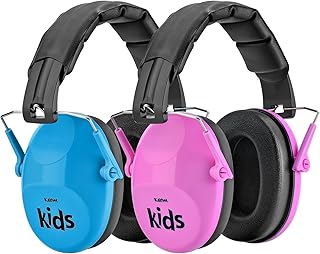
4. KAYNN 032 Kids Ear Protection Headphones — 28dB SNR for Concerts & Sensory Needs
Price and availability are accurate as of 12/25/2025 09:17 pm GMT and are subject to change.
When activities creep louder—marching bands, stadiums, or Fourth of July—an extra decibel of rated reduction can make a noticeable difference. KAYNN’s SNR 28 dB model is a practical pick if your child encounters higher-volume events but still wants to stay engaged. The broader-frequency attenuation is particularly helpful for whistling, cheering, and sudden pops.
As with all passive earmuffs, these have no microphone and no ANC electronics. That means what you hear is simply “less”—not digitally altered. If your child wears glasses or has thicker hair, double-check the ear-cup seal each time; the seal determines performance, especially when you’re relying on that slightly higher rating.
5. ProCase Extra Large Hearing Protection Ear Muffs — SNR 37 dB / NRR 30 dB, Adjustable Fit (Black)

Price and availability are accurate as of 01/28/2026 12:43 am GMT and are subject to change.
For adults seeking “calming headphones,” strong passive protection often beats ANC—especially if triggers include high-pitched or impulsive noises. With SNR 37 dB / NRR 30 dB, ProCase’s extra-large earmuffs create a remarkably quiet bubble for work-from-home, open-plan offices, libraries, or while near power tools (not as a replacement for mandated safety gear). The larger, adjustable fit supports comfort for broader head sizes and helps maintain a full ear seal.
There’s no microphone or active cancellation, and that’s a deliberate trade-off in favor of consistent, battery-free performance across frequencies. If you sometimes need to converse or hear notifications, consider routines like wearing them over one ear for brief chats, or pairing with visual alerts—so you get the calm when you want it, and awareness when you need it.
FAQ
- Do these “cancel” sound completely?
No. Passive earmuffs reduce overall volume, especially sudden and higher‑pitched sounds, but they won’t make the world silent. You’ll still hear voices, alarms, and traffic—just at a lower, less intense level.
- What’s the difference between SNR and NRR?
SNR (common in Europe) and NRR (common in the U.S.) are two rating systems for noise reduction. Higher numbers indicate more potential reduction, but real‑world results depend on fit and environment. As a rough guide, NRR 30 is very high for consumer earmuffs; SNR 27–28 is a good everyday range for kids.
- Are these better than ANC for sensory processing disorder or autism?
Often, yes—especially if triggers include sharp, unpredictable sounds (bells, clanging, cheering). ANC excels at steady low-frequency noise (engines, HVAC). Many sensory users prefer passive earmuffs for the broader-frequency reduction and lack of electronic artifacts.
- Are microphones included for calls or class participation?
No. The products in this guide are passive hearing protectors and do not include microphones. If two-way communication during wear is essential, consider a separate headset or an ANC model with an integrated mic, and weigh the trade-offs.
- Are they safe for long wear?
Generally, yes, when used thoughtfully. Take breaks to check comfort and skin pressure points, especially for young children. If a child relies on hearing for safety cues, supervise and coach when to wear or doff earmuffs. For environments with extreme noise, follow safety guidelines and use equipment rated for that use.
Bringing the Volume Down: Recommendations by Scenario
- For school, homework, and errands (kids):
RIIKUNTEK (SNR 27 dB) or GREEN DEVIL (27.4 dB) offer the “daily driver” balance: dependable quieting with kid-ready sizing and simple, battery-free operation. Choose based on preferred fit and adjustment range.
- For toddlers and younger children:
MelonArt’s 27 dB design supports early adoption and predictable routines, with wipe-friendly surfaces that are practical for frequent on/off cycles.
- For louder events (pep rallies, parades, fireworks at a distance):
KAYNN 032 (SNR 28 dB) nudges the reduction up a notch. Double-check the ear-cup seal before loud moments.
- For adults seeking deeper calm in louder settings:
ProCase (SNR 37 dB / NRR 30 dB) creates a notably quiet space for focus or decompression. It’s bulkier than ANC headphones, but broader-frequency passive reduction can feel calmer for many sensory users.
Final tip: Fit is the “secret feature.” Take a minute to adjust the headband height and cup position every time—especially over glasses or thick hair. A proper seal can easily add what feels like several “extra dB” of calm.
Your world doesn’t have to get quieter for you to feel calmer; the right headphones can bring the room down to you.


Leave a Comment