

The 6 Best Home Weather Stations and Barometers: From Stylish Analogs to Reliable Wireless Workhorses
If you’ve ever watched a storm slide past your street while your phone insisted on sunny skies, you already know: hyperlocal weather matters. A well-chosen home weather station or barometer gives you more than curiosity-satisfying numbers—it gives context you can act on. Gardeners time irrigation to dewpoint and rainfall, pilots watch pressure trends, and anyone with a backyard event appreciates seeing wind and rain before it shows up on radar.
Below is an in-depth, expert breakdown of six standout options—ranging from elegant analog barometers to practical wireless stations with rain gauges and atomic clocks. We’ll explain who each one suits best, how they differ in accuracy and sensors, and what to expect around connectivity and daily usability.
Why a Home Weather Station Matters (Even If You Have Weather Apps)
Public forecasts are generated from distant stations, satellites, radar, and models. They’re excellent for regional outlooks but rarely capture the microclimate in your yard. A digital weather thermometer in full sun reads differently than one shaded by a tree. Rainfall can vary dramatically over just a few blocks. A barometer for home reveals pressure falls signaling approaching systems—even as skies remain deceptively calm.
For safety and planning, local data is hard to beat:
- Gardeners and farmers adjust watering by actual rainfall, soil evaporation conditions, and humidity—not just forecasts.
- Outdoor workers time tasks around wind gusts and pressure changes that can accelerate fire weather or cut spray drift.
- Homeowners notice indoor humidity trends that affect comfort, energy use, and even hardwood floors.
- Storm watchers watch pressure drops and temperature differentials that often precede severe weather.
Basic vs. Advanced Models: What’s the Real Difference?
Think of home weather stations in three tiers:
- Entry-level basics: A compact wireless weather station with one external sensor typically reports outdoor temperature and humidity, indoor conditions, barometric pressure, and a forecast icon. The focus is readability and ease, not exhaustive data. These are ideal “digital clock plus weather” consoles.
- Intermediate feature sets: Systems that add a dedicated rain gauge and better barometric tracking move into hobbyist territory. You get trend graphs, max/min logging, and more dependable rainfall totals. Wind, UV, and solar radiation are less common at this price, so consider your priorities.
- Advanced, pro‑style suites: Full arrays with wind speed/direction, rainfall, temperature, humidity, UV/solar, and a weather station with internet (Wi‑Fi) integration deliver a complete local climate picture. You can stream data to the cloud, set smart home automations, and analyze long-term trends. These require more careful siting, occasional calibration, and higher up-front cost.
In this roundup, you’ll see excellent analog and digital picks—including stations with rain measurement and atomic clocks. If you need cloud connectivity or smart home integration, note that the models below operate as capable standalone systems.
How to Shop: Accuracy, Sensors, Connectivity, and Display
- Accuracy and stability: Look for temperature accuracy within ±0.5–1.0 °C, humidity within ±3–5% RH, and a barometer that can be adjusted for elevation. For rainfall, a well-calibrated tipping‑bucket gauge should be within roughly 5–10% under steady rain.
- Sensor array: Decide what you truly need. Minimum: temperature, humidity, barometric pressure. Add rainfall if you garden, manage drainage, or need storm totals. Add wind if you’re in aviation, sailing, spraying chemicals, or planning scaffolding or canopy use. UV/solar sensors are valuable for sun safety and evapotranspiration modeling.
- Connectivity and logging: A weather station with internet (Wi‑Fi) gives alerts, long-term graphs, and sharing to online networks. If you only need at‑a‑glance local data, a non‑Wi‑Fi station can be simpler and more reliable day to day. Atomic time sync (WWVB) is a separate feature that keeps clocks exact but does not put the station online.
- Display and usability: Consider viewing angles, backlight, data density, and whether you prefer numeric displays or trend icons. Large fonts help at a glance; color displays improve readability but can be bright in bedrooms. Check that the console shows the metrics you care about without deep menu digging.
- Installation and maintenance: Rain gauges need to be level and kept free of debris. Outdoor sensors need good siting: shielded from direct sun, a few feet above ground for temp/humidity, and away from heat sources and reflective surfaces. Replace batteries proactively before winter or storm season.
Our Selection Criteria
- Credible measurement of the basics (temperature, humidity, barometric pressure)
- Sensor array quality (rain and, where relevant, support for more)
- Wireless stability and practical range
- Data display clarity, trend information, and atomic time (when applicable)
- Build quality and installation friendliness
- Honest value for the intended use case (decor, learning, hobby, planning)
- Transparency about limitations (e.g., no Wi‑Fi, no wind/UV)
1. Storm Glass Weather Station — Scandinavian Drop Barometer for Design-Forward Interiors
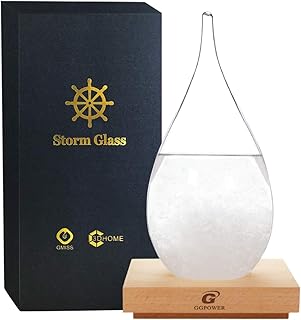
A storm glass is essentially a sealed crystal solution whose appearance shifts with temperature and pressure changes. As a barometer for home décor, this drop‑shaped model is captivating—crystals feather, clear, or cloud in ways that invite conversation and curiosity. It’s a piece you’ll enjoy seeing on a shelf or desk.
However, it’s important to set expectations. Unlike a digital weather thermometer or a calibrated aneroid barometer, storm glass behavior is not a dependable forecast tool and should not be used for safety‑critical decisions. Consider it a beautiful, historical nod to weather observation that complements—but doesn’t replace—your actual measurements. If you want a tasteful weather accent and already rely on other instruments for data, this fits perfectly.
2. Sainlogic SA68 Wireless Home Weather Station — Rain-Focused, No Wi‑Fi Distractions

For households that care about actual rainfall on their property, the Sainlogic SA68 hits a sweet spot. You get the core metrics—indoor/outdoor temperature and humidity, a barometer, and a dedicated rain gauge—plus a forecast view that’s more useful when paired with its pressure trend data. It’s a pragmatic upgrade from a basic wireless weather station that lacks precipitation measurement.
Accuracy in this class is generally strong enough for gardening, yard drainage planning, and “how much did that storm really drop?” conversations. Without Wi‑Fi, there’s nothing to set up beyond the outdoor sensor and the console—great for users who prefer reliable, at‑a‑glance information. If wind or internet connectivity is essential to your workflow, you’ll need a higher tier; if not, this is a dependable daily driver.
3. Lily’s Home Analog Weather Station — Classic Galileo Thermometer Meets Glass Barometer

This analog trio pairs a Galileo thermometer (floating glass bulbs that indicate relative temperature bands) with a glass barometer and hygrometer, creating a timeless display of fundamental weather concepts. As a barometer for home décor, it’s both an art piece and a conversation starter, ideal for studies, libraries, or classrooms.
Understand the tradeoffs. You won’t get decimal‑level readings, internet connectivity, or graphs—just the tactile experience of observing buoyancy shifts, dial movements, and pressure‑driven water levels. For enthusiasts who appreciate the history of meteorology or want a power‑free visual of changing conditions, it’s a charming choice. For data‑driven decision‑making, consider pairing it with a modern wireless weather station elsewhere in the home.
4. Wireless Outdoor Rain Gauge & Weather Station — Practical Totals, Atomic Clock Precision

If you’re after dependable rainfall measurement without paying for a full sensor suite, this wireless weather station is compelling. It includes a tipping‑bucket rain gauge for accurate storm totals, temperature and humidity inside and out, and barometric pressure for trend‑based forecasting. The atomic clock syncs automatically, so max/min and daily resets stay consistent.
The value proposition here is focus: you get the metrics most homeowners actually use, on a readable display, minus app setup and Wi‑Fi troubleshooting. Keep the rain gauge level and clear of debris for best accuracy. If you later decide you need wind or smart home alerts, you’ll have to step up to a more advanced, internet‑connected system; as a standalone rain‑forward station, though, it’s hard to beat.
5. Ambient Weather BA212 Wall-Mounted Weather Station — Analog Simplicity in Cherry Finish

Not every weather watcher wants a color console and icons. The BA212 delivers the essentials—temperature, humidity, and barometric pressure—in a handsome, analog presentation. Mount it in a hallway or office and you’ll quickly learn to correlate barometer trends with how your local weather behaves, a skill many forecasters still use daily.
For best results, set the barometer using a reliable local pressure reference and fine‑tune seasonally. Expect dial‑class accuracy: good for home comfort and trend awareness, but not laboratory precision. If you want a barometer for home that looks like furniture and invites habitual glances, this is a welcoming option. Pair it with a separate wireless weather station if you need outdoor or rainfall metrics.
6. Wireless Indoor/Outdoor Weather Station with Remote Sensor — Full‑Color, Atomic Clock, Daily Readability

When you want a compact wireless weather station that nails the basics, this model is a sensible pick. It covers indoor and outdoor temperature/humidity, barometric pressure trend, and adds an atomic clock so alarms and daily high/low rollovers stay precise. The color display improves readability from across the room, making it well‑suited to kitchens and offices.
This is a “digital weather thermometer plus” rather than a full pro station, and that’s by design. It won’t measure rain or wind, and there’s no internet syncing. But for most households wanting accurate comfort metrics and a quick read on whether pressure is rising or falling, it fits nicely—and with fewer settings to manage.
FAQ
- Are storm glass barometers accurate enough to forecast weather?
- Storm glass is best viewed as decorative. Crystal patterns are influenced by temperature and pressure but are not consistently predictive. For actionable forecasting, use a calibrated barometer and, if possible, local temperature/humidity and rainfall measurements.
- Where should I mount outdoor sensors for accurate readings?
- Place temperature/humidity sensors 4–6 feet above ground, in shade, with good airflow, and away from heat sources (roofs, vents, masonry). Keep rain gauges level, open to the sky, and clear of obstructions. Avoid radiating surfaces and reflected sun.
- How accurate are tipping‑bucket rain gauges?
- Under steady rain, expect around ±5–10% accuracy if the gauge is clean and level. Intense downpours and wind can introduce additional error. Periodic cleaning and re‑leveling improve consistency.
- What does an “atomic clock” do in a weather station?
- It syncs the console’s time to a national time broadcast (WWVB in North America). This keeps alarms, daily max/min rollovers, and logging timestamps accurate. Atomic time does not imply Wi‑Fi or internet capability.
- Do I need a weather station with internet?
- If you want mobile alerts, long‑term cloud graphs, and smart home automations, yes—choose a model with Wi‑Fi/cloud integration. If you mainly need reliable, at‑a‑glance local data, a non‑Wi‑Fi station can be simpler and equally dependable day to day.
Forecast Smarter: Matching the Right Station to Your Needs
Choosing the best home weather station comes down to the data you’ll actually use and the complexity you’re comfortable maintaining.
- For design-led homes that appreciate meteorology’s history: The Storm Glass Weather Station and Lily’s Home Analog Weather Station deliver beautiful, power‑free displays. They’re conversation pieces—pair them with a digital station if you need precise, actionable data.
- For practical rainfall tracking without Wi‑Fi: The Sainlogic SA68 and the Wireless Outdoor Rain Gauge & Weather Station each provide a dedicated tipping‑bucket gauge, plus indoor/outdoor temperature and humidity and a barometer. They’re excellent choices for gardeners, yard management, and storm‑total confirmation.
- For classic, always‑visible indoor comfort and pressure trend: The Ambient Weather BA212 is a handsome wall‑mounted analog option that promotes daily weather awareness without screens.
- For straightforward daily readouts and timekeeping: The Wireless Indoor/Outdoor Weather Station with Full‑Color Display & Atomic Clock is a reliable “check it as you pass” console—great for homes that want a digital weather thermometer, humidity, and barometric trend in one view.
If you require wind, UV/solar radiation, or a weather station with internet for logging and alerts, move up to a full sensor suite with Wi‑Fi integration. If your priority is dependable local readings and rain totals without the cloud overhead, the models above excel at delivering exactly that—clearly, reliably, and right where you live.








Leave a Comment