


Best Shop Vacs for Woodworking: Fine‑Dust Focused Picks That Punch Above Their Weight
Wood dust doesn’t just make a mess—it hangs in the air, infiltrates every drawer, and coats your lungs with particles you can’t see. That’s why a woodworking vacuum must be more than a big bucket with suction. If you’re ripping sheet goods, surfacing rough lumber, or sanding fine joinery, you need a wet/dry vacuum that moves real air, pairs with the right filters, and stays reliable when the chips start flying.
Below, we round up six DEWALT shop vacs that perform where it counts for woodworking: airflow, filtration, durability, and tool-friendly usability. You’ll also learn exactly how to set up a “fine-dust-first” system—so you capture the dust at the source instead of cleaning it up after it settles.
Why dust control matters (and why fine dust matters most)
Most shop vacs can grab the curls and chips from a planer or router pass. The real threat is the fine particulate from sanding and ripping sheet goods. Those sub‑10 micron particles hang in the air for hours and travel everywhere. They can affect finishing consistency, clog tool mechanisms, and, most importantly, impact respiratory health over time.
If you only use a household vacuum to “clean up after,” you’re behind the curve. You want to catch fine dust the moment it leaves the tool. That’s where a woodworking‑ready shop vac—with a tight filtration stack and adequate CFM—changes the game.
Shop vac vs. dust extractor vs. dust collector
- Shop vacs: Compact, affordable, high sealed suction with moderate CFM, great for point‑of‑source capture on sanders, routers, miter saws, and general cleanup. They can be configured with fine‑dust or HEPA‑rated filters and bags to dramatically improve air quality. Downsides: usually louder and lack features like auto‑tool‑start or automatic filter cleaning found on premium dust extractors.
- Dust extractors: Purpose‑built for fine dust. Typically include certified HEPA filtration, auto‑tool‑start, and filter cleaning. Excellent for continuous sanding and small‑port tools. Downsides: higher cost, smaller tanks.
- Dust collectors: High CFM but low static pressure—ideal for big machines with 4–6 inch ports (table saw, jointer, planer). They move lots of air but don’t excel with tiny tool ports. You’ll still want a shop vac for small‑tool dust and shop cleanup.
For many woodworkers and DIYers, a well‑set‑up shop vac—outfitted with a fine‑dust cartridge and a high‑efficiency bag or pre‑separator—delivers excellent results without dust‑extractor prices.
How to shop a shop vac for sawdust and fine dust
Airflow isn’t just “more is better.” You want a balance of CFM (air volume) and static pressure (ability to pull through small hoses and tool ports). Look for:
- CFM: Around 80–100 CFM is a solid baseline for small power tools. More helps when stepping up hose diameter or collecting chips from planers and routers.
- Filtration stack: A fine‑dust or HEPA‑rated cartridge plus a high‑efficiency (fleece) collection bag traps the fine stuff and protects the motor. Many DEWALT vacs accept upgraded filters and bags—check model compatibility.
- Hose diameter: 1‑7/8 inch is a great compromise for small tools; 2‑1/2 inch moves chips better for stationary machines. Use adapters to fit tool ports snugly.
- Tank size and duty cycle: The more you plane and joint, the faster you fill a tank. If you generate lots of chips, consider 9–12 gallons.
- Build and mobility: Poly tanks are light and dent‑proof; larger casters roll better over cords and chips. Good onboard storage keeps you working, not searching for nozzles.
- Noise and usability: Quieter is better for long sanding sessions. Blower/inflation ports add versatility for garage and jobsite use.
- Accessory ecosystem: Bags, fine‑dust/HEPA cartridges, anti‑static hoses, and cyclone separators matter as much as the base machine.
Pro setup tips for capturing the finest dust
- Always run a high‑efficiency bag plus a fine‑dust or HEPA‑rated cartridge when sanding or cutting sheet goods. The bag captures most fines and prevents the cartridge from clogging.
- Keep hoses short and joints tight. Every bend and leak robs suction.
- Introduce a small cyclone pre‑separator for chip‑heavy work (planing/jointing). You’ll empty the bin more often, but the vacuum’s filter stays clean and suction stays consistent.
- Use the right nozzle: A narrow crevice tool boosts velocity for floor and bench cleanup; a wider floor head moves chips without burying itself.
- Wear hearing protection—shop vacs are loud. And use a quality respirator whenever you break apart old dust.
Our selection criteria
We evaluated DEWALT shop vacs for woodworking and DIY use with an emphasis on fine‑dust capture. To make this list, a vacuum needed to check most of these boxes:
- At least moderate CFM with strong sealed suction for small tool ports
- Compatibility with fine‑dust and/or HEPA‑rated cartridge filters and high‑efficiency bags
- Durable tank and chassis with stable casters and useful onboard storage
- Practical tank capacity relative to chips and shop size
- Helpful extras for woodshops (blower/inflation ports, long hose options, easy drain)
- Positive reputation for reliability and parts/accessory availability
Below are six models, each with a clear use case—from compact, budget‑friendly units to large‑capacity workhorses.
1. DEWALT DXV06PL 6-Gallon 4HP Poly Wet/Dry Shop Vacuum with Inflation Kit — Best compact starter for fine-dust upgrades
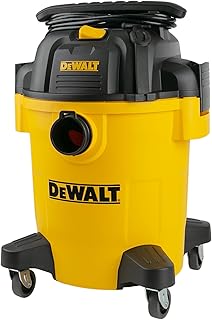
If you’re outfitting a first shop or need a nimble vac to live next to the miter saw, the DXV06PL hits a sweet spot. The poly tank resists dents and keeps the unit lighter than metal‑bodied peers, and the inflation kit is surprisingly useful for blowing out tool housings, inflating dust boots, and clearing chips from jigs.
To make it a sawdust star, add a high‑efficiency bag and a fine‑dust or HEPA‑rated cartridge (check compatibility before purchase). That two‑stage approach traps the fines that standard cartridges miss and keeps suction high during long sanding sessions. The compact tank is fine for cutting and sanding, but expect frequent dumps if you’re thicknessing boards.
2. DEWALT DXV06P 4-Peak HP 6-Gallon Wet/Dry Shop Vacuum with Blower — Best small-shop vac with handy blower mode

$103.97 on Amazon
The DXV06P adds a dedicated blower function to a compact, jobsite‑friendly form factor. For woodworkers, that means quick chip clearing between cuts and an easier time managing dust in awkward spots. Paired with a high‑efficiency bag and a fine‑dust cartridge, it becomes a very capable dust extractor for sanders, routers, and miter saws—without the heft of a larger tank.
Its size is both a strength and a limitation: great around a bench, not ideal for hours of planing. Keep the hose runs short and connections snug to maximize static pressure to small tool ports, and consider an adapter set so it plays nicely with your sander, router, and track saw fittings.
3. DEWALT DXV12P 12-Gallon 5.5 HP Wet/Dry Shop Vacuum — Best for planers, jointers, and big messes
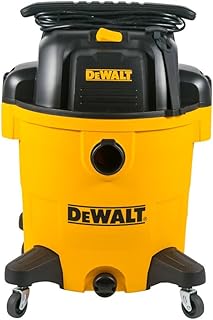
$129.00 on Amazon
If your workflow includes planing rough stock or jointing wide faces, the DXV12P’s capacity is a real advantage. It sustains cleanup between operations and maintains usable suction with a 2‑1/2 inch hose for chips. Woodworkers often pair a 12‑gallon vac with a mini‑cyclone so most debris never touches the filter—an easy way to keep suction strong and maintenance minimal.
To make it a true fine‑dust catcher for sanding and sheet‑good work, run a high‑efficiency bag and a fine‑dust/HEPA‑rated cartridge. You’ll protect the motor, reduce airborne dust, and still have the headroom to handle big cleanups at the end of the day.
4. DEWALT DXV09P 9‑Gal Wet/Dry Vac — Powerful 5HP, 3‑in‑1 versatility for balanced shops
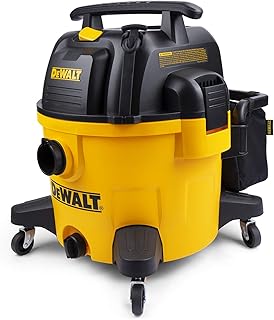
$0.00 on Amazon
The DXV09P is a “just right” size for many woodshops: big enough to tackle chips from the router table and table saw, yet compact enough to live under a bench. Its 3‑in‑1 utility lets you vacuum, blow, and handle wet pickup, so it transitions from sanding duty to garage cleanup without missing a beat.
To make the most of its power with small tool ports, keep the hose short and upgrade the filtration: run a high‑efficiency bag plus a fine‑dust/HEPA‑rated cartridge and it behaves far more like a pro extractor than a basic shop vac. Add a simple cyclone if you routinely generate shavings; you’ll go longer between filter cleanings and keep airflow steady.
5. DEWALT DXV10P 10-Gallon Wet/Dry Shop Vacuum — 5.5 HP, 90 CFM workhorse for tool-connected sanding

$128.66 on Amazon
For continuous sanding or cutting sessions, airflow stability matters—and the DXV10P’s 90 CFM rating gives it a leg up for tool‑connected use. Pair it with a 1‑7/8 inch hose and the right adapter for your sander or track saw, and you’ll notice cleaner cuts, less airborne dust, and fewer filter clogs when you run a bag plus fine‑dust cartridge.
The 10‑gallon size is a sweet middle ground: more headroom than a compact vac but easier to maneuver than a 12‑gallon unit. If your shop toggles between sanding, routing, and periodic machine cleanup, this is a strong “one vacuum to do it all” pick—especially once you dial in the accessories.
6. DEWALT DXV09PA 9-Gallon Wet/Dry Shop Vacuum with Blower, 5 Peak HP — Pro-leaning features in a mid-size package
$134.83 on Amazon
The DXV09PA builds on the versatile 9‑gallon format with a blower function and a strong 5 peak HP motor. It’s a great fit for small to mid‑size shops that want one machine to follow them from miter saw to router table to bench cleanup. With the right filtration stack—high‑efficiency bag plus a fine‑dust or HEPA‑rated cartridge—it shifts from “general cleanup” to “serious fine‑dust capture” quickly.
Use the blower mode to clear mortises or push chips into a pile before vacuuming. For sanding, keep hose runs tight and seal every connection. The more air you keep in the system, the better any vacuum behaves with small ports.
FAQ
- What’s the difference between a shop vac and a true dust extractor for woodworking?
A dust extractor is purpose‑built for fine dust: HEPA‑rated filters, auto‑tool‑start, and often automatic filter cleaning. A shop vac can approach that performance for woodworking when you add a high‑efficiency bag and a fine‑dust or HEPA‑rated cartridge, but it typically lacks auto features and certified filtration.
- Do I need HEPA filtration for sawdust?
For coarse chips, no. For sanding and sheet goods, a HEPA‑rated or fine‑dust cartridge plus a high‑efficiency bag significantly reduces airborne particulates. If you work in a small shop or indoors, upgrading filtration is one of the highest‑impact steps you can take.
- How do I keep my shop vac from clogging when planing?
Use a cyclone pre‑separator so chips drop out before the vacuum. Always run a bag inside the tank; it protects the cartridge and makes disposal easier. A 2‑1/2 inch hose helps move larger chips efficiently.
- What hose size should I use for woodworking tools?
For hand‑held sanders and routers, 1‑7/8 inch (or 1‑1/4 inch with adapters) maintains velocity at the tool. For table saws, router tables, and planers, a 2‑1/2 inch hose moves chips better. Use tight‑fitting adapters to avoid leaks.
- How much CFM is “enough” for a shop vac on small tools?
Around 80–100 CFM is a practical target for many sanders and saws, provided your connections are sealed and hose lengths are short. More CFM helps, but static pressure and good plumbing matter just as much.
The Sawdust Is Calling: Our Recommendations
- Best compact starter for fine dust: DEWALT DXV06PL. Light, maneuverable, and perfect to upgrade with a fine‑dust/HEPA cartridge and high‑efficiency bag. Great next to a miter saw or bench sander.
- Best small-shop all‑rounder with a blower: DEWALT DXV06P. Keeps footprint tiny while adding useful blower capability.
- Best for chip‑heavy work and larger tools: DEWALT DXV12P. Pair with a cyclone and 2‑1/2 inch hose, and you’ll keep up with planers and jointers while maintaining suction.
- Best balanced capacity and versatility: DEWALT DXV09P. A 9‑gallon, 3‑in‑1 platform that thrives in mixed tool environments.
- Best for continuous sanding and tool‑connected tasks: DEWALT DXV10P. With 90 CFM and a 10‑gallon tank, it’s the “do‑most‑things‑well” pick for many woodshops.
- Best mid‑size with pro‑leaning features: DEWALT DXV09PA. Strong suction and blower mode in a manageable chassis—excellent once you add fine‑dust filtration.
Final tip: Whatever you choose, the secret sauce is the setup. Run a high‑efficiency bag and a fine‑dust or HEPA‑rated cartridge, keep the hose short and sealed, and consider a mini‑cyclone for chip‑heavy days. Do that, and any of these DEWALT shop vacs can pull serious duty as a woodworking dust extractor—and your lungs, finishes, and tools will thank you.








Leave a Comment