

Best Foot Circulation Machines and Diabetic‑Friendly Massagers: Expert Picks for Warmer, Happier Legs and Feet
If your feet run cold, swell by day’s end, or ache from neuropathy or plantar fasciitis, you’re not imagining it—circulation in the lower legs and feet is easy to disrupt. The good news: modern foot and leg massagers can deliver targeted kneading, compression, and warmth that feel great and can temporarily boost local blood flow. For people managing diabetes or poor circulation, the right device—and the right settings—matter even more.
Below, you’ll find an in‑depth, safety‑first guide and six expert‑vetted picks spanning shiatsu foot machines and air‑compression leg wraps. We also clarify what “FDA‑cleared circulation boosters” actually are and when EMS technology makes sense.
Why foot circulation support matters
- Your calf and foot muscles act like a “second heart,” pumping blood back toward the torso. Long hours sitting or standing, injury, and chronic conditions can weaken that pump, leading to swelling, stiffness, and cold feet.
- Massage and pneumatic compression can stimulate the soft tissues and temporarily enhance local circulation. Heat adds comfort, eases muscle tension, and can support vasodilation at the surface—though it must be used conservatively, especially with diabetes.
- For plantar fasciitis or overuse aches, deep kneading can untangle tight fascia, while air compression helps “milk” fluid from the lower legs. Many people alternate modalities depending on symptoms: rollers for the soles; compression for calves and ankles; heat when feet feel icy.
Massage tech 101: shiatsu, air compression, and EMS
- Shiatsu/roller foot machines: These devices use mechanical nodes and rolling plates to knead the soles, arches, and heels. Some add airbags to squeeze the sides and tops of the feet. They’re excellent for plantar fascia tightness and general soreness.
- Air‑compression sleeves/boots: Inflating chambers gently squeeze calves and feet in a rhythmic, wave‑like pattern. This can help with end‑of‑day swelling, desk‑job fatigue, or recovery after activity. Many sleeves offer adjustable pressure and timed sessions.
- EMS “circulation boosters”: Electrical Muscle Stimulation pads or footplates activate the lower‑leg muscles using low‑level electrical impulses, aiming to augment the muscle pump. Some EMS devices are FDA‑cleared (510(k)) for improving circulation or reducing swelling. None of the products in this roundup are marketed as FDA‑cleared EMS devices; they use mechanical kneading and/or pneumatic compression. If you specifically want an EMS booster with regulatory clearance, confirm “FDA‑cleared” status on the manufacturer’s site and in the device’s documentation.
Safety essentials for people with diabetes or reduced sensation
- Heat wisely: Choose devices with low, controllable heat settings and auto shut‑off. With neuropathy, limit heat to the lowest setting and short durations (10–20 minutes), and inspect skin afterward. Many clinicians recommend keeping surface heat at or below roughly 104–108°F if sensation is reduced.
- Start gentle: Begin with the lowest kneading/compression intensity and slowly increase as tolerated. If you feel pressure points, numbness, or pain, stop and reassess.
- Wear socks: A thin pair protects skin from friction and hot spots in enclosed shiatsu devices. Several makers explicitly recommend socks during massage.
- Know contraindications: Do not use leg compression wraps if you suspect DVT, have severe peripheral arterial disease, open wounds, or untreated infections. If you use a pacemaker or other implanted device, note the manufacturer’s warnings (see Medisana’s explicit contraindication below).
- Clean regularly: Washable liners and easy‑wipe surfaces reduce infection risk. This is particularly important for diabetic foot care.
How we chose these foot and leg massagers (selection criteria)
- Evidence‑aligned mechanisms: Shiatsu/rolling and pneumatic compression with heat options; we also note where EMS would be relevant and what “FDA‑cleared” means.
- Safety for sensitive users: Low and high heat ranges, auto shut‑off, intensity controls, sock/use guidance, and manufacturer contraindications.
- Fit and ergonomics: Foot size limits, calf circumference, adjustability, and comfort for different body types.
- Usability: Remote controls, clear panels, timers, portability, and noise.
- Hygiene: Removable/washable liners or wipe‑clean surfaces.
- Value and support: Warranty notes when available, and any HSA/FSA eligibility listed by the manufacturer.
The best foot circulation machines and massagers right now
1. Shiatsu Foot Massager with Heat & Remote — a compact, enclosed machine with quick warmth and full-foot coverage
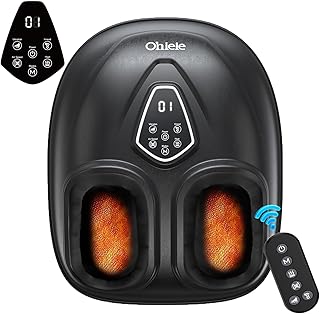
Soothe sore, cold feet with 360° shiatsu, fast heat, rolling massage and remote control. Washable liners make sharing easy — try it.
$109.99 on Amazon
View on AmazonPrice and availability are accurate as of 01/27/2026 04:01 pm GMT and are subject to change.
For a tidy, under‑desk solution that focuses on the feet, this enclosed shiatsu unit delivers deep kneading and air squeeze across the entire foot. The remote is a thoughtful touch if bending down is uncomfortable, and the removable liners make shared use more hygienic—a plus for diabetic foot care routines. Heat ramps quickly, and the timer/auto shut‑off adds peace of mind.
If you’re managing neuropathy or reduced sensation, stick with socks, start with low compression, and use the lower heat setting (approx. 113°F). The device’s full‑foot squeeze is effective for sore arches and heels, but it can be too assertive at max intensity for very sensitive users. Those needing calf work or an EMS circulation booster should look to sleeves or EMS devices, respectively.
2. Medisana Heat & Compression Leg Massager — precise, heated air compression for calves and feet
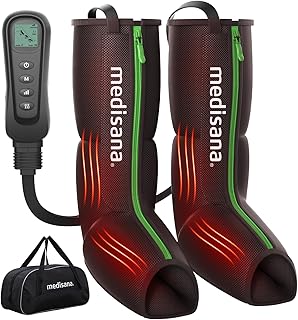
Targeted air compression + heat for calves and feet — adjustable pressures, modes and timers ease swelling, soreness and boost circulation. Quick, comfy relief. Learn more.
$99.99 on Amazon
View on AmazonPrice and availability are accurate as of 01/27/2026 04:02 pm GMT and are subject to change.
If swelling, heavy legs, or end‑of‑day fatigue are your main complaints, wave‑like air compression plus optional heat can be a game‑changer. Medisana’s wraps let you target upper/lower calves and feet separately, and the pressure range spans comfortable to quite firm. The 30–60‑minute timers make it simple to set and forget.
Important safety note: Medisana advises against use with pacemakers, defibrillators, or other implanted devices. With diabetes, stay on lower heat (113°F) and lower compression first, checking skin afterward. There’s no mechanical kneading here; if plantar fascia tenderness is your primary issue, pair this with a dedicated rollers‑style foot device—or choose a hybrid foot‑and‑calf machine below.
3. Shiatsu Foot Massager with Heat — deep kneading plus 9‑level air compression and optional vibration

Deep shiatsu kneading, adjustable heat, 9 airbag levels and vibration for soothing relief. Fits up to men’s 13, remote control and washable cover—try it for daily comfort.
$189.98 on Amazon
View on AmazonPrice and availability are accurate as of 01/27/2026 04:02 pm GMT and are subject to change.
When you want more granular control, this feature‑rich shiatsu model stands out. The 9‑level compression scale lets you find a gentle squeeze even if you’re neuropathy‑prone, and the three heat levels top out at a conservative ~115°F—useful for comfort without venturing into higher temperatures. The adjustable handle is practical, allowing relaxed positioning under a chair or recliner.
The tradeoff for all that control is size and complexity. Take a few sessions to fine‑tune roller direction, compression level, and vibration; if any single mode feels busy, pare back to heat plus light kneading. As with all enclosed massagers, socks help reduce friction. Those needing calf compression should consider a sleeve‑style unit.
4. Shiatsu Foot & Calf Massager with Heat and Remote — wide, open design that handles feet and calves (FSA/HSA eligible)
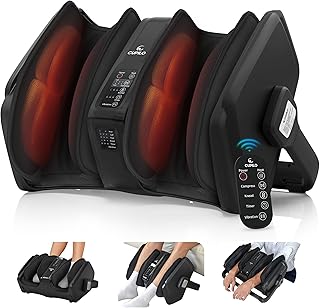
Wide heated foot & calf massager with adjustable support, customizable compression/kneading, remote/timer—relief for plantar fasciitis, neuropathy, and sore muscles.
$209.99 on Amazon
View on AmazonPrice and availability are accurate as of 01/27/2026 04:03 pm GMT and are subject to change.
If you want one machine that hits both feet and lower legs without the bulk of full boots, this hybrid is a smart middle ground. Compression, kneading, and heat are all adjustable, and the lower heat range (104–113°F) is friendly for users wary of high temperatures. The remote’s long range is especially helpful for anyone with limited mobility. It’s also listed as FSA/HSA eligible, which can ease the out‑of‑pocket cost.
Expect some tinkering to dial in the bar angle that best targets your calves or soles. Because it’s an open design, the sides of the feet won’t be squeezed as completely as in enclosed foot boxes. For broad versatility on the couch or at a desk, though, it’s a compelling choice.
5. Nekteck Shiatsu Heated Foot Massager — simple, portable relief with toe‑touch controls (FSA/HSA eligible)

HSA/FSA-eligible foot massager: 6 heads, 54 nodes + heat, toe-touch controls and ergonomic, portable design—soothing relief at home or office. Learn more.
$49.99 on Amazon
View on AmazonPrice and availability are accurate as of 01/27/2026 04:03 pm GMT and are subject to change.
For straightforward kneading without the bulk or learning curve, Nekteck’s platform delivers. It excels under a desk or couch where you can slide feet on and off quickly. The toe‑tap controls are a small but meaningful win if bending is hard, and the ergonomic angle suits relaxed lounging.
Because there’s no air compression or full enclosure, this isn’t the pick for ankle/instep squeeze or swelling management. The nodes are assertive; people with neuropathy or marked tenderness should start with thick socks and brief sessions. As a simple, budget‑friendly tool for tired arches and heels, it earns a spot.
6. CINCOM Air Compression Leg & Foot Massager — gentle, wave‑like compression with extenders up to ~28.5″
CINCOM’s sleeve system is an approachable entry into air compression. The wave‑like squeeze feels soothing after long workdays, and the built‑in 20‑minute auto shut‑off is a safety‑forward default. With extenders included, it accommodates larger calves better than many consumer wraps.
While it lacks heat, that can be a positive if you’re heat‑sensitive or prefer a cooler experience. As always, avoid compression wraps if you suspect DVT or have been told to avoid external compression. For day‑to‑day leg comfort, it’s an easy, gentle routine to keep.
FAQ
What’s the difference between a foot massager and an FDA‑cleared “circulation booster”?
- Most foot massagers use mechanical kneading and/or pneumatic compression. They relieve tension and can temporarily improve local circulation through tissue stimulation.
- FDA‑cleared “circulation boosters” typically use EMS (Electrical Muscle Stimulation) to contract lower‑leg muscles, augmenting the calf pump. Some have 510(k) clearance for improving circulation or reducing swelling. None of the products above are marketed as FDA‑cleared EMS devices. If you specifically need an EMS unit, verify “FDA‑cleared” status in the product’s official documentation.
Are foot massagers safe for people with diabetes or neuropathy?
- Often, yes—with precautions. Choose low, controllable heat (ideally 104–108°F), start at the lowest intensity, wear socks in enclosed machines, and limit sessions to 10–20 minutes while you evaluate tolerance. Inspect skin after each use for redness, hot spots, or abrasions. If you have severe neuropathy, foot ulcers, or vascular disease, consult your clinician before using any massager or compression device.
Do these devices improve circulation?
- Shiatsu and pneumatic compression can temporarily enhance local blood flow and reduce the feeling of heaviness. EMS devices have small clinical studies showing increased venous return during use. However, these products are not a replacement for medically prescribed compression stockings, lymphedema pumps, or treatment plans for vascular disease. Think of them as comfort and adjunct‑recovery tools.
How hot is “too hot” for heated foot massagers?
- For sensitive skin or neuropathy, favor the lowest setting and keep surface heat roughly at or below 104–108°F. Some devices offer higher settings (e.g., 113–122°F+). If you have reduced sensation, avoid the high setting and check your skin post‑session. Heat should feel gently warm—never hot or “stingy.”
How often should I use a foot or leg massager?
- Many users do well with 1–2 sessions per day, 10–30 minutes each. Start shorter and gentler, especially if you’re new to compression or shiatsu. If you notice lingering soreness, reduce intensity or frequency. For swelling, a brief session after work and again before bed can be effective.
A confident close: Find your fit, then build the habit
There’s no single “best” foot‑circulation device—there’s the best match for your symptoms, safety needs, and routine:
- For enclosed, full‑foot kneading with quick heat: The Shiatsu Foot Massager with Heat & Remote (Pick #1) is a compact, hygienic all‑rounder for arches and heels.
- For swelling and calf fatigue: Medisana’s heated compression sleeves (Pick #2) or CINCOM’s gentle wraps (Pick #6) bring adjustable wave‑like pressure; choose Medisana if you want heat and a wider pressure range.
- For granular control and conservative heat: The feature‑rich Shiatsu Foot Massager with Heat (Pick #3) offers 9 compression levels and 100–115°F warmth—excellent if you’re heat‑sensitive.
- For one unit that reaches calves and feet without full boots: The open‑platform Shiatsu Foot & Calf Massager (Pick #4) balances kneading, compression, and low‑range heat, and is FSA/HSA eligible.
- For simple, portable relief: The Nekteck platform (Pick #5) is a value pick with deep kneading and toe‑touch controls, also FSA/HSA eligible.
A final word on safety: If you live with diabetes, neuropathy, or vascular concerns, favor lower heat, lighter pressure, and consistent skin checks. When in doubt, ask your clinician—then use your massager regularly. The habit, not the hardware, is what keeps feet warmer, lighter, and happier over time.








Leave a Comment