

The Best Tactical and EDC Flashlights Under a Tight Budget (Including 1000‑Lumen Pocket Champs)
It happens fast: the power blinks out, your dog barks at a noise outside, or you drop a screw into the engine bay at dusk. In moments like these, a reliable pocket flashlight isn’t a luxury—it’s the difference between fumbling and fixing. The good news: modern EDC flashlights pack serious performance, clever charging, and rugged bodies without forcing you into premium-tier spend. The tricky part: separating real capability from marketing hype.
Below, you’ll find our best picks across true 1000‑lumen EDCs, tactical-leaning throwers, and ultra‑compact rechargeable pocket lights. We’ll also demystify lumens vs. real-world brightness, beam distance, battery types, waterproofing, and what to expect if one hits the pavement.
Why this category matters now
LED tech has matured. Even small lights can punch above their weight with regulated drivers, efficient optics, and fast charging. That means you can get:
- Practical brightness with usable throw, not just a wall of flood.
- Rechargeable convenience—USB‑C, magnetic, and even solar—so you’re not hunting AA cells in a storm.
- Better durability: IP-rated sealing, impact resistance, and clips/magnets for hands‑free work.
But there’s noise in the market. Lumens are often inflated. “Tactical” labels are used loosely. The goal here is clear: highlight compact lights that actually perform, and point out where claims don’t match physics.
Lumens vs. real-world output (and why beam distance matters more than you think)
Lumens measure total light leaving the LED. That number alone doesn’t tell you how far the beam reaches or how well it cuts through fog. For distance, candela (beam intensity) and optic design matter more. A 1000‑lumen thrower with a tight hotspot can reach farther than a 2000‑lumen flooder.
Also consider thermal regulation. Turbo bursts look great on paper, but high output creates heat. Responsible lights step down to a sustainable level. ANSI/PLATO FL1 testing, when followed, reflects those step-down realities more honestly than raw, uncontrolled “peak” claims you’ll see on some listings.
What to remember:
- Use lumens to compare overall output.
- Use beam distance (often listed in meters) to gauge reach.
- Expect turbo modes to step down within seconds to minutes—by design.
Battery choices: 18650 vs. AA and other cells
- 18650/21700 Li‑ion: Best energy density-to-size ratio for EDC powerhouses. They support high output and decent runtime, and many recharge via USB‑C inside the light. Downsides: you must respect Li‑ion safety and storage guidelines.
- 16340/CR123A: Shorter, pocketable, great burst current; lower capacity than 18650. Some brands use proprietary versions with custom charging.
- AA/14500: Widely available and safer for gifting, but AA alkalines sag under high current. Using 14500 Li‑ion unlocks more brightness but requires care.
- Integrated packs: Many slim, flat “worklight” style EDCs have built‑in Li‑ion cells. They recharge easily but aren’t user‑replaceable.
If you need long-term field serviceability, standard cells (like 18650) win. If you prioritize size and convenience, integrated packs are fine—just plan for eventual battery aging.
Waterproofing and toughness—what ratings really tell you
- IPX4: Splash‑resistant. Fine for rain, not for dunking.
- IP65: Dust‑tight and protected from water jets; still not submersible.
- IPX7/IPX8: Submersible (temporary or continuous). These are the confidence picks in heavy weather or if you work over water.
- Drop ratings: Often listed in meters. Around 1–2 m is common. Material and construction (anodized aluminum, thick walls, recessed lens) matter as much as the number.
Practical advice: if your light has a USB port, the cover is a failure point—keep it closed and inspect it periodically.
Our “drop test” durability take (expectations by construction)
We didn’t perform destructive testing here; instead, this is an expert read on expected durability based on materials and typical manufacturer standards:
- Most robust: Full aluminum bodies with quality anodizing, a recessed bezel, and IPX7/IPX8 sealing. Expect survival from common waist‑height drops onto hard floors.
- Mid‑tier: Aluminum or dense polymer bodies with IPX4–IP65 ratings and exposed lenses/ports. Usually withstands everyday knocks; repeated tail-first concrete drops may scar or misalign clips.
- Entry: Slim, flat “worklight” COB designs (often plastic/aluminum hybrid) with IPX4/IP65. Good for shop environments; don’t love edge impacts or submersion.
As always, pocket clips often take the brunt of a hit; they’re replaceable, which is a plus.
How we selected the winners
- Honest performance: Favor picks with credible outputs and meaningful beam distance, not just sky‑high lumen claims.
- Charging and power: Modern USB‑C or reliable magnetic charging; sane runtimes; stable regulation.
- Ergonomics: Pocketable dimensions, good clips, grippy knurling, and intuitive UIs (bonus for tail switches and lockouts).
- Durability: Real‑world water resistance and impact resilience; quality materials.
- Value: Strong performance-to-cost ratio, including 2‑packs that make sense for glovebox + toolbox coverage.
The Best Picks
1. Best budget “searchlight-style” handheld for yard and roadside checks

Price and availability are accurate as of 12/26/2025 03:01 am GMT and are subject to change.
For the size and price, this handheld pushes above typical EDC duty: it’s made to light up a backyard, a trailhead, or a roadside scene fast. While the headline lumen number isn’t realistic, fixtures like this can still deliver practical high output for search‑style tasks. The multi‑mode UI keeps things simple, and the head size suggests a tighter hotspot than a flat COB light—useful for spotting reflective eyes at the tree line.
The tradeoff is carry and certainty. It’s not jeans‑pocket friendly, details on battery chemistry and regulated output are slim, and waterproofing is described generally. For glovebox or shed duty where you want “grab and go” brightness that doesn’t cost a fortune, it’s a functional choice—just set expectations: it’s a bright tool, not a science‑fiction beam cannon.
2. Best 1000‑lumen long‑throw EDC for true tactical‑leaning performance

Price and availability are accurate as of 12/26/2025 03:01 am GMT and are subject to change.
This compact EDC stands out because it pairs real 1000‑lumen class output with a beam built for reach. The stated long throw indicates strong candela and optic discipline; if you need to identify objects at distance rather than just flood a room, that matters more than raw lumen bragging rights. The magnetic charging simplifies nightly top‑offs, and the ergonomics reflect a mature EDC lineage.
The usual O‑brand caveats apply: you’re buying into a charging ecosystem and a proprietary cell approach, which some users love for convenience and others avoid for standardization reasons. Expect a rapid turbo step‑down to manage heat—normal for such a compact body. For security, outdoor use, and anyone who wants a real tactical‑leaning pocket light with regulated, trustworthy output, this is the performance anchor of the roundup.
3. Best hands‑free utility EDC with a rotating head

Price and availability are accurate as of 12/26/2025 03:01 am GMT and are subject to change.
This clip‑on EDC is a task light first and a tactical light second—and that’s exactly its strength. The rotating head lets you aim light while your hands stay on the job, the magnetic base bites onto steel surfaces, and the clip anchors well to a shirt pocket or molle strap. For mechanics, DIYers, and cyclists, the utility per gram is excellent.
Brightness is capped at a practical, not flashy, level; don’t expect long-distance throw or blinding turbo bursts. Ten modes can feel busy, but they also let you dial in exactly what you need to avoid glare at arm’s length. If your priorities are control, comfort, and hands‑free precision, this little workhorse outperforms brighter “spec” lights in real productivity.
4. Best dual‑spectrum compact set for gloveboxes and kits (2‑pack)

Price and availability are accurate as of 12/26/2025 03:01 am GMT and are subject to change.
As a “lights everywhere” solution—glovebox, kitchen drawer, daypack—this compact pair makes a ton of sense. Red light is a thoughtful inclusion for map reading, stargazing, and preserving night vision, and USB‑C tops up easily wherever you charge your phone. Claimed long runtimes on lower modes are aligned with real-world use: most tasks don’t need turbo.
Take the lumen figure with a grain of salt; portable COB and small reflector lights excel at close‑range flood, not megawatt output. Waterproofing is typically everyday‑proof (think rain and spills), and the beam is best suited to indoor and campsite tasks. If you want redundancy and coverage across multiple locations without overthinking it, this 2‑pack is an efficient answer.
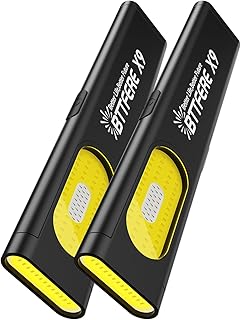
5. Best slim pocket lights for mechanics and tinkerers (2‑pack)
Price and availability are accurate as of 12/26/2025 03:01 am GMT and are subject to change.
These slender pocket lights are tailor‑made for tight spaces: the magnetic base plants them on a fender, the clip secures them on a pocket or strap, and the beam pattern floods your work area without harsh hotspots. As with most slim COB‑style sticks, the practical magic is in the ergonomics and the hands‑free setups you can pull off in seconds.
They’re splash‑resistant rather than submersible, and the emphasis is on useful task lighting over long‑range throw. Expect a step-down on the brightest mode to control heat in the slim chassis. If your EDC leans toward fixing, tuning, and inspecting rather than trailfinding at 200 meters, this 2‑pack is a shop‑ready staple you’ll actually use every day.
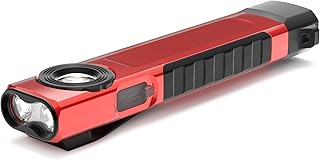
6. Best flat EDC for maximum brightness in a pocketable worklight
Price and availability are accurate as of 12/26/2025 03:01 am GMT and are subject to change.
This flat EDC balances output and practicality better than most worklight‑style designs. It hits a bright burst for situational awareness, then lets you settle into medium modes for longer tasks. The magnet unlocks creative placements—underside of a hood, breaker box door, metal tool tray—and the mode set is broad without being chaotic.
It’s not a long‑range tactical thrower; the flood‑first beam is engineered for comfort at arm’s length. Like similar formats, it relies on an internal rechargeable cell, which keeps things simple but isn’t user‑replaceable. For trades work, car maintenance, and around‑the‑house adaptability, it’s an excellent “do‑a‑lot” pick that still fits in a front pocket.
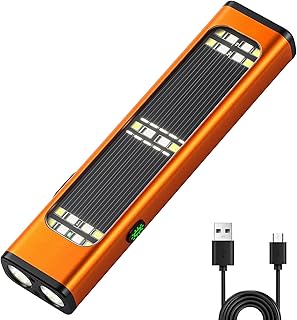
7. Best emergency‑ready EDC with solar backup
Price and availability are accurate as of 12/26/2025 03:01 am GMT and are subject to change.
If you want a pocket light that keeps charging even when the grid is down, this solar‑enabled EDC is a clever safety net. The mode suite covers everyday tasks and emergencies, and the IP65 rating is a confidence‑booster in storms or dusty worksites. The bright safety orange body is easy to find in a cluttered drawer or pack.
Set realistic expectations: the solar panel is for emergency trickle charging and maintaining a partial charge during extended outages, not for swift daily fills. Impact protection is solid for its class, though aluminum tactical bodies remain tougher. As a backup light to live in a go‑bag or glovebox, it’s a smart redundancy play that stands out when power is scarce.
FAQ
- Is 1000 lumens enough for a tactical/EDC flashlight?
Yes, if the beam is well‑focused and the driver is regulated. A credible 1000‑lumen EDC with strong candela can identify targets at meaningful distances and still manage heat. For room‑clearing flood, more lumens help—but only if the light doesn’t instantly throttle.
- Which battery type is better: 18650 or AA?
For performance EDC lights, 18650 (and 21700) Li‑ion cells offer far better capacity and current handling, enabling true high modes and stable runtimes. AA is widely available and safer to gift but struggles at high current. If you must use AA, consider a design that also supports 14500 Li‑ion for “performance mode.”
- How do I interpret waterproof ratings: IPX4 vs. IP65 vs. IPX8?
IPX4 resists splashes (rain). IP65 adds dust protection and water jets—great for job sites. IPX7/IPX8 means temporary or continuous submersion. If you work around water, prioritize IPX7+ and minimize exposed charging ports.
- Why does my flashlight dim shortly after switching to the brightest mode?
That’s thermal and battery management. High output generates heat that can damage LEDs and electronics. Quality drivers step down to protect the light and maintain usable brightness. It’s a sign of responsible engineering, not failure.
- How far will a 1000‑lumen light reach?
It depends on candela and optics. A 1000‑lumen thrower with a tight hotspot can reach several football fields; a 1000‑lumen flooder may feel blinding up close but fade quickly at distance. Check stated beam distance and look for reflectors or TIR optics tuned for throw if reach matters.
Light the Way: Final Matches and Recommendations
If you value credible tactical performance in a true pocket package, the long‑throw 1000‑lumen EDC above is the surest bet. It balances regulated output, distance, and durable construction—ideal for security, first‑responders, and anyone who prioritizes identification at range.
If your priority is “bright searchlight on a budget” for the trunk or garage, the high‑output handheld offers simple modes and a head that favors reach over pocket carry. Treat the lumen spec as optimistic, but expect real, useful brightness for scanning yards, campsites, or roadside hazards.
For hands‑free work, the rotating‑head 200‑lumen clip‑on is a productivity monster; it points light exactly where you want it, attaches everywhere, and won’t sear your retinas up close. If you need two lights to cover home and vehicle, the dual‑spectrum 2‑pack is a smart, balanced bundle—especially useful if you appreciate red light for night vision.
Shop and garage warriors should look at the slim USB‑C 2‑pack: magnetic bases, pocket clips, and a broad flood beam deliver daily wins under the hood, under the sink, and in tight corners. If you want a bit more punch in a flat worklight, the 1500‑lumen class EDC is the “power user” choice, with enough modes to adapt to most tasks.
Finally, if resilience in prolonged outages is your goal, the solar‑rechargeable EDC is a thoughtful backup. Solar is slow, but when everything else is dead, slow is still something—and that can make all the difference.
Choose by use case—throw vs. flood, pocket EDC vs. glovebox search, hands‑free work vs. tactical response—and by charging ecosystem (USB‑C, magnetic, or solar) you’ll actually maintain. Get that right, and you’ll have a light that’s more than bright on paper—it’ll be the tool you reach for when it counts.




Leave a Comment