

The 6 Best 70–300mm Telephoto Zooms for Wildlife and Bird Photography (Canon, Nikon, Sony)
There’s a special thrill to bringing faraway wildlife close—watching an egret’s eye catch the morning light or freezing a falcon mid-dive. A 70–300mm telephoto zoom is the classic starting point for that magic: long enough to reach, compact enough to carry, and versatile enough to handle everything from perched owls to deer at dusk. If you’re hunting for a telephoto lens for wildlife or a DSLR zoom lens for birds, the six lenses below cover the most popular mounts and use cases, including standout Sigma and Tamron telephoto lens options and staple 70–300mm picks for Canon and Nikon shooters.
Before the picks, here’s what matters and how to shop wisely.
Why a 70–300mm Zoom Matters for Wildlife
Wildlife doesn’t wait. Subjects appear at unpredictable distances, light changes fast, and you rarely get to “zoom with your feet.” That’s where a 70–300mm shines.
- Range that adapts: 70mm is wide enough for environmental portraits of larger animals, while 200–300mm pulls in detail without crowding your subject. On APS-C cameras, that 300mm behaves like ~450mm (Nikon DX) or ~480mm (Canon APS-C), giving you even more effective reach—especially helpful for small birds.
- Portability: Compared with super-tele primes, these zooms are compact and manageable for long hikes, blinds, or safari vehicles.
- Handheld-friendly: Paired with effective image stabilization, a 70–300mm is practical for dynamic, real-world wildlife work where tripods can be impractical or restricted.
In short, you get reach, flexibility, and packable size—three things wildlife shooters value in the field.
The Big Three: Focal Length, Stabilization, Weather Sealing
- Focal length and aperture: Most 70–300mm lenses use a variable aperture (e.g., f/4–5.6 or f/4.5–6.3). At 300mm, you’ll often be at f/5.6–6.3. That means you’ll want sufficient light or higher ISO to keep shutter speeds fast enough for moving subjects, especially birds in flight (think 1/1000s or faster).
- Image stabilization (IS/VR): Optical stabilization is gold for static subjects and low light. It helps you frame at 300mm and keeps perch shots tack sharp. Note that stabilization doesn’t freeze subject motion; you still need fast shutter speeds for action. Some lenses add panning-aware modes that help when tracking birds in flight.
- Weather sealing: Dust, mist, and unexpected drizzle are part of outdoor shooting. True weather sealing (with gaskets and treated surfaces) pays for itself in reliability. If your lens isn’t sealed, a simple rain cover goes a long way to protect your gear in the field.
Zoom vs. Prime Lenses on Safari: Which Is Better?
- Zoom advantages: Wildlife seldom cooperates. In safari trucks and hides, your shooting distance changes constantly. A 70–300mm zoom lets you compose quickly without swapping lenses, a major convenience when dust is swirling and animals are on the move.
- Prime advantages: Fixed telephoto primes (like a 300mm f/4) typically offer brighter apertures, superior sharpness, better subject isolation, and often faster AF tracking. They excel when you know your working distance or need extra light.
- Practical takeaway: For most travelers and mixed wildlife scenarios, a 70–300mm zoom wins on flexibility. If you specialize in birds or low light, a longer or faster prime becomes compelling—often as a second lens, not a replacement.
How to Shop These Lenses Like a Pro
- Autofocus behavior: Fast, quiet AF motors (USM, SWM, RXD, etc.) make a difference for tracking birds and minimizing focus hunting in brush.
- Minimum focus distance: A shorter minimum focus is handy for frame-filling shots of butterflies, reptiles, and larger flowers you encounter during wildlife outings. Some 70–300mm zooms include “macro” modes that boost magnification at the long end.
- Handling and balance: A lighter lens is easier to handhold for long stretches. If your lens lacks a tripod collar, consider a monopod for extra stability during extended sessions.
- In-lens vs. in-body stabilization: Canon and Nikon DSLR systems rely on optical stabilization in the lens. Many Sony bodies provide in-body stabilization (IBIS), which is helpful if the lens lacks its own stabilizer.
- Compatibility and future-proofing: Canon EF and Nikon F lenses adapt well to their mirrorless bodies via official adapters. Sony FE glass is native to its mirrorless system and ready to go.
Selection Criteria: What Made the Cut
- Real-world reach and flexibility across 70–300mm
- Effective image stabilization and/or strong IBIS compatibility
- Weather sealing or at least moisture resistance for outdoor reliability
- Fast, confident autofocus suited to wildlife and birds
- Optical quality at 300mm where it counts most
- Build quality and handling for long days outside
- Mount coverage for Canon, Nikon, and Sony shooters
Below are the six standout picks—each one a strong telephoto lens for wildlife, with special attention to 70–300mm lenses for Canon, Nikon, and a compact Tamron option for Sony.
1. Canon EF 70-300mm f/4-5.6 IS II USM — Smart, fast, and versatile for Canon DSLRs
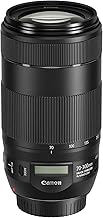
See focus distance, focal length and image shake at a glance — helps nail sharp shots and steady telephoto framing.
$689.00 on Amazon
View on AmazonPrice and availability are accurate as of 01/31/2026 11:22 pm GMT and are subject to change.
Canon’s updated 70–300mm hits the sweet spot for a DSLR zoom lens for birds. The standout is the Lens Information Display, showing focus distance, focal length, and even shake level—fantastic feedback that helps you improve handholding technique and confirm you’ve locked focus on an eye. Paired with its effective IS and speedy Nano USM drive, it’s a confident wildlife partner.
At 300mm, you’ll want decent light or higher ISO for moving subjects, but stabilizer-assisted perch shots look clean. The build is solid for carry-everywhere use, though the lens isn’t weather sealed, so pack a simple rain sleeve for fieldwork. For Canon EF shooters, it’s a modern, dependable 70–300mm that does a lot right without weighing you down.
2. Canon EF 70-300mm f/4-5.6L USM (Renewed) — Pro-grade optics and weather sealing

Pro L-series 70–300mm: sharp from 1.2m, 4-stop IS and UD glass, weather-sealed with fluorine coating—durable, reliable glass worth a closer look.
$0.00 on Amazon
View on AmazonPrice and availability are accurate as of 01/31/2026 11:23 pm GMT and are subject to change.
If you want the premium Canon 70–300mm, this is it. The L-series version is built for the outdoors, with weather resistance and fluorine-coated elements that shrug off dust, fingerprints, and light drizzle. Optical quality holds up beautifully through the range, and the stabilizer is up to the task for handheld telephoto work and panning.
The tradeoff is weight and size—noticeable on long hikes or cramped safari vehicles—but the optional tripod collar makes a monopod or support setup much easier at 300mm. For Canon wildlife shooters who value weather sealing and top-tier optics, this is a standout telephoto lens for wildlife and travel.
3. Sigma 70–300mm f/4–5.6 DG Macro (Motorized) for Nikon — Budget reach with a useful macro twist

Autofocus-ready for Nikon, 300mm tele with 1:2 macro, SLD glass and multi-coating reduce chromatic aberration and flare—ideal for portraits, sports and close-ups.
$0.00 on Amazon
View on AmazonPrice and availability are accurate as of 01/31/2026 11:23 pm GMT and are subject to change.
This Sigma brings you to 300mm and adds a compelling macro feature that can produce frame-filling close-ups at the long end. For wildlife photographers who split time between birds and the small details of nature, that’s a rare advantage in this price and weight class. The built-in focus motor also keeps it compatible with Nikon DSLRs that lack an in-body AF drive.
The absence of stabilization means you’ll lean on faster shutter speeds, a higher ISO, or a monopod—especially critical at 300mm. Optical performance is respectable with good technique, but it won’t match stabilized, modern designs. If you need reach and macro versatility on a tight budget, it’s a practical Sigma telephoto lens option for Nikon users.
4. Nikon 70-300mm f/4.5-5.6G AF-S VR — A proven, balanced telephoto for Nikon DSLRs

Shoot sharp telephoto handheld – 105-450mm reach, VR lets you go up to 4 stops slower, ED glass for crisp color, quiet fast AF and non-rotating front. Explore details.
$579.95 on Amazon
View on AmazonPrice and availability are accurate as of 01/31/2026 11:23 pm GMT and are subject to change.
Nikon’s AF-S 70–300mm VR has long been a go-to for DX and FX users who want reliable reach without bulk. The VR system offers real-world benefits for stabilizing your frame and keeping perched subjects sharp. Autofocus is responsive, and internal focusing avoids awkward length changes that can spook subjects at close range.
It’s a strong wildlife and travel lens, but like most 70–300mm designs, sharpness is best before the last 10% of the range—stopping down a notch can help. Weather protection is limited, so plan accordingly for dust, spray, and sudden rain. Overall, a balanced 70–300mm lens for Nikon that still earns its place in many bags.
5. Canon EF 70-300mm f/4-5.6 IS USM — Classic stabilization and dependable AF for EF mount

Reach distant action with sharp, shake-free shots: 3-stop IS, fast quiet USM AF and pleasant bokeh, perfect for handheld wildlife and sports.
$0.00 on Amazon
View on AmazonPrice and availability are accurate as of 01/31/2026 11:24 pm GMT and are subject to change.
This earlier Canon 70–300mm remains a capable telephoto lens for wildlife, particularly if stabilization is a must and you value compact handling. The 3-stop IS helps tranquil scenes and perched birds look tack sharp at slower shutter speeds, and the USM autofocus is responsive for an older design.
However, the successor (lens #1 in this guide) improves autofocus speed, information display, and overall sharpness. If budget or availability steers you to this version, it’s still a practical EF zoom that gets the job done—just mind light levels at the long end, and consider stopping down slightly for better edge performance.
6. Tamron 70-300mm f/4.5-6.3 Di III RXD (Sony FE) — The tiny, travel-ready telephoto for mirrorless

Tiny, lightweight 70-300mm for Sony E: sharp to 300mm, dreamy bokeh, and silent, fast AF—perfect for wildlife, sports, and travel.
$0.00 on Amazon
View on AmazonPrice and availability are accurate as of 01/31/2026 11:24 pm GMT and are subject to change.
Tamron’s compact 70–300mm is a joy for hikers and travelers who want serious reach without bulk. It’s sharp to 300mm, and the RXD focus motor is both quick and whisper-quiet—excellent for skittish subjects and on-camera audio. Moisture-resistant construction boosts durability in the field, and the lens plays nicely with Sony’s advanced AF features.
There’s no optical stabilization, so this lens pairs best with Sony bodies featuring IBIS. For birds in flight and action, stick to fast shutter speeds; for static wildlife, IBIS and clean technique keep frames crisp. As a Tamron telephoto lens tailor-made for Sony FE, it’s a superb light-pack option that doesn’t compromise on image quality.
FAQ
- Is 300mm long enough for bird photography?
- Often, yes—especially on APS-C bodies where 300mm behaves like ~450–480mm. For small, distant songbirds, more reach is always welcomed, but you can combine careful fieldcraft, cropping, and good light to make 300mm work. For larger birds or closer habitats, 300mm is very effective.
- Do I really need image stabilization for wildlife?
- Stabilization is invaluable for handheld telephoto framing and static subjects, especially in dim light. It won’t freeze motion, so for birds in flight you’ll still use fast shutter speeds. Many lenses have a panning mode (or auto-detection) that helps with smooth tracking.
- How important is weather sealing?
- If you shoot in dusty savannas, misty wetlands, or unpredictable weather, sealing becomes a real asset for reliability. If your lens isn’t sealed, add a cheap rain/dust cover and periodically clean gaskets and barrels to keep grit at bay.
- Can I use these DSLR lenses on mirrorless cameras?
- Yes. Canon EF lenses adapt well to Canon’s RF-mount bodies with the official adapter. Nikon F lenses adapt to Nikon Z bodies using the FTZ/FTZ II adapter. Sony FE lenses are native to Sony’s mirrorless bodies and need no adapter.
- What shutter speeds should I aim for with birds?
- For flight: start around 1/1600s and adjust based on light, subject size, and your camera’s ISO performance. For perched birds or static wildlife, you can go slower—especially with stabilization—but keep an eye on subject movement and wind.
Lock On, Breathe, Release: The Telephoto Picks That Bring the Wild Closer
Here’s the quick match-up:
- Best all-around for Canon EF: Canon EF 70-300mm f/4-5.6 IS II USM (fast AF, smart display, excellent stabilization).
- Pro build and weather sealing for Canon: Canon EF 70-300mm f/4-5.6L USM (Renewed) (L-series optics, robust 4-stop IS, field-ready construction).
- Budget reach with macro versatility for Nikon: Sigma 70–300mm f/4–5.6 DG Macro (built-in AF motor, 1:2 macro).
- Balanced Nikon telephoto with VR: Nikon 70-300mm f/4.5-5.6G AF-S VR (reliable VR, quick AF, proven performer).
- Classic stabilized Canon EF on a budget: Canon EF 70-300mm f/4-5.6 IS USM (solid IS, compact, dependable).
- Lightest long reach for Sony mirrorless: Tamron 70-300mm f/4.5-6.3 Di III RXD (tiny, sharp, quiet AF, moisture-resistant).
If your priority is rugged reliability in the elements, go for the Canon L lens. Want a modern, feature-rich Canon EF zoom at a more approachable size? The IS II USM is the one. Nikon shooters who emphasize stabilization and everyday usability will be happy with the AF-S VR, while value hunters who also enjoy close-ups should look hard at the Sigma. And Sony photographers who hike far and pack light will love the Tamron’s size-to-reach ratio.
Whichever path you choose, remember the wildlife trifecta: solid support (or great IS/IBIS), fast shutter speeds for moving subjects, and meticulous focus on the eye. Do that, and these 70–300mm lenses will reward you with images that feel close enough to touch—even when the subjects stay wild and far.








Leave a Comment