

The Best DSLR Shoulder Rigs and Camera Shoulder Mounts for Stable, Cinematic Video
If you’ve ever tried to shoot a longer sequence handheld, you know the problem: micro‑jitters build up, fatigue creeps in, and even minor breathing sways show up in the footage. A well‑balanced dslr shoulder rig changes that equation. It turns your body into a stabilization platform—giving you three points of contact (shoulder plus two hands), improved inertia, and far cleaner motion than bare‑handed shooting.
Below, we break down what to look for in a camera shoulder mount, then guide you through five standout options that cover beginners, run‑and‑gun shooters, and aspiring narrative filmmakers looking to build out a complete video stabilizer rig for dslr and mirrorless setups.
Why Shoulder Rigs Matter for Motion That Looks “Intentional”
Handheld can be emotive—but it’s also unforgiving. A shoulder rig adds mass and contact points, which dampens micro‑vibrations from footsteps or focusing. As the rig’s weight rests on your shoulder, your arms are freed to steer rather than hold the entire load, producing movements that feel deliberate rather than shaky.
Unlike a gimbal, a shoulder mount preserves natural parallax and horizon changes. That makes it ideal for documentaries, live events, and dialogue scenes where you want dynamic camera language without the “float” of a motorized stabilizer. A good rig also positions your camera’s viewfinder or monitor closer to eye line for confident framing and rapid reframing.
Finally, a shoulder rig is a platform. Standard 15mm LWS rods let you add follow focus, matte boxes, wireless video, shotgun mics, and even battery plates that double as counterweights—a modular path from simple support to a complete production tool.
Common Use Cases (and How a Rig Serves Each One)
- Fast documentary and ENG: You’re moving through unpredictable environments with minimal crew. A compact rig with quick adjustments and comfortable padding will keep your footage stable while you react to the moment.
- Event and wedding coverage: Hours on your feet demand a rig that balances well, supports a zoom lens, and keeps fatigue low. Adding a small counterweight or rear battery plate often makes the difference over a long day.
- Narrative and branded content: Repeatable moves, precise focus pulls, and accessory mounting matter. You’ll want robust rosettes for handle articulation, a riser/baseplate to hit lens height for matte boxes, and a layout that keeps center of gravity over your shoulder.
- Hybrid creators: If you bounce between tripod, shoulder, and gimbal, prioritize quick‑release compatibility and foldable/packable designs that won’t slow you down.
How to Shop for a DSLR Shoulder Rig
Start with compatibility. Most rigs here follow the 15mm LWS standard, which means your follow focus, matte box, and lens supports will integrate without drama. Confirm that the rig’s baseplate or riser will align your lens center to your matte box if you plan to use one.
Next, consider adjustability. Look for ARRI‑standard rosettes (M6) on handles, sliding shoulder pads, and fore‑aft rod travel. The more you can tune where weight sits relative to your shoulder, the longer you’ll shoot without discomfort.
Comfort is non‑negotiable. Dense foam/EVA pads and a shoulder contour that fits your body reduce hot spots. If you plan to run heavier glass or add accessories, make sure there’s an easy way to mount a rear counterweight or battery plate on 15mm rods.
Finally, think about workflow. Quick‑release options (NATO rails, dovetail plates, or camera plates) help you hop between shoulder, sticks, and gimbal. Foldable designs are a win for travel, and robust clamping hardware prevents flex when you’re rolling fast.
Our Selection Criteria
- Build quality and materials (rigidity of the 15mm rod system, metal construction, dependable clamps)
- Adjustability (rosette‑based handgrips, sliding pads, fore‑aft balance range, risers)
- Comfort (pad design, padding density, contact area, ability to shoulders‑offset)
- Counterweight support (rear 15mm rod availability, battery plate options)
- Accessory compatibility (15mm LWS standard, ARRI rosettes, NATO rails, follow focus/matte box)
- Workflow speed (quick‑release choices, foldability, ease of packing)
- Value for aspiring videographers (upgrade path without replacing the whole rig)
1. NICEYRIG 15mm Shoulder Mount Pad — Minimal, modular foundation for lightweight builds

Price and availability are accurate as of 12/22/2025 12:20 am GMT and are subject to change.
If you’re building your first camera shoulder mount and want to stay modular, this pad is a pragmatic starting point. The aluminum railblock clamps to standard 15mm rods, so you can slide it forward or back to tame front‑heavy lenses, then add components as needs grow—handles, a riser baseplate, a follow focus, or a rear counterweight.
Comfort is serviceable, with cushioned material that softens contact for shorter shooting windows. For long takes or heavier lenses, plan on expanding: add front handgrips on rosettes for steering and a small rear weight (or battery plate) on the rods to push the center of gravity back toward your shoulder. As a minimal, affordable core for a video stabilizer rig for dslr, it’s hard to beat.
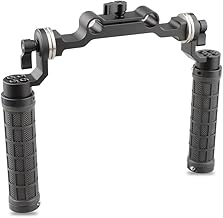
2. CAMVATE 15mm Rod Shoulder Mount Rig with Soft Rubber Grip & Rosette (1548) — Solid dual‑handle control with ARRI rosettes
Price and availability are accurate as of 12/22/2025 12:20 am GMT and are subject to change.
This CAMVATE rig steps you into a more complete dslr shoulder rig. The standout feature is the pair of ARRI‑standard rosette handgrips, which lock at virtually any angle—you can tuck your elbows in for steadier framing or cant the grips down for lower line of sight. The rosettes also resist creep, so your handle position stays put during longer takes.
The build is reassuringly rigid for its class, and the 15mm LWS rods open the door to tool‑less accessory mounting. Expect to add a rear counterweight or battery plate on the rods when you start using heavier glass; it transforms comfort and stability by pulling the balance point back over your shoulder. If you also want quick tripod transitions, pair it with a compatible camera plate or dovetail to round out the workflow.
3. Tilta TA-LSR-B Foldable Lightweight Shoulder Rig — Travel‑ready, dual quick‑release, and pro‑grade ergonomics

Price and availability are accurate as of 12/22/2025 12:20 am GMT and are subject to change.
If you want a rig that keeps up with fast crews and airline baggage limits, Tilta’s foldable shoulder rig is a standout. It combines 15mm rod compatibility with NATO rail quick‑release points, so you can collapse, re‑build, and switch shooting modes quickly. The machining quality and clamp tolerances are excellent, which translates to less flex and more confidence when you’re pulling focus or making quick pans.
Ergonomics are a highlight. The pad contour and handle articulation promote neutral wrists and a relaxed posture, and the rig accepts rear 15mm hardware for counterweights or battery plates to dial in balance. As a core for a narrative‑leaning video stabilizer rig for dslr or mirrorless cameras, it checks all the boxes: stability, comfort, accessorization, and workflow speed.
4. NICEYRIG 15mm Shoulder Rig with Riser Base Plate, Rods & Handle — A well‑rounded starter kit with lens‑height alignment

Price and availability are accurate as of 12/22/2025 12:20 am GMT and are subject to change.
For creators building a usable kit on day one, this NICEYRIG set provides the essentials: a riser baseplate to align lens height, 15mm rods for accessories, a shoulder pad, and a handle. The riser is particularly helpful if you plan to use a clamp‑on or rod‑mounted matte box, as it helps standardize lens center height across bodies.
It’s an honest, expandable foundation. Add a second front handle for symmetrical control, then mount a small counterweight or V‑mount plate at the rear to shift the center of gravity back. The result is a balanced shoulder mount that behaves well for interviews and handheld walk‑and‑talks. Compatibility with common follow focus units and lens supports makes it easy to grow with your ambitions.
5. CAMVATE 1472 Red Rubber Handle Shoulder Rig with Rosette — Grippy control and ARRI‑standard articulation

Price and availability are accurate as of 12/22/2025 12:21 am GMT and are subject to change.
This CAMVATE option centers on its tactile, red rubber handgrips—excellent for sweaty, high‑pressure event days. ARRI‑standard rosettes lock handle angles with confidence, which helps you fine‑tune wrist position and stance for steadier shots. Build quality is robust enough to support everyday use without wobble at the joints.
To complete the package, pair it with a camera baseplate/cage that offers a quick‑release and add rear 15mm rods for a counterweight or battery plate. That transforms the rig from front‑biased to neutral. As a dslr shoulder rig aimed at aspiring videographers, it’s a reliable way to gain control and stability while keeping the path open for future accessories.
FAQ
- How does a shoulder rig improve stability versus handheld?
A shoulder rig adds mass and three contact points (shoulder plus two grips), which increases inertia and reduces micro‑jitters from breathing or footsteps. Your arms steer rather than support all the weight, so motion looks intentional. With proper balance—often achieved by adding a rear counterweight—fatigue drops and shots stay steadier.
- Do I need a counterweight, and what works as one?
If your camera and lens make the rig front‑heavy, a counterweight helps immensely. You can use a dedicated 15mm rod counterweight or mount a rear battery plate (e.g., V‑mount/Gold‑mount) that powers accessories while doubling as mass. Position it on the rear rods until the rig rests neutrally on your shoulder.
- Will these rigs fit mirrorless cameras as well as DSLRs?
Yes. All the rigs above use the 15mm LWS standard, making them compatible with most DSLR and mirrorless camera bodies. Use a cage or baseplate with the correct mounting screws and, if needed, a riser to achieve standard lens height for matte boxes.
- What accessories should I plan to add first?
The common first add‑ons are a follow focus for precise pulls, a matte box for flare control and filtration, and a top or side handle for carrying. If you shoot long days, prioritize a rear counterweight or battery plate to improve balance and comfort.
- Shoulder rig or gimbal—how should I choose?
Gimbals excel at floaty, stabilized moves and walking shots. Shoulder rigs preserve natural handheld energy and allow faster framing changes, better accessory mounting, and easier operation in tight spaces without motor calibration. Many shooters keep both and choose based on the movement style the scene calls for.
Your Next Stable Shot Awaits: Matching Rigs to Your Shooting Style
- Budget‑conscious, modular start: The NICEYRIG 15mm Shoulder Mount Pad is the simplest, lightest way to turn a basic camera into a more stable handheld platform—add handles and a counterweight as you grow.
- Dual‑handle control and rosette precision: CAMVATE’s 15mm Rod Shoulder Mount Rig (Soft Rubber Grip & Rosette 1548) gives you the articulation and grip comfort that make a tangible difference in real‑world shooting.
- Longer balance range for accessories: NEEWER’s SR004 16″ Shoulder Rig provides extra fore‑aft travel, accommodating matte boxes, follow focus units, and rear weights without crowding.
- Premium, fast‑workflow build: Tilta’s TA‑LSR‑B is the pick for creators who travel, reconfigure often, and want top‑tier ergonomics with quick‑release convenience.
- Ready‑to‑shoot starter kit: The NICEYRIG 15mm Shoulder Rig with Riser Base Plate, Rods & Handle sets you up for matte box use and future expansion at a sensible entry point.
- Grippy, reliable control: CAMVATE’s 1472 Red Rubber Handle Shoulder Rig uses ARRI‑standard rosettes and comfortable grips to keep shots steady through long takes.
Whichever route you take, prioritize balance and comfort. A properly tuned camera shoulder mount—ideally with a small rear counterweight—will deliver smoother footage, reduce fatigue, and make your camera feel like an extension of your body. That’s the foundation of cinematic handheld work, and it’s within reach with any of the rigs above.







Leave a Comment