

The Best DSLR Lenses for Astrophotography: Fast Night Lenses for Nikon, Canon (with Sony Guidance)
If you’ve ever stood beneath a dark sky and wondered why your photos don’t match the grandeur you see, the answer is usually the lens. In night photography, glass is destiny: aperture, focal length, and edge-to-edge sharpness determine whether stars are tack-sharp points or smeared commas. This guide zeroes in on DSLR lenses that perform in low light—especially fast primes—so you can capture the Milky Way, constellations, auroras, and the Moon with confidence.
While most astrophotographers gravitate to ultrawide lenses (think 14–24mm) for sweeping Milky Way landscapes, there’s a second, equally rewarding path: standard and telephoto primes for star fields, clusters, and lunar work, often with a star tracker. The six lenses below are proven performers for Nikon and Canon shooters; we also include shopping guidance for Sony users so you can make parallel choices in your system.
Why your night lens matters more than you think
A fast aperture isn’t just about “brightness.” At night, every stop of light translates into lower ISO, cleaner files, and shorter exposures that hold stars as points (not trails). The difference between f/1.8 and f/2.8 is a full stop—that’s half the ISO or half the shutter time for the same exposure.
But speed without control is a trap. Many lenses look fine at noon and fall apart at midnight: sagittal coma flare turns stars into bird-shaped blobs, astigmatism warps points at the frame edges, and field curvature makes focusing a moving target. That’s why night photographers care deeply about how a lens renders stars wide-open or one stop down, and why some “portrait legends” also become cult favorites for astro.
Finally, stabilization doesn’t help for untracked stars on a tripod; it can even introduce blur. Prioritize optics, manual-focus precision, and mechanical stability over VR/IS.
Focal length and the night sky: what each range does best
- 14–24mm (ultrawide): The classic Milky Way landscape range. Forgiving shutter speeds (use the 500/NPF rule), wide scenes, dramatic foregrounds. You’ll want f/2.8 or faster.
- 24–50mm (wide-normal): Perfect for constellations, star fields, and aurora. A 50mm f/1.8 on a star tracker is a low-cost, high-yield setup for mosaics and timelapses.
- 85–150mm (short tele): Frames large nebulae, dense star clouds, and tighter nightscapes. The 135mm f/2 is an astrophotography staple when paired with a tracker.
- 200–500mm (telephoto): Moon, planets (with proper technique), globular clusters, and small nebulae on a tracking mount. Demands precise alignment and sturdy support.
On APS-C bodies, remember the crop factor. A 50mm behaves like ~75–80mm equivalent, and a 135mm acts like ~200mm—great for tighter compositions but less forgiving for untracked exposures.
How to shop a night lens (for Nikon, Canon, and Sony shooters)
- Evaluate star rendering at wide apertures. Look for low sagittal coma, low astigmatism, and good corner sharpness by f/2–f/2.8.
- Favor faster glass. f/1.4–f/2.8 gives you flexibility; f/1.8 primes are exceptional budget performers at night.
- Check manual-focus feel. A long focus throw and repeatable infinity mark (or a reliable hard stop) make a huge difference in the field.
- Consider consistency over convenience. A lens that performs best at f/2 may beat a zoom at f/2.8, even if the zoom is more flexible by day.
- Weight vs. stability. Heavier telephotos demand better support and a counterweighted tracker; lighter primes are easier for travel.
- Filters and hoods. Light pollution filters are situational; they can help with emission nebulae but can shift colors in Milky Way work. Always use a hood to reduce stray light and dew.
Brand notes:
- Nikon (F-mount DSLRs): The 50mm f/1.8G is a classic night performer; for tele astro, the 200–500mm f/5.6E is a sharp lunar tool on a strong mount.
- Canon (EF/EF-S DSLRs): The EF 50mm f/1.8 STM is a stellar budget astro choice; EF-S shooters can use the 55–250mm STM for the Moon and tracked tele work.
- Sony: For full-frame and APS-C E-mount, look for fast 20mm–24mm primes (f/1.4–f/1.8) for Milky Way, and a sharp 135mm f/1.8–f/2 for tracked deep-sky. Prioritize lenses with well-controlled coma and a smooth manual focus ring.
Our selection criteria
- Fast maximum aperture (priority to f/1.8–f/2.8 primes; telephotos included for lunar/tele astro use)
- Strong star rendering: minimal coma/astigmatism at wide apertures
- Reliable manual focus behavior (long throw, usable infinity)
- Optical stability on a tripod; minimal focus breathing (bonus)
- Brand fit for Nikon and Canon DSLR systems, with notes for Sony
- Real-world utility for night shooters: Milky Way, star fields, timelapse, Moon, and tracked deep sky
Quick comparison
| Lens | FL | f/ | Wt | Focus | IS | Mount | Best For |
|---|---|---|---|---|---|---|---|
| Nikon AF-S NIKKOR 50mm f/1.8G | 50mm | 1.8 | 185g | AF-S | No | Nikon F | Star fields, aurora |
| Canon EF 50mm f/1.8 STM | 50mm | 1.8 | 160g | STM | No | Canon EF | Star fields, timelapse |
| Nikon AF-S 200–500mm f/5.6E VR | 200–500 | 5.6 | 2300g | AF-S | Yes | Nikon F | Moon, planets |
| Canon EF 50mm f/1.8 STM (R) | 50mm | 1.8 | 160g | STM | No | Canon EF | Budget nightscapes |
| Rokinon 135mm f/2.0 | 135mm | 2.0 | 830g | Manual | No | Nikon F | Tracked nebulae |
| Canon EF-S 55–250mm f/4–5.6 IS STM | 55–250 | 4–5.6 | 375g | STM | Yes | Canon EF-S | Moon, clusters |
Note: Weights are typical manufacturer figures or widely published approximations. Stabilization should be turned off when mounted on a tripod or star tracker.
1. Nikon AF-S NIKKOR 50mm f/1.8G — The small, fast night staple for Nikon

Price and availability are accurate as of 12/20/2025 10:03 am GMT and are subject to change.
A 50mm f/1.8 is one of the most productive night lenses per dollar, and Nikon’s AF-S 50mm f/1.8G shows why. It’s bright enough to hold stars as points without pushing ISO through the roof, yet compact enough to ride on lightweight trackers for mosaics or long timelapses. On full-frame, it frames rich fields around Cygnus or Orion; on DX bodies, it behaves like ~75mm, perfect for tighter constellations and aurora bands.
Stop to f/2–f/2.8 and you tame most sagittal coma while retaining plenty of light. The manual-focus ring offers usable throw for precise infinity, and the lack of VR is a non-issue on a tripod. If you’re a Nikon shooter who wants a night-capable lens that doubles as a daytime standard, this is the obvious starting point.
2. Canon EF 50mm f/1.8 STM — Canon’s classic “nifty fifty” that shines under the stars

Price and availability are accurate as of 12/20/2025 10:03 am GMT and are subject to change.
Canon’s EF 50mm f/1.8 STM is beloved for good reason. Under the night sky, it’s capable of crisp, contrasty star fields with minimal fuss—especially when you give it a small stop to f/2–f/2.2. On full-frame it’s a flexible “normal” view for the summer Milky Way’s dense regions; on APS-C, it’s a tighter ~80mm equivalent, which works well for isolated constellations and aurora curtains.
The STM motor is whisper-quiet, helpful if you also shoot night video or timelapse in quiet locations. While it’s not the lens for ultrawide Milky Way landscapes, it pairs brilliantly with a small tracker for high-quality panoramas and deep-sky intros.
3. Nikon AF-S FX NIKKOR 200–500mm f/5.6E ED VR — A lunar and tele-astro workhorse

Price and availability are accurate as of 12/20/2025 10:03 am GMT and are subject to change.
For lunar photography, focal length is king, and Nikon’s 200–500mm f/5.6 delivers. It’s sharp, versatile, and pairs with a solid tripod for detailed Moon phases and eclipses. With careful technique (and often a star tracker), it can also resolve globular clusters and small nebulae. The constant f/5.6 simplifies exposure while zooming—a practical advantage at night.
The trade-offs are weight and speed. This lens is not built for Milky Way landscapes and will require meticulous alignment and balance on a tracker. If you split your time between wildlife and astro, though, it’s a powerhouse that earns its space in the bag.
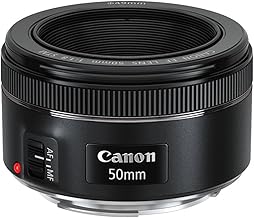
4. Canon EF 50mm f/1.8 STM (Renewed) — The budget astro entry point for Canon DSLRs
Price and availability are accurate as of 12/20/2025 10:04 am GMT and are subject to change.
If you’re building a night kit on a tight budget, the renewed EF 50mm f/1.8 STM is a smart first step. It’s bright, compact, and—crucially—good enough optically to make you want to go shoot again the next clear night. Expect the best star shapes around f/2–f/2.2; use live view at maximum magnification to nail focus and tape the ring to prevent drift.
As with any renewed gear, give it a quick functional check when it arrives. For the price-to-performance ratio, it’s hard to beat for star fields, aurora, and general low-light shooting.
5. Rokinon 135mm f/2.0 ED UMC (Nikon) — The cult-classic astro telephoto

Price and availability are accurate as of 12/20/2025 10:04 am GMT and are subject to change.
Among night shooters, the Rokinon/Samyang 135mm f/2 enjoys near-legend status. Its combination of speed, sharpness, and low aberrations makes it a go-to for tracked deep-sky fields: the North America Nebula, the Rho Ophiuchi complex, and star clouds around Scutum are framed beautifully at this focal length. Wide-open at f/2 it’s already strong; stop to f/2.8 for near-spot stars to the corners.
It’s manual focus, but that’s a feature at night. The long throw lets you dial in stars precisely with live view, and the mechanical construction holds focus well through a session. If you own a tracker—or plan to—this is a game-changer lens for Nikon F-mount astrophotography.
6. Canon EF-S 55–250mm f/4–5.6 IS STM (Renewed) — Lightweight tele for APS-C lunar work

Price and availability are accurate as of 12/20/2025 10:04 am GMT and are subject to change.
For Canon APS-C DSLRs, the EF-S 55–250mm STM is a practical way to get close to the Moon without breaking your back—or your budget. It’s sharp enough in the 200–250mm range for lunar detail on a tripod. Add a tracker and you can experiment with clusters and tighter star fields, though the slower aperture will push exposures and ISO higher.
As with any tele zoom at night, technique matters: use a remote trigger, mirror lock-up or electronic shutter, and disable stabilization on solid support. For a small lens, it pulls solid lunar duty and earns its keep as a daytime telephoto.
FAQ
- What focal length is best for Milky Way landscapes?
Typically 14–24mm on full-frame (10–16mm on APS-C). Wider lenses let you use longer exposures before stars trail, making them ideal for single-exposure nightscapes. If you only have a 50mm, create panoramas or use a star tracker.
- Do I need image stabilization for astrophotography?
No. On a tripod, stabilization can cause blur as the system hunts. Switch VR/IS off for stars. It’s useful again for handheld daytime shooting.
- How do I focus at night?
Use live view at maximum magnification on a bright star or distant light, open to your widest aperture, and manually focus for the smallest star size. Tape the focus ring once set. A Bahtinov mask can speed up precision.
- What’s the 500 rule, and should I use it?
The 500 rule (500 divided by focal length) gives a rough maximum exposure in seconds before star trailing on full-frame. It’s a starting point; the NPF rule is more accurate for high-resolution sensors. Shorter exposures yield tighter stars.
- Are light pollution filters worth it?
They can help with emission nebulae and in heavy light pollution, but may shift colors and dim broadband targets like the Milky Way core. For natural-looking nightscapes, many photographers shoot unfiltered and correct color in post.
Night-Sky Matches: Picking the right tool for your goals
- Want a simple, fast night lens for Nikon? Choose the Nikon AF-S 50mm f/1.8G. It’s compact, bright, and versatile for star fields, aurora, and tracked panoramas.
- Shooting Canon and need a budget astro prime? The Canon EF 50mm f/1.8 STM (standard or renewed) is a low-cost, high-impact upgrade for night work and timelapse.
- Planning tracked deep-sky fields on Nikon? The Rokinon 135mm f/2.0 ED UMC is the standout choice for nebula-rich regions and dense star clouds.
- Moon and tele-astro on Nikon full-frame? The Nikon 200–500mm f/5.6E ED VR is a sharp lunar specialist that also doubles as a wildlife lens by day.
- Moon shots on Canon APS-C with a light kit? The Canon EF-S 55–250mm IS STM (renewed) is portable and effective for lunar phases, with bonus daylight utility.
For Sony shooters, mirror the logic: pick a fast 20–24mm prime for Milky Way landscapes, a sharp 50mm f/1.8 for star fields and timelapse, and a 135mm f/1.8–f/2 for tracked deep-sky targets. Prioritize lenses with clean corner performance and a smooth manual focus ring.
Ultimately, the “best” astrophotography lens is the one that fits your sky, mount, and workflow. If you’re starting out, a 50mm f/1.8 plus a sturdy tripod can carry you a long way—and a simple star tracker unlocks the rest. Build from there toward the niche that inspires you: wide, sweeping nightscapes or the intricate detail of the deep sky. Either way, the right glass makes the stars fall into place.








Leave a Comment