

The Best Scales for Reloading: Digital Grain Scales, Powder Scales, and Precision Picks for Bullet Casting
If you’ve ever chased a tenth of a grain only to watch your numbers drift with a slight breeze, you already know: the right scale is the backbone of safe, accurate handloading. Good data and good technique are critical, but a reliable digital grain scale brings it all together—whether you’re trickling powder for precision rifle, sorting cast bullets, or verifying brass. Below, you’ll find practical picks and honest notes on where each tool shines and where it doesn’t, so you can build a setup that’s both safe and repeatable.
Why your reloading scale matters more than you think
A reloading scale isn’t a kitchen aid—it’s a precision instrument that measures powder charges in grains, not grams. A few reasons this matters:
- Precision equals safety. Powder charge errors measured in tenths of a grain can affect pressure and velocity. Being off by whole grains is dangerous.
- Accuracy creates consistency. When you’re tuning a load, the difference between a node and a flyer is often found in your scale’s resolution and stability.
- Stability saves time. Scales that drift, auto-zero, or respond poorly to trickling slow your workflow, force re-weighs, and undermine confidence in your ammo.
For cast-bullet workflows, you’ll weigh alloy samples, sort bullets by lot, and verify lube/coat application. Capacity and ease of use matter, but accuracy and environmental control are the real game-changers.
Common use cases: powder charges, bullet casting, and brass prep
- Powder weighing and trickling: This is where resolution in grains and draft protection matter most. A stable, grains-capable scale with quick response to trickle increments is key.
- Cast bullet sorting: A 0.01 g jewelry scale is fine for separating bullets into weight lots, checking lube application, and verifying mold consistency. You don’t need ultra-fine grain resolution for this job.
- Brass case work: Sorting brass by weight and confirming uniformity can be done on compact pocket scales, as long as you’re not measuring powder. These tasks are less sensitive to absolute resolution.
- Load development sanity checks: Regardless of your primary scale, check weights and a proper reloading manual help you verify what your instrument is telling you, and ensure your charges align with published data.
How to shop for a digital grain scale (and why kitchen scales aren’t suitable)
Shopping for a reloading scale is about controlling error sources and your environment:
- Resolution in grains: For powder, 0.1 grain resolution is a baseline; precision shooters often seek 0.02–0.03 grain class. The gold standard is even tighter (0.01 grain), but that typically requires specialized lab-grade gear. Many pocket scales list “0.01 g,” which is about 0.15 grains—not fine enough for powder charges.
- Draft and vibration control: A draft shield, cover, or at least a calm workspace is essential. Even HVAC airflow can move readings.
- Calibration stability: Reliable zeroing and calibration that holds throughout a session is non-negotiable. Warm-up time and check weights help.
- Trickle behavior: Some scales lag or over-smooth inputs, making it hard to trickle up to a final charge. Look for responsive, consistent readings.
- Power and auto-off: AC or USB power reduces battery sag; the ability to disable auto-off prevents interruptions mid-trickle.
- Capacity: 1500–2000 grains capacity easily covers powder charges, bullets, and cases without maxing out the load cell.
Why kitchen scales don’t work:
- Wrong units and resolution: Kitchen scales measure grams, often to 0.1 g (about 1.54 grains). That’s nowhere near precise enough for powder charges.
- Aggressive auto-zero and filtering: They smooth and average inputs for cooking, which destroys the fine sensitivity you need when trickling powder.
- Drift and instability: They aren’t designed for tiny incremental changes and can be influenced by temperature, static, or drafts far more than reloading-grade scales.
Our selection criteria
To make this list, each pick had to excel in at least one of these roles without compromising safety:
- Reliable measurement in grains for powder work, or an honest fit for sorting bullets/brass where 0.01 g resolution is acceptable.
- Strong calibration stability and sensible warm-up behavior.
- Some form of draft protection or a compact layout that’s easy to shield from airflow.
- Clear, responsive readout that behaves predictably when trickling or adding small increments.
- Proven usefulness in a real reloading workflow—and paired, when appropriate, with trusted manuals for safe data.
Below are five picks that cover powder weighing, cast-bullet work, and the essential reference data you should keep on your bench.
1. Frankford Arsenal Platinum Series Precision Scale — Best everyday powder scale for most reloaders

Compact, high-precision pocket scale: stainless platform, backlit LCD, dual power, multiple units and included calibration weight—perfect for jewelry, coins, food, travel.
$14.99 on Amazon
View on AmazonPrice and availability are accurate as of 01/27/2026 11:01 pm GMT and are subject to change.
If you want one scale to handle most reloading tasks—especially weighing powder in grains—this reloading-focused unit is the practical pick. The form factor is bench-friendly, the readout is straightforward, and the included case makes it easier to keep the load cell protected between sessions. For general rifle and pistol loads, a 0.1-grain class reloading scale is the standard starting point, and this one’s built for that job.
Like any electronic powder scale, it benefits from a calm environment and a consistent routine. Give it a short warm-up, keep it out of drafts, and verify with check weights at the start of your session. Do that, and you’ll have reliable, repeatable charges without fuss.
2. MAXUS Precision Pocket Scale 200g x 0.01g — Best budget pocket scale for bullet and brass sorting

1/10-grain precision to 1500gr, big backlit display, included weights & case—easy, accurate results for your reloading bench. Worth checking out.
$75.95 on Amazon
View on AmazonPrice and availability are accurate as of 01/27/2026 11:01 pm GMT and are subject to change.
For cast-bullet casters and those who like to weight-sort components, this compact pocket scale is a handy helper. The 0.01 g resolution lets you separate bullets into tight weight lots, detect voids, and check consistency across cavities. It’s also handy for brass sorting or checking small parts. The included calibration weight simplifies setup, and USB power means fewer battery worries during long sessions.
Important safety note: 0.01 g is roughly 0.154 grains—not tight enough for weighing powder charges. Use this as a companion tool for sorting and general bench tasks, not as your primary powder scale.
3. Mini Travel Digital Scale 200g/0.01g (Red) — Best travel-friendly helper for casting and field checks

Price and availability are accurate as of 12/26/2025 03:48 pm GMT and are subject to change.
Think of this as a field companion for bullet casters and tinkerers who value portability. It’s ideal for sorting cast bullets by weight class and confirming uniformity when you don’t want to fire up the main bench scale. The included calibration weight helps it travel well—calibrate, verify, and get your checks done without guesswork.
Again, keep it in its lane. For powder charges, especially for precision rifle or warm pistol loads, you want a grains-first reloading scale that’s built for trickling and fine increments.
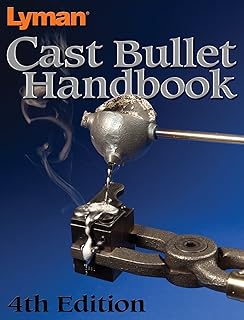
4. Lyman Cast Bullet Handbook, 4th Edition — Best reference for precision bullet casting and load development with cast projectiles
Price and availability are accurate as of 12/26/2025 03:48 pm GMT and are subject to change.
Great ammunition starts with great data. For anyone casting their own bullets, this handbook is the go-to companion. It covers alloys, molds, lube and coating, and how weight, hardness, and diameter interplay with pressure and accuracy. Pairing this manual with your scale is powerful: you can sort bullets intelligently, understand what variations mean on target, and select cast-friendly powders and charge windows with confidence.
Use it to calibrate your understanding as well as your equipment. Even the best precision scale cannot replace a tested data set and thoughtful guidance on cast-specific variables.
5. Lyman 51st Edition Reloading Handbook (Softcover) — Best all-around data reference for safe, consistent handloads

Price and availability are accurate as of 01/27/2026 11:02 pm GMT and are subject to change.
When you’re weighing powder, you’re not just chasing a number—you’re confirming a published, safe charge. A modern, reputable handbook is the anchor for that process. This edition offers a wide spread of cartridges, powders, and bullet combinations, plus the foundational techniques that keep your reloading consistent. Keep it on your bench to verify minimums, maximums, and to understand how changes in components affect pressure.
A good scale is only as useful as the data you feed it. This handbook ensures your precise measurements lead to safe and predictable results.
FAQ
- Do I really need 0.01-grain accuracy for powder?
For most handloaders, a reliable 0.1-grain class reloading scale is the practical baseline. Precision rifle shooters often aim for 0.02–0.03 grain-level repeatability. True 0.01-grain digital resolution is lab-grade territory. Focus on stability, drift control, and technique—with check weights to verify—rather than chasing extreme specs alone.
- Why shouldn’t I use a kitchen scale for reloading?
Kitchen scales read in grams and typically resolve to only 0.1 g (≈1.54 grains), which is far too coarse for powder. They also auto-average inputs and auto-zero aggressively, which ruins trickling accuracy. Use a grains-capable reloading scale for powder charges.
- How do I reduce drift and get stable readings?
Warm up the scale per the manual. Use AC or USB power if possible. Shield from drafts (HVAC, open windows), avoid direct sunlight, and use an anti-static brush or dryer sheet on plastic powder pans. Place the scale on a rigid, vibration-free surface. Calibrate, then verify with check weights before and during a session.
- How often should I calibrate and check my scale?
Calibrate at the start of each session or after moving the scale. Verify at least every 25–50 rounds with check weights or a known reference (e.g., a bullet you’ve measured consistently). If you see drift or inconsistent trickle response, stop and re-verify.
- What capacity do I need?
For general reloading, 1500–2000 grains capacity covers most tasks: powder charges, bullets, and brass. Pocket scales listing 200 g capacity easily handle component sorting, but remember they’re 0.01 g devices—not powder-precise in grains.
Zero, Shield, Verify: Bringing It All Together
Choosing a scale isn’t about chasing a spec sheet—it’s about building a workflow that stays steady from the first charge to the last. Here’s how these picks fit different benches:
- Need a reliable powder scale that reads in grains and fits most workflows? Pick the Frankford Arsenal Platinum Series Precision Scale. It’s built for handloading and rewards good setup with stable, repeatable charges.
- Sorting cast bullets or brass and want a compact helper? The MAXUS Precision Pocket Scale and the Mini Travel Digital Scale are excellent companions for 0.01 g tasks—just don’t use them for powder charges.
- Want your measurements anchored to trusted data? Pair your scale with the Lyman 51st Edition Reloading Handbook and, for casters, the Lyman Cast Bullet Handbook. Good numbers plus good data equals safe, consistent ammo.
Set your bench up to win: control drafts, warm up the scale, keep a set of check weights handy, and verify often. When your scale, technique, and data are all in alignment, your ammo shows it—on paper and over the chronograph.








Leave a Comment