


The 5 Best Apartment‑Friendly Digital Pianos with Headphone Jacks and Weighted Keys
You know that itch to play at 11:47 p.m.—right when inspiration strikes and your neighbors are definitely asleep? The right digital piano makes it possible. With a headphone jack, weighted keys that feel like an acoustic, and smart connectivity, you can practice late, play expressively, and keep the building quiet.
Below, we’ll break down what matters for apartment players, how to shop for realistic key feel and silent practice, and five excellent keyboards that deliver—whether you’re a beginner, returning player, or serious student preparing repertoire.
Why apartment‑safe digital pianos matter
Life in a shared space means controlling volume—and not just from speakers. Acoustic pianos radiate sound and transmit pedal thumps through floors. A modern digital piano with a proper headphone output, quiet key mechanism, and stable stand lets you practice scales, jazz voicings, or dense Romantic-era pieces without tension about noise.
Headphones do more than make things silent for others. They also put your ears “inside” the instrument, letting you hear subtle dynamics, pedal blending, and stereo sampling details that can be masked by room acoustics. That clarity accelerates learning—especially for pedaling and voicing in classical and pop ballad styles.
Finally, apartment living favors compact footprints. Slimline slab pianos, foldable stands, and bundles with carrying cases make it easy to store your instrument or move it between rooms. Furniture-style cabinets can also work if you want a permanent, upright look with integrated pedals—just plan the floor space and weight in advance.
Weighted keys, graded hammer, and polyphony—what actually matters
- Weighted vs. semi‑weighted: Weighted (or hammer‑action) keys use mechanisms that emulate real hammers, so the key pushback and momentum feel closer to an acoustic piano. Semi‑weighted keys add resistance with springs; they’re lighter and can be easier for small hands but are less piano‑realistic.
- Graded hammer action: On an acoustic, bass notes feel heavier and treble notes lighter. Some digital pianos replicate this with “graded” actions (e.g., Yamaha GHS), which helps develop proper technique and dynamic control. If you’re studying classical repertoire, graded hammer action is a real advantage.
- Polyphony: This is how many notes a piano can sound at once. With sustain pedal, layered chords, and reverb, notes stack quickly. Aim for 64‑note minimum if you’re practicing classical or film music; 128‑note polyphony gives more headroom for arpeggios, fast passages with pedal, and layered sounds without notes cutting off.
- Pedals: A quality sustain pedal matters for realistic feel. Some bundles include a basic footswitch; it works, but a piano‑style pedal (or integrated 3‑pedal unit) is better for long‑term technique. If you regularly play at night, place the pedal on a rug or isolation mat to reduce thump transmission.
Quiet‑practice essentials: headphone jacks, connections, and ergonomics
- Headphone output: Most stage‑style pianos use a 1/4‑inch (6.35 mm) jack. If your headphones have a 1/8‑inch plug, grab a threaded adapter. Closed‑back headphones reduce sound leakage in quiet apartments; open‑back designs sound airy but leak more.
- Connectivity for learning and recording: USB (often “USB to Host”) lets you connect to learning apps, notation software, or a DAW for silent recording. Some models add Bluetooth for wireless app control or backing tracks. If you’re practicing late, USB‑MIDI plus headphones is the golden combo.
- Stands and playing posture: In tight spaces, X‑stands are convenient but can wobble and set your hands too high. A height‑adjustable stand or furniture‑style cabinet keeps wrist angle healthy and reduces mechanical noise. If you share walls/floors, a thick rug under the stand and pedal will dramatically cut transmitted noise.
How we selected these pianos
- Realistic key feel for apartment practice: Preference for weighted or graded hammer actions; clear notes on any semi‑weighted option.
- Headphone‑first experience: Solid headphone output, quiet key mechanism, and useful control over volume and touch response.
- Polyphony headroom: Enough note capacity to handle sustained chords and complex passages.
- Compact friendly: Slim designs, manageable weights, or furniture cabinets that make sense in small spaces.
- Useful connectivity: USB‑MIDI and/or Bluetooth for apps, recording, and lessons; sustain pedal support.
- Honest value: Bundles that make sense for beginners, and models that will still serve you as you advance.
Below are five strong picks for late‑night pianists and apartment dwellers, each with a clear scenario where it shines.
1. Yamaha P71 — Compact, graded‑hammer feel with true piano focus

Perfect for home practice: realistic weighted keys, Yamaha piano tones, compact footprint, plus USB, headphone and sustain jacks for quiet practice or easy recording.
$429.99 on Amazon
View on AmazonPrice and availability are accurate as of 01/28/2026 09:46 pm GMT and are subject to change.
If you want a no‑nonsense, apartment‑ready digital piano that plays like a piano, the Yamaha P71 is a standout. Its Graded Hammer Standard action gives you that crucial heavier‑in‑the‑bass, lighter‑in‑the‑treble response that helps build proper finger strength and control. Yamaha’s premium piano voices are focused, balanced, and easy on the ears through headphones—great for long, late sessions without fatigue.
The P71 stays slim and tidy, with the ports that matter: a headphone jack for silent practice, a sustain input, and USB for connecting to notation apps or a DAW. While its 64‑note polyphony is enough for most repertoire, advanced players running big sustained chords may occasionally notice note stealing. If you’re prioritizing feel, footprint, and reliable sound in an apartment, this is a safe and satisfying pick.
2. Alesis Recital Pro — Hammer‑action, lesson tools, and 128‑note polyphony

88 hammer-action keys, realistic sounds, built-in speakers and lesson tools — great for practicing, recording, or learning with Skoove and Melodics included.
$0.00 on Amazon
View on AmazonPrice and availability are accurate as of 01/28/2026 09:47 pm GMT and are subject to change.
For learners and returners who want generous features for quiet practice, the Recital Pro offers a lot. The 128‑note polyphony means less worry about note dropouts when you hold the damper pedal through rich chords or fast arpeggios—something you’ll appreciate in Romantic and cinematic pieces. Lesson Mode splits the keyboard into two identical ranges, so student and teacher can practice simultaneously (silently, via a splitter, if you add one).
A full suite of connections supports apartment life and hobby recording: a 1/4‑inch headphone output for quiet sessions, stereo line outs if you want to monitor through nearfields at low volume, and USB for app‑based learning. The hammer‑action is responsive and adjustable, though not graded; if you’re a classical purist, that may matter. As a complete practice station for silent nights, it’s hard to beat.
3. 88‑Key Semi‑Weighted Digital Piano with Bluetooth — Beginner bundle made for quiet portability

All-in-one 88-key digital piano with semi-weighted touch, 128 voices, Bluetooth and travel case—perfect beginner bundle to learn, practice and play anywhere.
$109.99 on Amazon
View on AmazonPrice and availability are accurate as of 01/28/2026 09:47 pm GMT and are subject to change.
If you’re just starting and want everything in one box, this bundle gets you playing quickly—quietly. Semi‑weighted keys are lighter under the fingers than hammer‑action, so beginners can build confidence and dexterity while keeping late‑night sessions comfortable. The included headphones, stand, sustain pedal, and case mean you can set up in a corner today and pack away tomorrow.
Bluetooth makes connecting to learning apps, play‑along tracks, or video lessons simple—no extra cables needed. For apartment players, that matters: fewer wires, fewer headaches, and more practice. As your ear develops, you may want richer samples or higher polyphony; for now, this package delivers a flexible, silent practice solution at an accessible level.
4. 88‑Key Digital Piano Bundle (Weighted Keys) — Budget weighted feel for practice and light gigging
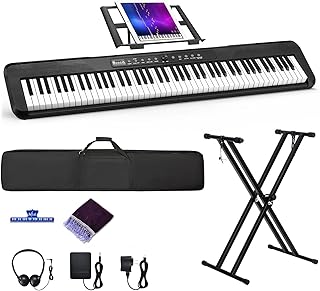
Full 88-key digital piano with weighted keys and rich acoustic-like tones—ideal for practice, lessons, or lightweight gigging.
$125.99 on Amazon
View on AmazonPrice and availability are accurate as of 01/28/2026 09:48 pm GMT and are subject to change.
This bundle aims squarely at players who want a weighted‑key experience without a large cabinet or complex setup. The weighted action is closer to a piano than semi‑weighted keys, helping you practice dynamics and build strength. It’s also apartment‑friendly: set it up in minutes, stash it when guests arrive, and practice through your headphones at any hour.
Bluetooth is handy for lessons and play‑along tracks, making practice more engaging. Because the specs are minimal, treat this as a solid entry into weighted‑key territory—not a substitute for a higher‑end graded hammer instrument. Before long late‑night sessions, confirm your headphone plug size and consider a pedal mat to tame floor‑borne noise.
5. WENCAI 88‑Key Wooden Digital Piano — A home‑friendly cabinet with headphones and USB‑MIDI

Play with 88 velocity-sensitive keys and rich French DREAM piano tones. Sturdy wooden stand doubles as a desk, plus USB-MIDI and headphone support for quiet practice.
$348.88 on Amazon
View on AmazonPrice and availability are accurate as of 01/28/2026 09:48 pm GMT and are subject to change.
If you’d prefer a permanent, living‑room‑friendly setup, this wooden digital piano strikes a nice balance between home aesthetics and silent practice. The sturdy stand cuts wobble and pedal creep—crucial in apartments where structure‑borne noise travels. USB‑MIDI lets you plug into learning apps or a DAW, and a standard headphone connection makes quiet evening practice routine.
The three pedals encourage proper technique for repertoire that uses sostenuto and nuanced sustain. While the action is velocity‑sensitive rather than a specified graded hammer mechanism, it’s responsive for general practice and lessons. If you want the look of an upright and the convenience of headphones, this is an appealing, space‑aware choice.
FAQ
- Do I really need graded hammer action in an apartment?
- If you’re studying classical or working on dynamic control, graded hammer action helps mimic an acoustic’s feel—heavier in the bass, lighter in the treble. It’s not mandatory for beginners, but it pays dividends as you progress.
- How much polyphony is enough for silent practice?
- For pop, jazz comping, and basic classical, 64‑note polyphony is workable. If you hold the damper pedal through dense chords or play fast arpeggios, 128‑note polyphony reduces note dropouts and sounds more natural in headphones.
- What headphones work best with digital pianos?
- Closed‑back, over‑ear headphones keep sound in and apartment noise out. Look for neutral tuning and comfortable pads. If your piano uses a 1/4‑inch output, use a proper adapter. Avoid super‑low‑impedance gaming headsets that can hiss with high‑gain outputs.
- How can I reduce pedal noise in a second‑floor unit?
- Place the pedal on a thick rug or isolation mat. Ensure your stand is stable and at the right height so you’re not stomping. Furniture‑style cabinets often transmit less wobble than lightweight X‑stands.
- Can I record silently from these pianos?
- Yes. Use USB‑MIDI to record MIDI into a DAW or learning app, or line outputs (where available) for direct audio. Recording while monitoring through headphones keeps things totally silent for neighbors.
Play Boldly, Sleep Peacefully: Final Picks
- Want the most authentic feel in a slim package? Choose the Yamaha P71. Its graded hammer action and refined voices make it a superb weighted keys piano for apartment practice through headphones.
- Need headroom for complex pieces and built‑in lesson tools? The Alesis Recital Pro brings 128‑note polyphony, record/lesson modes, and flexible I/O—excellent for silent practice and structured learning.
- Prefer an all‑in‑one beginner setup you can store easily? The 88‑Key Semi‑Weighted Bluetooth bundle includes headphones, stand, sustain pedal, and a case—great for quiet, portable practice.
- Looking for budget weighted keys without a cabinet? The 88‑Key Digital Piano Bundle offers a more piano‑like feel than semi‑weighted options, plus Bluetooth convenience, in a compact format.
- Want a stable, furniture‑style instrument with full pedals? The WENCAI 88‑Key Wooden Digital Piano integrates into your home, supports headphones and USB‑MIDI, and encourages good pedal technique.
Whichever you pick, match your choice to how you practice: action feel, polyphony needs, and connectivity for apps or recording. Get a comfortable stand, a soft rug under the pedal, and a pair of closed‑back headphones—and enjoy guilt‑free, late‑night creativity.




Leave a Comment