

The Best Bottles for Breastfed Newborns: Anti‑Colic, Breast‑Like, and Nipple‑Confusion‑Friendly Picks
If you’re nursing and introducing a bottle, it can feel like you’re translating between two languages. Breastfeeding is all about latch, rhythm, and pace. Bottles introduce gravity, different shapes, and different flows. The right bottle narrows that gap so baby can switch back and forth without frustration, gas, or backslides in latch.
Below, we break down what actually matters for breastfed newborns, how to shop with confidence, and the top bottles that check the boxes: breast‑like nipples, thoughtful anti‑colic venting, and slow, baby‑led flow. Then we match each pick to real‑world scenarios like returning to work, easing gas, or avoiding bottle refusal.
Why Bottle Choice Matters for Breastfed Newborns
Breastfed babies learn to work for milk—tongue forward, wide gape, rhythmic compression, and a pause‑swallow pattern. Bottles can short‑circuit that if the nipple shape is too short or rigid, or the flow gushes with little effort. The result isn’t just “nipple confusion”; more often it’s flow preference or latch changes that bounce back to the breast.
Anti‑colic features also matter. Air swallowing can trigger gassiness, spit‑up, and fussy feeds. Smart venting reduces negative pressure in the bottle so babies don’t gulp air to keep milk flowing. For many families, the right venting is the difference between a peaceful nap and a wailing 2 a.m. burp marathon.
Finally, newborns have small tummies and delicate coordination. A gentle, slow, predictable flow helps them maintain the same skills they use at the breast—less dribbling, fewer coughs, and less fatigue mid‑feed.
How to Shop: What to Prioritize
- Nipple geometry and softness
Look for a wide, breast‑like nipple with a gradual slope and a soft, compressible feel. This shape encourages a deep latch and lets baby use the same tongue‑and‑jaw mechanics as breastfeeding. A too‑short or steep nipple can drive shallow latch, lip tucking, and clicking.
- Venting that truly works
Effective anti‑colic systems vent air away from milk and relieve vacuum build‑up as baby drinks. Designs vary—internal vents, base vents, or nipple vents—but the goal is the same: less air in baby’s tummy. Choose one that’s easy for you to assemble consistently.
- Flow rate that matches the breast
For breastfed newborns, start with a true slow‑flow nipple. Milk should only release when baby actively sucks, not pour out with gravity. If baby sputters, tightens lips, or finishes unusually fast, the flow may be too quick.
- Materials, size, and cleaning
Silicone bottles feel soft and “skin‑like,” while classic plastic is lightweight and durable. Wide‑neck bottles are typically easier to clean by hand; narrow‑neck designs may need a brush for the vent parts. For newborns, 4–5 oz bottles are practical; 8–9 oz bottles become useful as intake increases.
- Compatibility and longevity
Some systems let you swap nipple levels, attach to pump adapters, or transition to sippy tops later. If you’re building a feeding routine for the long haul, a modular system can reduce guesswork.
Protecting Your Breastfeeding Relationship During the Transition
- Time the introduction
Many lactation pros recommend waiting until breastfeeding is established (often around 3–4 weeks) before introducing a bottle—unless medically necessary. Then, offer a bottle a few times per week to keep the skill fresh.
- Use paced bottle feeding
Hold baby more upright and keep the bottle more horizontal. Let baby draw milk in and take natural pauses, just like at the breast. This reduces flow preference and supports self‑regulation.
- Watch baby, not the ounce marks
Look for relaxed hands, rhythmic sucking, and contentment at the end rather than targeting a specific volume. If baby fights the bottle, check the flow rate, latch depth, and venting.
- Get help if needed
If latch changes at the breast, or you’re seeing persistent gas, consult a lactation professional. A small tweak—nipple type, flow, position—can make a big difference.
How We Selected the Best Bottles
- Breast‑like nipple shape that supports a deep latch
- True slow‑flow options suitable for newborns
- Anti‑colic venting that reduces air intake and vacuum
- Positive reputation among breastfeeding families for easy transitions
- Thoughtful design for cleaning, assembly, and consistency
- Availability of different nipple levels as baby grows
- Real‑world usability: warming, measuring, and day‑to‑day handling
1. Comotomo 7-Piece Green Baby Bottle Set — the soft, breast‑like silicone pick for smooth latch transitions
Price and availability are accurate as of 12/23/2025 03:02 am GMT and are subject to change.
Comotomo is the go‑to when you want the bottle to feel as close to skin as possible. The ultra‑wide, soft silicone nipple lets baby flange lips and compress the teat like a breast, while the bottle’s squeezable body can reassure reluctant babies during early trials. Dual anti‑colic vents help equalize pressure so milk flows with baby’s effort—not gravity.
The extra‑wide opening reduces the chore of cleaning and assembling, which is a relief during middle‑of‑the‑night washups. The bundled set spans early months into bigger feeds, making it a strong choice for families planning to combo feed long‑term. Just be mindful of proper vent orientation and warming time with the thicker silicone.
2. Philips Avent Natural 9 oz Baby Bottles — best for breast‑like shape with baby‑led, stop‑start flow

Price and availability are accurate as of 12/23/2025 03:03 am GMT and are subject to change.
Avent’s Natural line is built for babies who thrive on a breast‑like rhythm. The Natural Response nipple aims to mimic breastfeeding by letting milk flow when baby sucks and stop when they pause, reducing the “gush and guzzle” that can lead to preference for the bottle. The wide teat encourages a mouthful latch, helping protect breastfeeding mechanics.
Venting is built into the nipple to direct air away from baby’s tummy. For newborns, pair with the slowest nipple level and practice paced feeding. If you prefer a smaller bottle in the early weeks, you can start with a compact size and transition up as intake grows.
3. MAM Easy Start 9oz Anti‑Colic Bottle — great for sensitive tummies with a breastfeeding‑like nipple

Price and availability are accurate as of 12/23/2025 03:03 am GMT and are subject to change.
MAM’s Easy Start stands out for its vented base, which helps milk flow smoothly without pulling in air. For babies who battle gas or spit‑up, that pressure relief can shorten burp sessions and calm post‑feed fussiness. The nipple’s shape and texture are designed to feel familiar to breastfed babies, supporting a wide latch and comfortable suck.
The built‑in self‑sterilizing feature is a clever touch: no bulky sterilizer needed. Just assemble with a small measure of water and pop it in the microwave as directed. Expect a few practice runs to get assembly muscle memory; once dialed in, it’s a reliable option for the colic‑prone.
4. Dr. Brown’s Options+ Narrow 4 oz Anti‑Colic Baby Bottles — the newborn slow‑flow classic for gas relief

Price and availability are accurate as of 12/23/2025 03:03 am GMT and are subject to change.
For tiny tummies and small, frequent feeds, the 4 oz Options+ is a smart baseline. Dr. Brown’s internal venting has a long track record for reducing fussiness related to air intake and helping sensitive babies feed at a comfortable pace. That predictability can protect the breastfeeding rhythm when combined with paced feeding.
The trade‑off is extra parts and a narrow‑neck nipple that’s less breast‑mimicking than wide‑neck or silicone picks. Families often keep these in the toolkit for gas‑heavy days or late‑night feeds where consistent flow and easy burps win the night. Clean carefully and use the included brushes to keep the vent system clear.
5. Dr. Brown’s Natural Flow Options+ Anti‑Colic 15‑Piece Pink Feeding Set — an all‑in registry pick that grows with baby

Price and availability are accurate as of 12/23/2025 03:03 am GMT and are subject to change.
If you want one box to cover the feeding journey, this set delivers a whole system—bottles, slow‑to‑faster nipples, and useful add‑ons for later stages. The internal venting aims to keep air out of baby’s tummy, which can soothe fussy periods while you safeguard the breastfeeding relationship with paced feeds and correct nipple levels.
Because it’s a narrow‑neck system, the nipple feel is different from ultra‑wide silicone brands. Many families use this kit as their dependable anti‑colic backbone, then add a breast‑like option for times when baby needs extra help switching between breast and bottle.
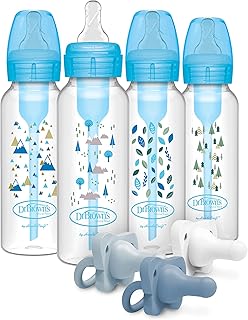
6. Dr. Brown’s Options+ 8oz Narrow Anti‑Colic Bottles + HappyPaci Pacifiers — consistent feel from pacifier to bottle

Price and availability are accurate as of 12/23/2025 03:03 am GMT and are subject to change.
This bundle pairs Dr. Brown’s tried‑and‑true vented bottles with silicone pacifiers modeled after the brand’s nipple. That continuity can help babies who are particular about the feel in their mouth, making transitions less jarring. The vent system aims to reduce air swallowing and ease gas—especially helpful when feeds get longer.
While the 8 oz size shines as baby grows, many families prefer starting with 4 oz for newborn volumes. Keep this set on deck as your baby ramps up intake or if you want a consistent “feel” across bottles and pacifiers. As with all vented systems, careful cleaning keeps performance on point.
FAQ
- What flow level should I use for a breastfed newborn?
Start with the slowest flow available for the bottle you choose. Milk should not stream out on its own. If baby sucks rhythmically without sputtering and finishes calmly in 10–20 minutes, you’re likely in the right zone. Size up only if baby works very hard with little transfer or shows frustration over multiple feeds.
- Do anti‑colic vents really help with gas and spit‑up?
They can. Effective venting reduces vacuum inside the bottle and limits air bubbles mixing into milk, which may decrease swallowed air. While no bottle “cures” colic, many families report fewer burps, less spit‑up, and calmer feeds with well‑vented designs.
- How do I avoid nipple confusion when combo feeding?
Think “flow preference,” not just nipple shape. Use a slow‑flow nipple, practice paced feeding, and aim for a deep latch on the bottle (wide open mouth, lips flanged). Offer the bottle a few times per week after breastfeeding is established so it’s familiar, and keep breast routines consistent.
- Are silicone bottles safe and easy to clean?
High‑quality silicone bottles are BPA‑free and designed for infant feeding. They’re often easier to hand‑wash thanks to wide necks. Follow the manufacturer’s guidance for dishwashers, sterilizers, and warming; silicone can take a bit longer to heat evenly due to its thickness.
- Can I mix nipples or parts across brands?
Generally, no. Nipples and caps are engineered for their specific bottles and vent systems. Mixing brands can cause leaks, poor venting, or unpredictable flow. Stick with the same system or use brand‑approved adapters where applicable.
Your Feeding Game Plan: Confident Picks for Real Life
Choosing a bottle for a breastfed newborn isn’t about chasing trends—it’s about protecting latch mechanics, controlling flow, and minimizing air. Here’s a quick matchup to help you decide:
- For the most breast‑like feel and easier acceptance: Comotomo 7‑Piece Green Bottle Set
- For baby‑led, stop‑start flow that mimics let‑down: Philips Avent Natural
- For sensitive tummies and microwave self‑sterilizing convenience: MAM Easy Start Anti‑Colic
- For newborn‑size feeds with a proven anti‑colic system: Dr. Brown’s Options+ Narrow 4 oz
- For an all‑in system from day one to later stages: Dr. Brown’s Options+ 15‑Piece Feeding Set
- For consistent feel across bottle and pacifier as baby grows: Dr. Brown’s Options+ 8 oz + HappyPaci
Whichever you choose, pair it with paced feeding, a slow‑flow nipple, and a deep latch—on both breast and bottle. If something feels off, tweak one variable at a time (flow, nipple shape, position) or check in with a lactation professional. You’ve got this, and your baby does too.






Leave a Comment