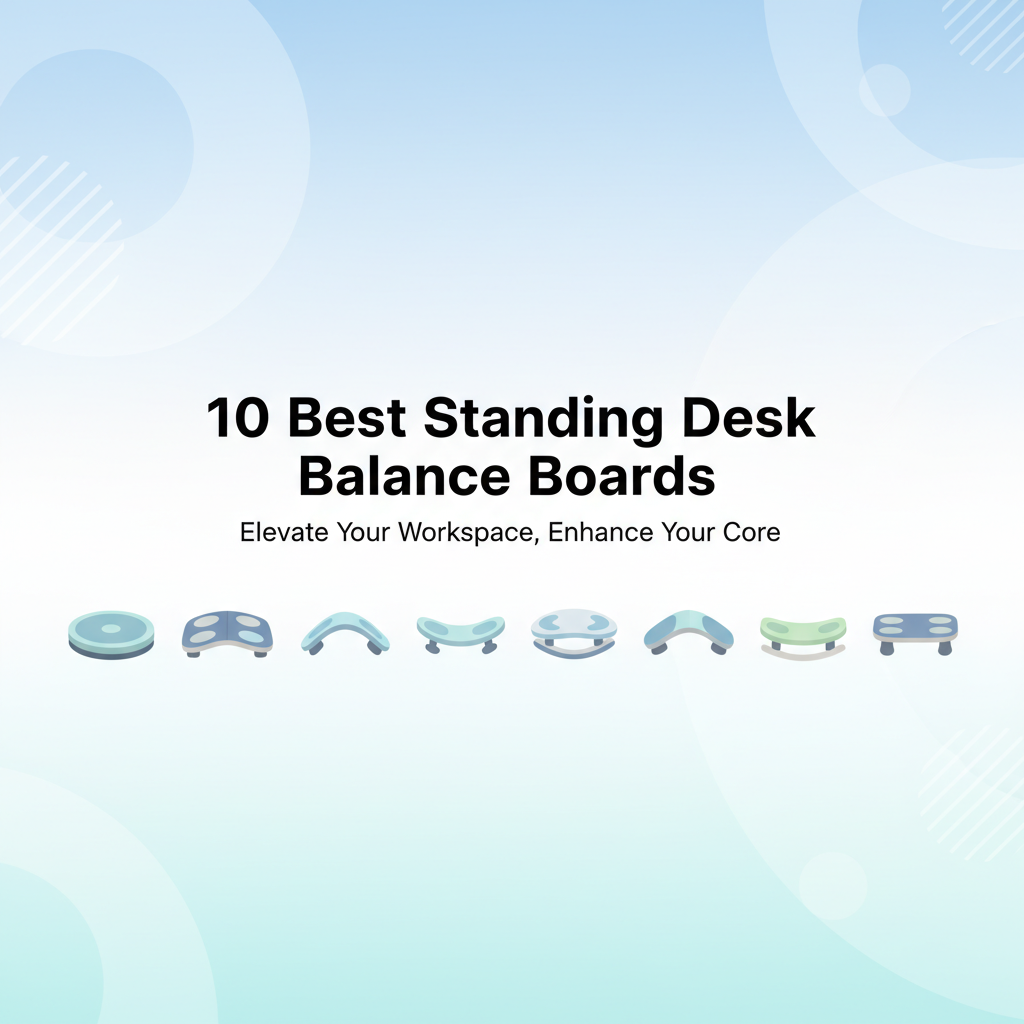
The Best Standing Desk Balance Boards and Anti-Fatigue Options for Energized, Quiet Workdays
If you’ve upgraded to a standing desk but still find your feet aching or your focus drifting, you’re not alone. Standing still is work for your body. The fix? Add motion. A good balance board or anti-fatigue surface brings micro-movements that wake up your core, keep circulation flowing, and make long stints on your feet feel surprisingly good. The trick is choosing a board that’s office-friendly—read: quiet, stable for focused tasks, and built to handle daily use.
Below, you’ll find our favorite boards for standing desk setups, including 360-degree wobble boards for fidget-friendly movement and slackline-inspired boards for smooth side-to-side “flow.” Every pick here is selected with an office environment in mind, with special attention to noise, deck size, and weight support.
Why this category matters for your workday
Static standing is hard on joints and circulation. When you bring controlled motion into the picture, you get the benefits of standing—better posture, more energy, less pressure on the lower back—without the foot and calf fatigue that can sap your focus. Micro-movements also function like “movement snacks”: small, frequent muscle activations that help you stay alert and comfortable.
Balance boards do more than entertain your fidgets. The right board can:
- Distribute weight changes that relieve heel and forefoot pressure.
- Encourage neutral spinal alignment with gentle hip and ankle motion.
- Reduce discomfort that often sends people back to their chair.
- Turn calls, reading, or deep work into opportunities to move.
And yes, they can be fun—without derailing productivity, as long as you choose a motion style that suits your tasks.
Types of boards: rocker vs. 360° wobble vs. slackline-style
Not all “wobble boards” wobble the same way. Movement pattern matters, especially when you’re typing or mousing for hours.
- Rocker boards: These pivot on a curved rail and move in one plane (front-to-back or side-to-side). They’re predictable and usually quiet. Great for focused work. Cons: limited motion variety.
- 360-degree wobble boards: These sit on a central dome or multi-sphere pivot and move in all directions. They’re lively, fantastic for ankle mobility and active micro-motions. Cons: can be noisier on hard floors if the pivot rubs; some models feel “busy” for precision typing.
- Slackline-style boards: A fabric or webbing line is tensioned across a sturdy frame, creating a dynamic but linear balance challenge. This movement is smooth and rhythmic, often quieter than mechanical pivots, with a satisfying side-to-side “flow.” Cons: larger footprint and a bit of a learning curve.
Each type has a place at a desk. If you type intensely for long stretches, you may prefer rocker or slackline-style for controlled motion. If you stand during calls and creative work, 360-degree boards deliver refreshing variety.
Office use cases and setup tips
- Deep work and heavy typing: Pick a predictable motion profile (rocker or slackline) and a wide, grippy deck. If you go 360°, choose a model with a gentle dome and quiet pivot.
- Meetings and calls: 360° boards shine here. You can rotate, circle, and shift weight without thinking about it.
- Long sessions: Anti-fatigue surface texture matters. Some boards integrate cushioning or a rubberized top. If yours doesn’t, pair it with a supportive mat.
- Flooring: Any hard pivot on wood/tile can transmit sound. Use a thin, grippy mat to both protect floors and dampen noise.
- Footwear: For sock-only use, prioritize high-traction deck grip. For shoes, a rubberized or sandpaper-style surface also works—just avoid overly abrasive textures if you switch between socks and shoes.
- Noise: Silent pivots and bearing-free designs are your friends. When possible, avoid exposed metal bearings or hard plastic pivots on bare floors. A low-profile mat solves most noise issues.
How to shop this category with confidence
Balance boards live at the intersection of ergonomics, materials, and movement mechanics. Here’s how to evaluate options quickly.
- Movement style first: rocker (predictable), 360° wobble (dynamic), slackline (smooth, flowing). Match the motion to your work habits.
- Noise profile: Prefer silent pivots or bearing-free designs; use non-marring, rubber contact points. If it uses bearings, look for “silent” or “low-friction” designs suitable for office environments.
- Deck width and stance: A wider platform supports a natural hip-width stance that reduces knee and ankle strain.
- Grip underfoot: Rubberized or grippy top surfaces matter, especially if you stand in socks.
- Anti-fatigue feel: Cushioned or textured decks reduce foot fatigue. If absent, consider pairing with an anti-fatigue mat.
- Weight capacity: Confirm manufacturer rating—important for safety, durability, and long-term stability.
- Floor protection: Non-marking bottoms and rounded edges protect hardwoods and tile.
- Footprint and storage: Slackline boards take more space; 360° and compact wooden boards are easier to stash.
- Build quality: Solid wood/composite decks and quality pivots age better under daily office use.
Our selection criteria
We chose the following products based on:
- Office-friendly noise and motion control
- Safe, comfortable movement for standing desk use
- Deck stability, grip, and a stance that supports hours of work
- Materials and construction appropriate for daily use
- Reasonable footprint and floor protection
- Clear use cases (typing vs. calls, short vs. long sessions)
- Manufacturer reputation and design intent for standing desks or balance training
Let’s get to the top picks.
1. Slackline “Flow” for Focused Work and Play
The GIBBON GiBoard SlackBoard — Slackline Balance Trainer for Core Workouts, Standing Desk & Home Use (1 or 2 Line) blends play with productivity. The slackline’s dynamic, side-to-side motion is rhythmic and surprisingly meditative once you find your balance. Using one line offers a more challenging ride; switching to two lines creates a lower, more controlled motion that suits typing and mousing.
Because there are no rolling bearings, the board’s movement is naturally quiet—great in open offices. The frame provides a generous stance area, and the low-impact sway keeps ankles and hips moving without distracting full-range wobble. Do make space for it (it’s longer than 360° wobble boards), and confirm the weight capacity if you need a higher rating. For ergonomic variety with a calm “flow” feeling, this is a standout.
2. 360° Movement with an Anti-Fatigue Feel
The Whirly Board Wide Anti-Fatigue Balance Board for Standing Desks is built for all-direction motion and long-standing comfort. The wide deck supports a natural stance and lets you roll, circle, and pivot throughout calls and creative sessions. The anti-fatigue surface helps soften the feel underfoot—especially helpful if you stand in socks or lightweight shoes.
As with most 360° pivots, the contact point can transmit noise on hard floors. A slim protective mat under your board will dampen sound, improve grip, and protect flooring. If you want lively, ankle-friendly motion with an underfoot surface designed for hours of standing, this wide, cushioned deck nails the brief.
3. Smooth, Quiet Side-to-Side for Desk-First Use
The GIBBON GiBoard SlackBoard — Balance Trainer for Core Workouts, Play & Standing Desks delivers the signature GiBoard sway in a streamlined package. The fabric line’s controlled give creates a gentle balance challenge that keeps your ankles articulating and your core subtly engaged. No grinding bearings means fewer noise worries in shared workspaces.
This style excels at “set it and forget it” motion—ideal for typing, design work, and long reads. If you crave circular rotations and toe-to-heel rolls, a 360° board will offer more variety. For calm, continuous movement that feels purpose-built for a desk, this is a smart pick.
4. Premium Slackline Stability with a Grippy Deck
The GIBBON GiBoard SlackBoard — Slackline Balance Trainer for Core Workouts & Standing Desk leans into office usability: a secure deck surface, a smooth side-to-side arc, and the kind of consistent feel that makes standing for hours genuinely sustainable. The motion keeps your lower body busy without demanding constant attention—exactly what you want in deep-focus sessions.
As with any slackline-style platform, you’ll get the best feedback on a firm surface. If your office has plush carpet, lay down a thin, dense mat to restore responsiveness and keep noise minimal. If you like the idea of a board that’s refined, quiet, and purpose-built for standing desks, this version checks all the boxes.
5. Compact 360° Wobble on a Budget
The 360° Wooden Balance Board — Portable Wobble Board for Core Strength & Physical Therapy offers classic dome-pivot versatility in a small footprint. It’s a great “movement snack” tool: hop on during calls, roll through ankle circles, and reset your posture. The compact size stores easily under your desk and travels well between home and office.
For typing-heavy sessions, its more pronounced tilt may be busier than you want. Place it on a thin, grippy mat to quiet the pivot and protect floors. If you’re curious about wobble boards and want a simple, packable option that delivers real mobility work, this is a solid starter.
FAQ
- Are balance boards safe to use at a standing desk all day?
Yes—if you match the motion to your tasks and your body. Start with short sessions (10–20 minutes), then build up. Choose a predictable motion style (rocker or slackline) for typing and a gentler 360° tilt for calls. If you have a history of balance issues, foot pain, or recent injury, check with a clinician first.
- Rocker vs. 360° wobble vs. slackline: which should I choose?
For focused typing, rocker or slackline boards shine—controlled motion with minimal distraction. For creative work and calls, 360° boards keep your joints happily moving in all directions. If you want rhythmic, quiet “flow,” slackline-style is a sweet spot.
- How do I reduce noise in a shared office?
Pick bearing-free or “silent” pivot designs and use a thin, grippy mat under the board. Mats cut pivot squeaks, protect floors, and improve stability. Keep shoes clean and dry—grit amplifies noise.
- What weight capacity should I look for?
Choose a board with a published weight rating that meets or exceeds your needs. Higher capacities often mean thicker decks or reinforced frames that feel more planted. When in doubt, contact the manufacturer.
- Do I still need an anti-fatigue mat?
If your board lacks cushioning, pairing it with a supportive mat can reduce foot soreness during long sessions. Some boards include anti-fatigue surfaces; others prioritize grip. You can also alternate: board for movement, mat for fully static tasks.
The Energized-Desk Playbook: Final Picks and Pairings
Here’s how to choose fast:
- Want calm, quiet motion while you type? Pick a slackline-style board. The GIBBON GiBoard SlackBoard options deliver smooth, bearing-free movement that keeps you focused. Choose the 1-or-2 line model if you want progression; the other GiBoard variants if you want streamlined, office-first setups with grippy decks.
- Want all-direction motion and a cushioned feel? The Whirly Board Wide Anti-Fatigue model brings 360° variety with a stance-friendly deck—great for calls and long creative sessions. Add a thin mat if you work on hard floors.
- Want compact and portable? The 360° Wooden Balance Board is an easy starter for movement breaks and ankle mobility. Use it in intervals during the day and pop it under the desk when you’re done.
Pro move: Alternate between a balance board and a plain anti-fatigue mat across the day. Movement for energy, cushioning for stillness, and both for a back and feet that thank you.
Choose the motion profile that matches your work, keep things quiet with a mat, and confirm the weight rating for peace of mind. Your standing desk just got a lot more comfortable—and a lot more fun.